We slept in a bit this morning. We had a late night with our Le Jules Verne reservation, so I was very glad we moved our tour time.
We slowly got ready and made our way down to our new favorite café, Paul’s. We ordered a quiche Lorraine, a pain au chocolat, and two cappuccinos. It was a nice, easy breakfast and exactly what we needed.
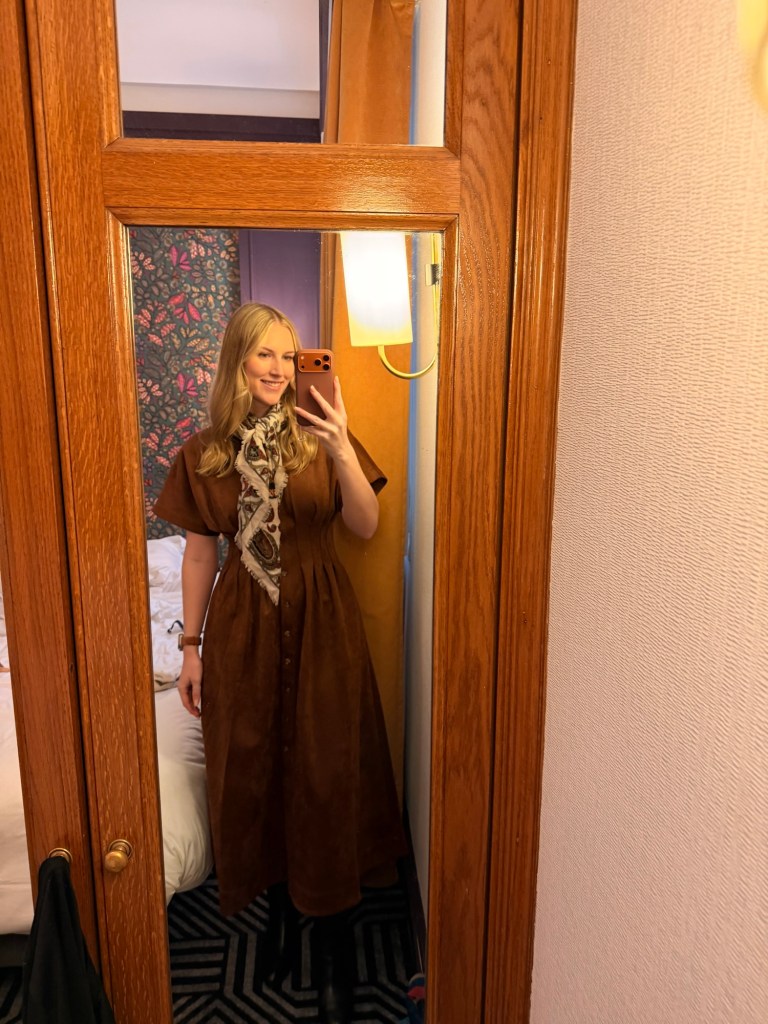
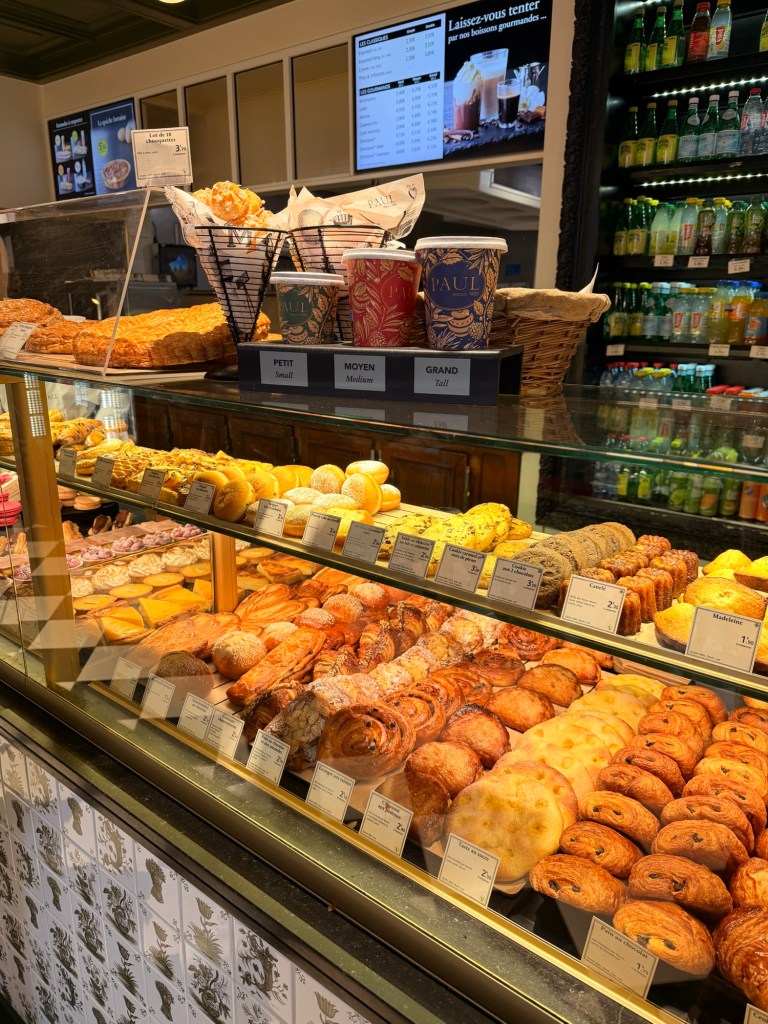
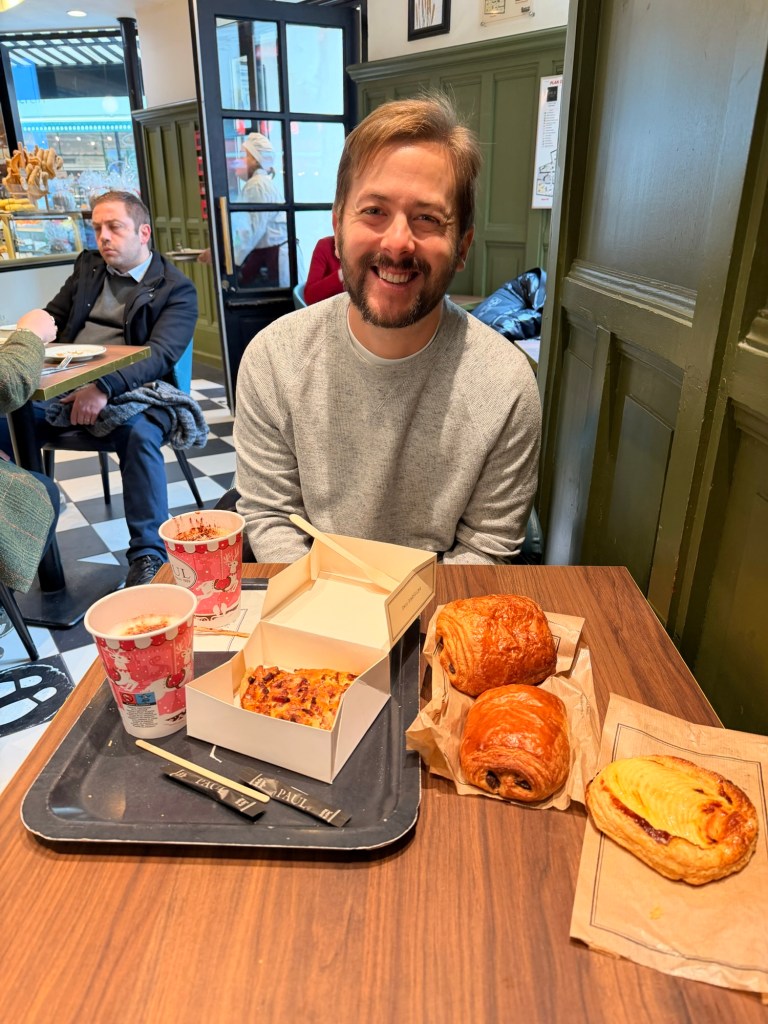
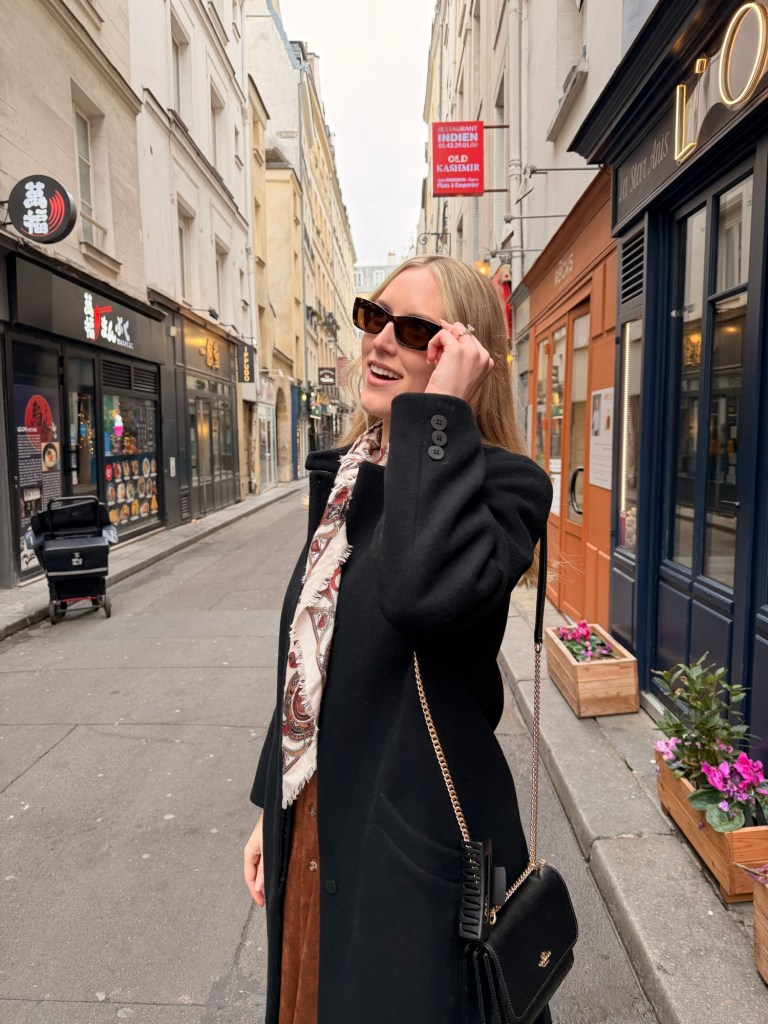
When it was time to head to our tour, I searched Bonjour for metro directions. I found a route that looked good and took us toward the Louvre, but it turned out to be a huge mistake. We definitely should have just walked the twenty minutes instead.
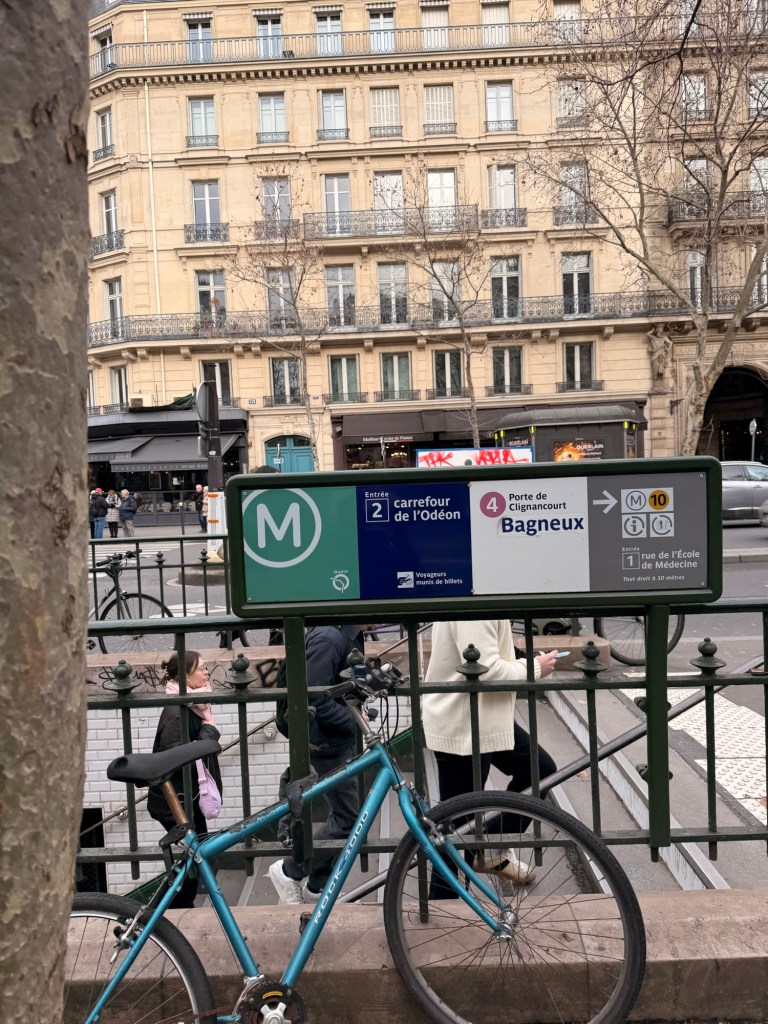
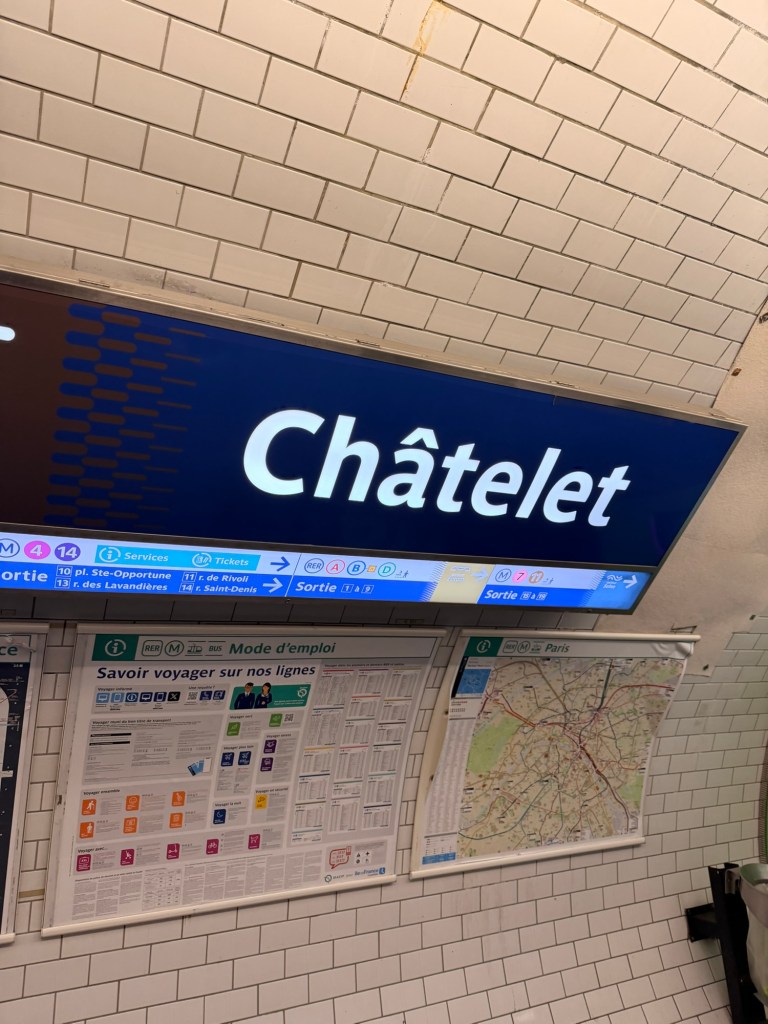
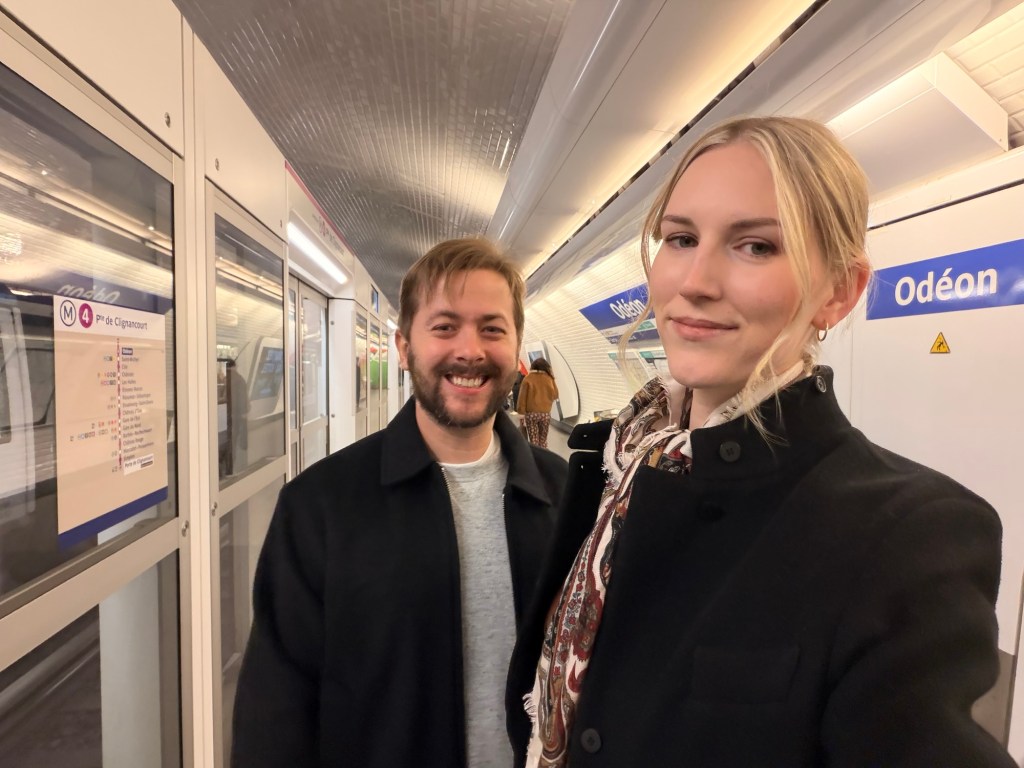
I was also debating whether to wear my walking shoes or my boots, and of course I chose the boots, which was another big mistake.
While on our first metro, we realized we were going to be late to the tour meeting point. And if you miss meeting the guide at the meeting spot, you miss the entire tour since you don’t have individual tickets and have to enter with the group.
Once we got off at the final metro stop, we were running. The stop let out across the courtyard from the Louvre, and the Louvre is massive, so we ended up running nearly half a mile to try to make it in time.
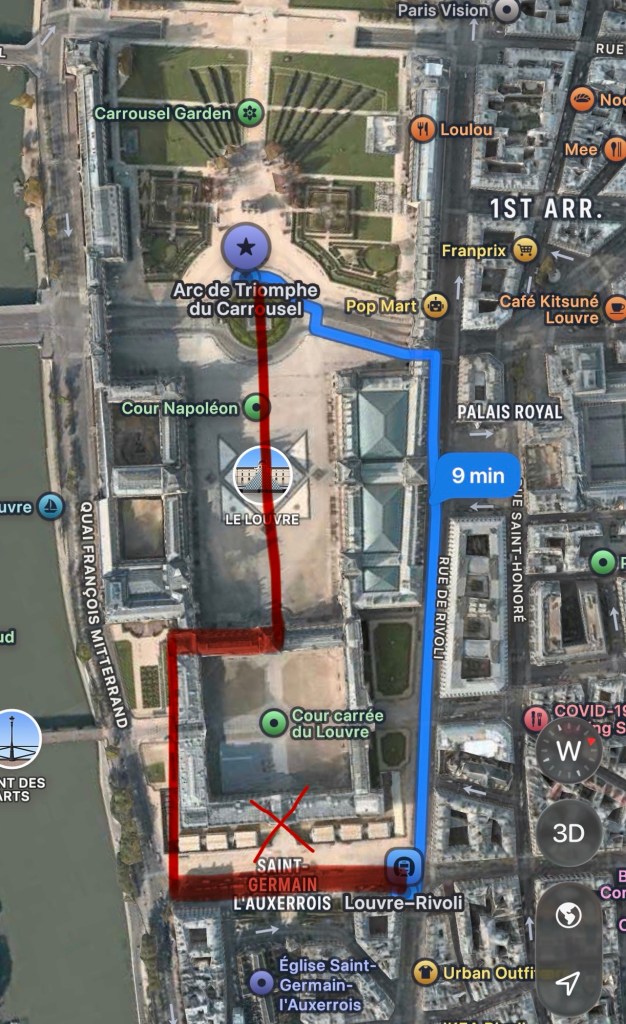
My feet were killing me, especially since I was running in 2” heeled boots!! We were both out of breath and sweaty, but somehow we made it to the meeting point just as the tour was starting. I still don’t know how we pulled it off, but we did.
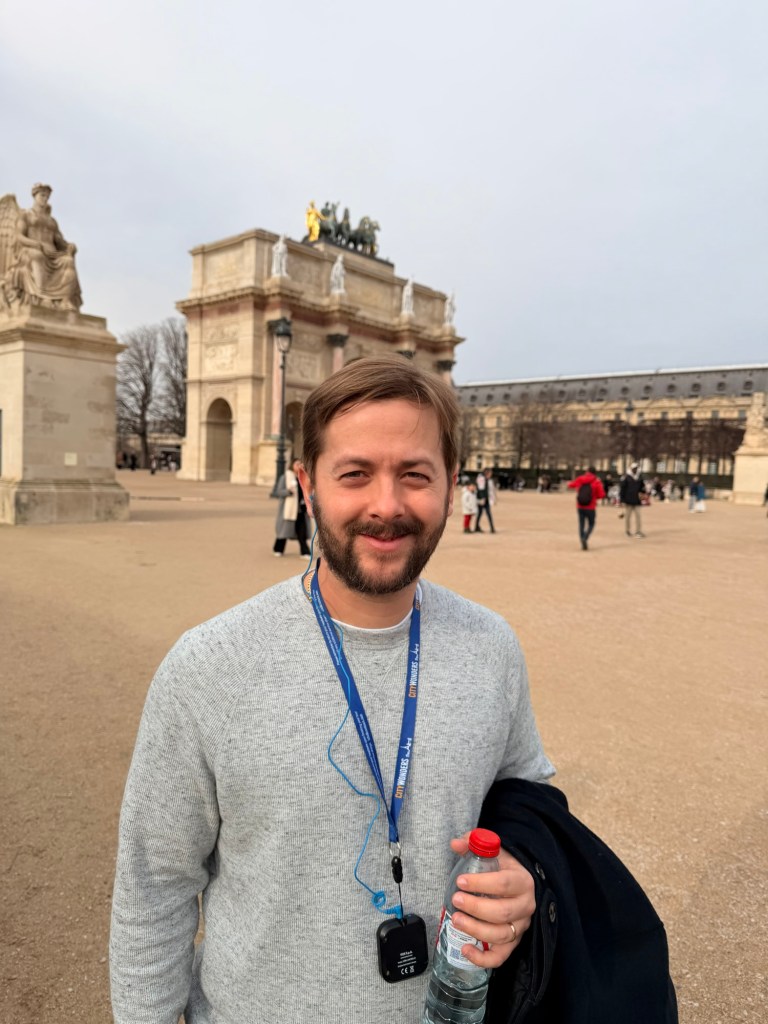
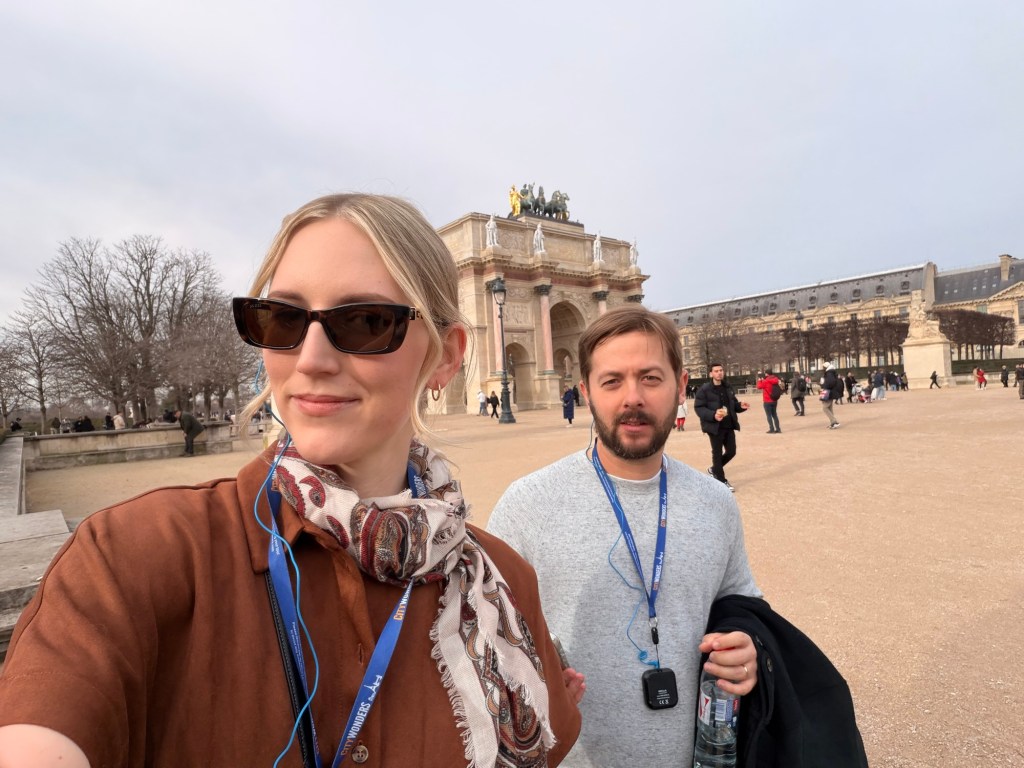
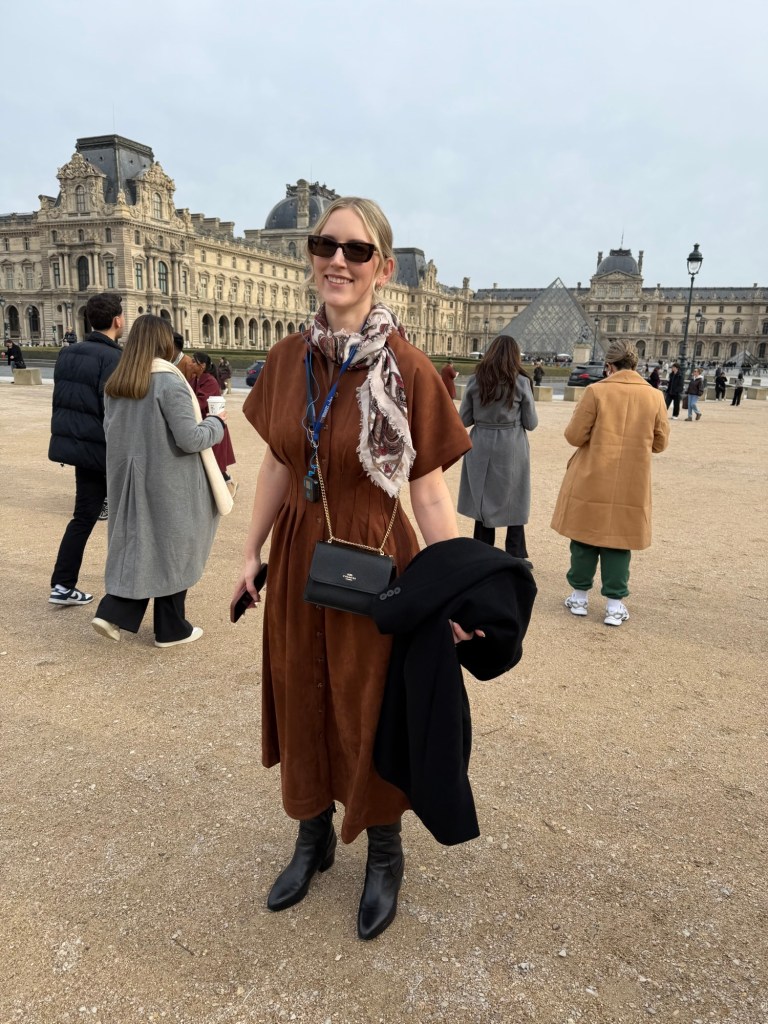
Our guide started the tour by putting the Louvre into perspective in the most overwhelming way possible. The museum contains about 8.5 miles of artwork, which immediately explains why it’s impossible to see everything in one visit.
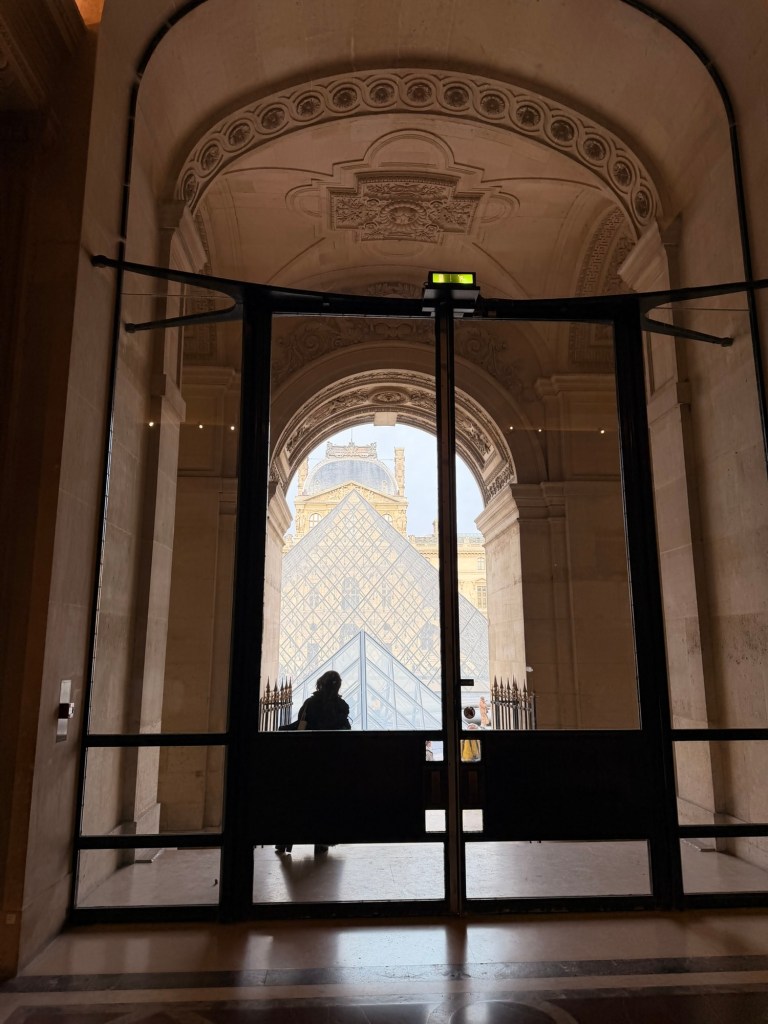
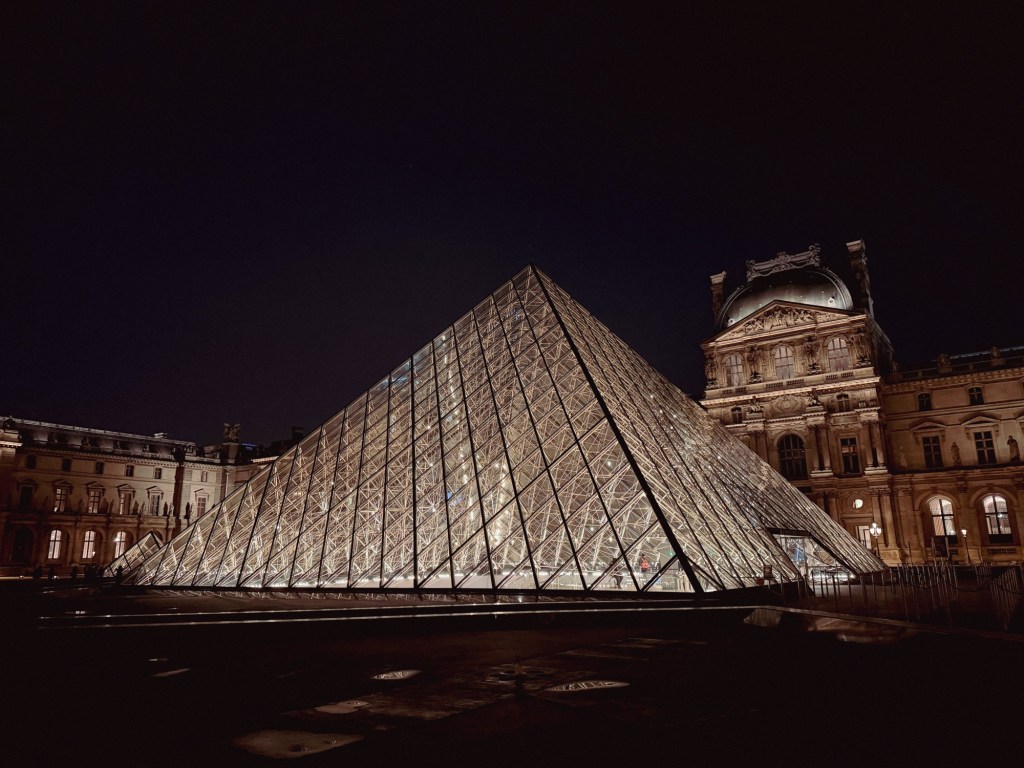
The iconic glass pyramid outside was designed by I. M. Pei and completed in 1989, a surprisingly modern addition to such a historic place.
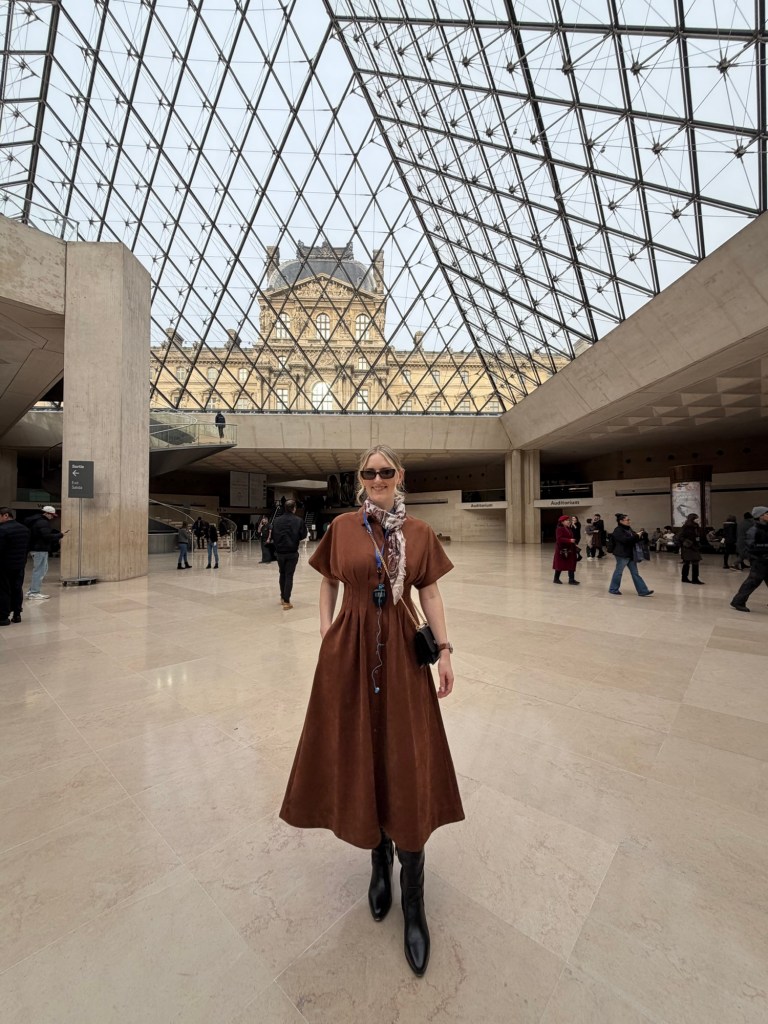
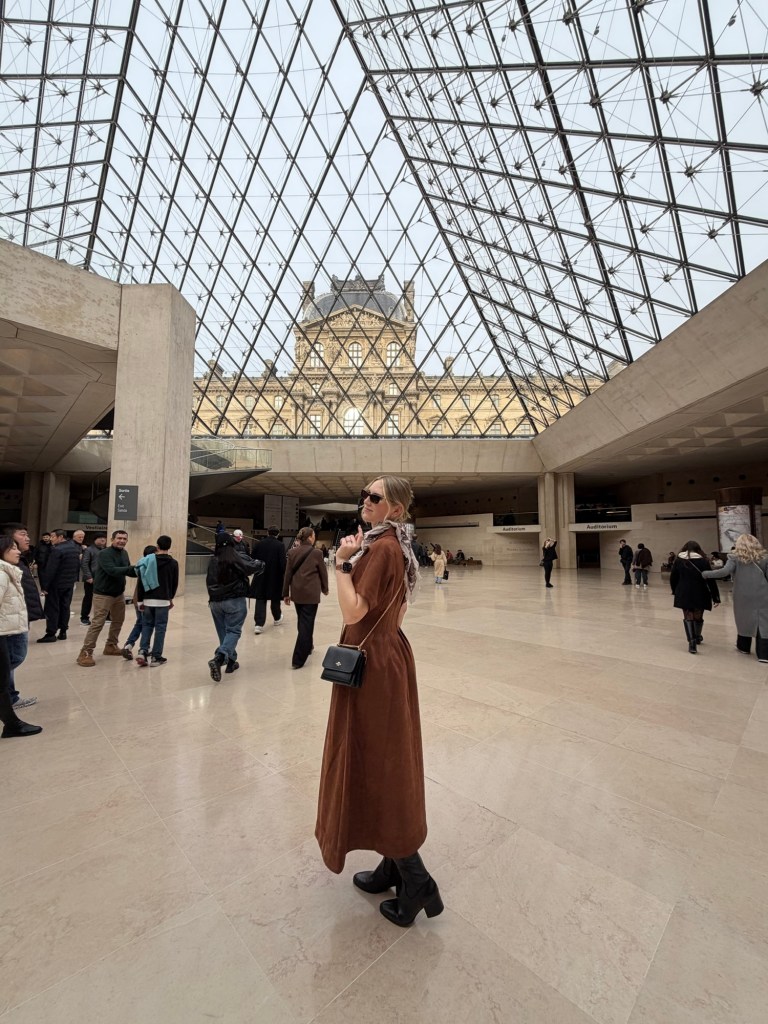
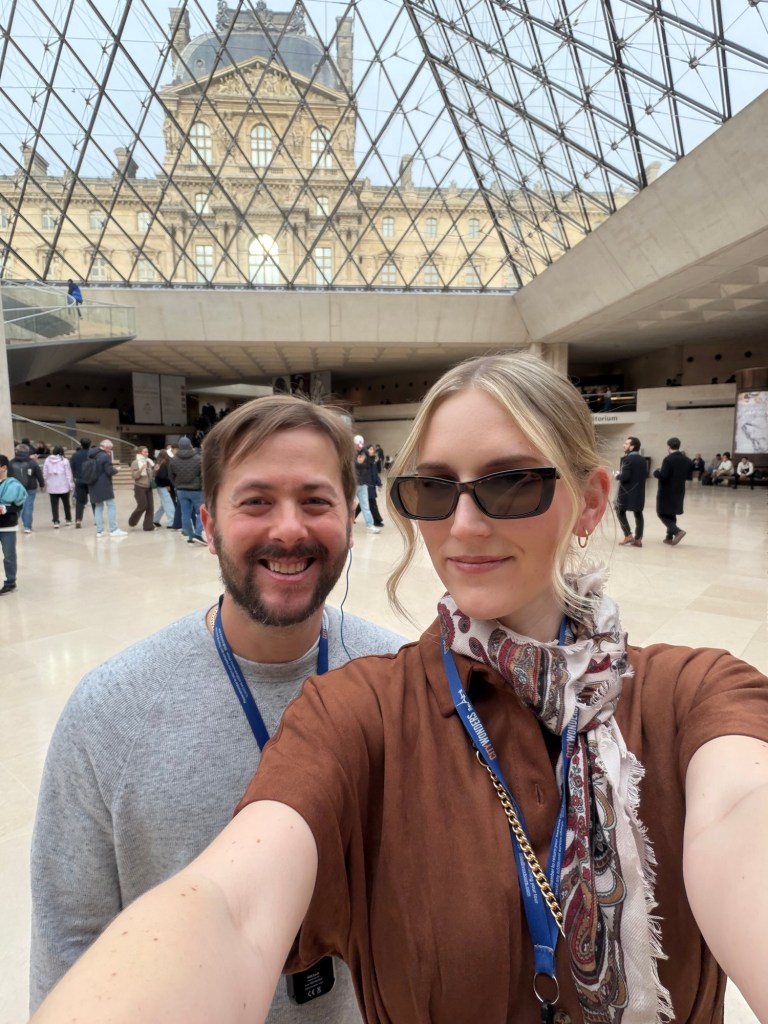
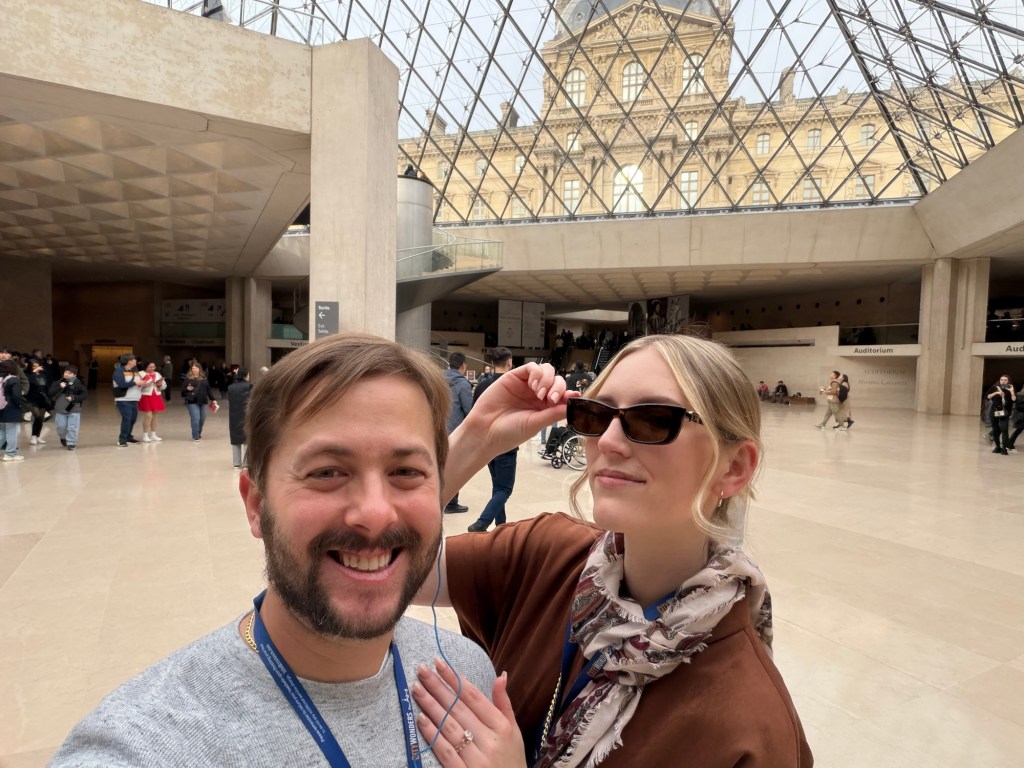
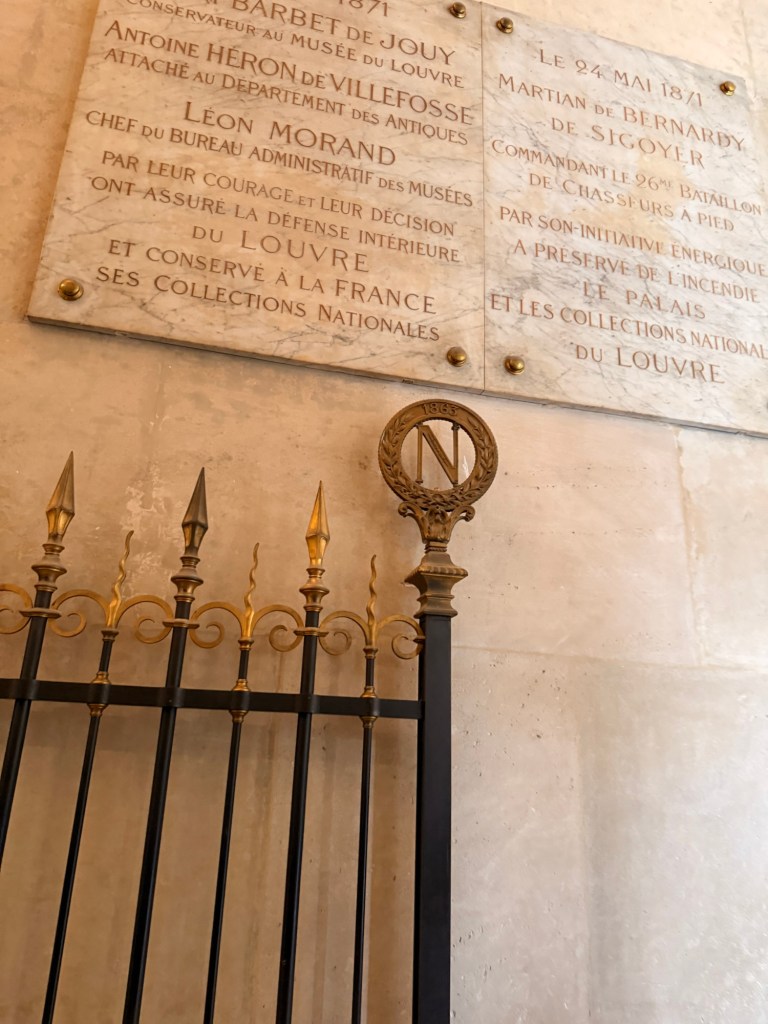
Before becoming a museum, the Louvre served many purposes. It was once a royal residence, and Napoleon himself lived here. He even learned how to ride horses within its walls.
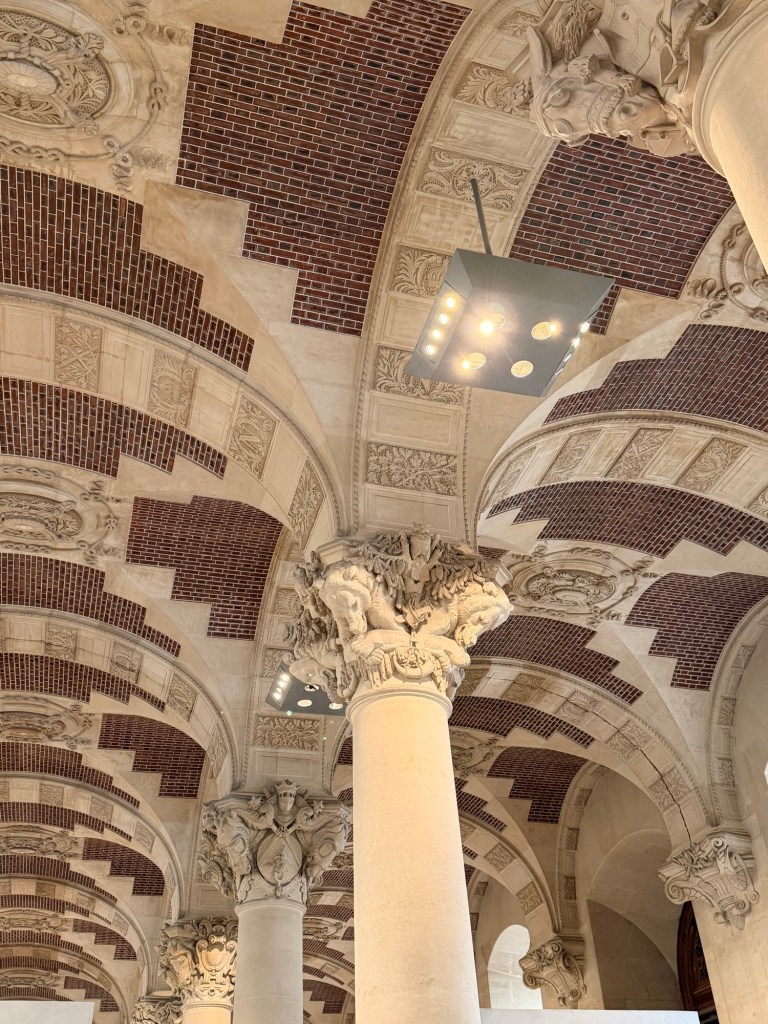
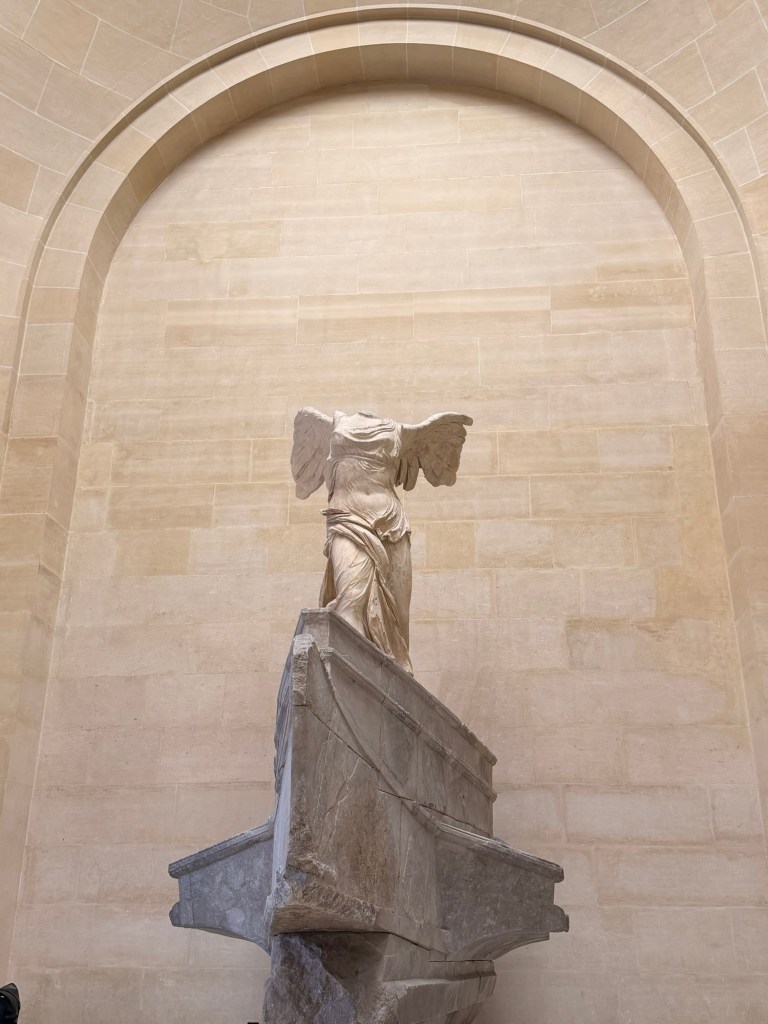
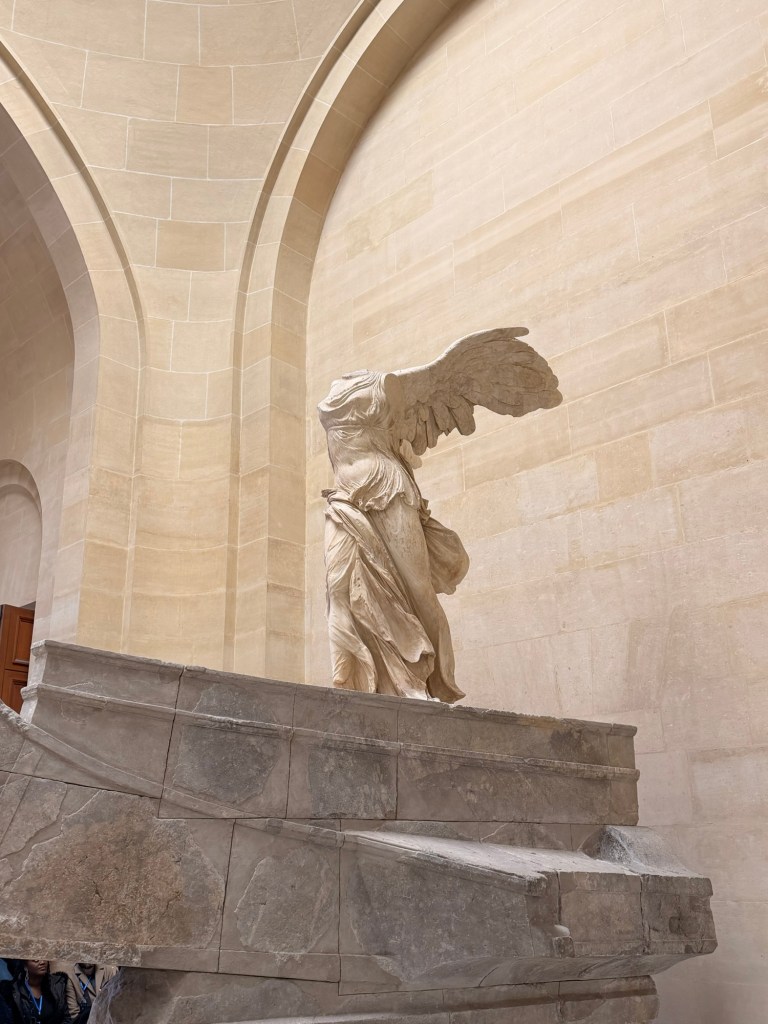
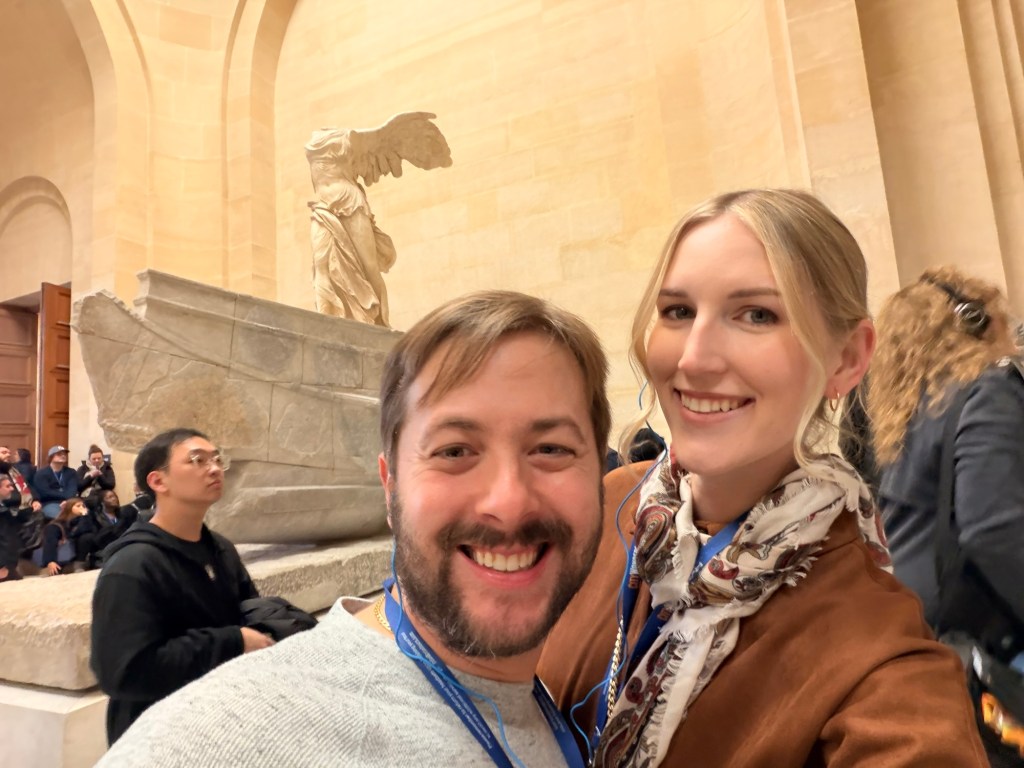
We began on the Imperial Staircase, where we saw one of the Louvre’s first major highlights: the Winged Victory of Samothrace, also known as Nike. This sculpture dates back to the 2nd century BC and was discovered by a French archaeologist. It represents strength, power, and movement. The founder of Nike was so inspired by this statue that he named his company after it, and even the swoosh logo is said to be inspired by the curve of the wings.
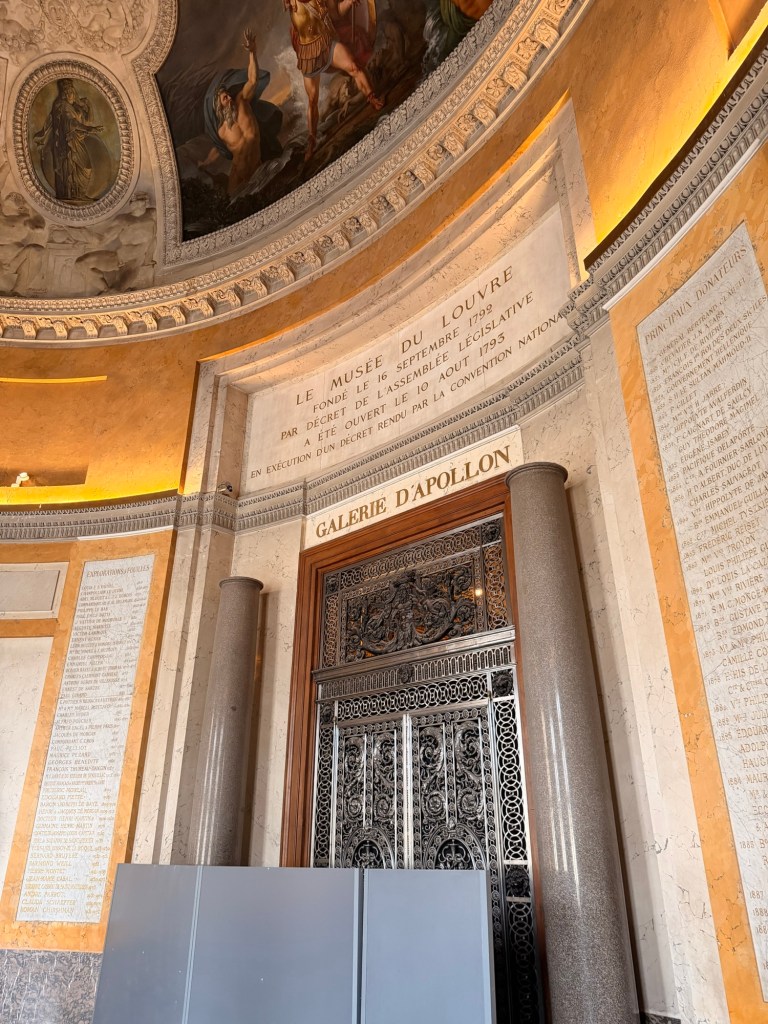
Nearby, we passed the gallery connected to one of the most famous art heists in history. The Mona Lisa was stolen in just seven minutes, and only one crown from the theft was ever recovered.
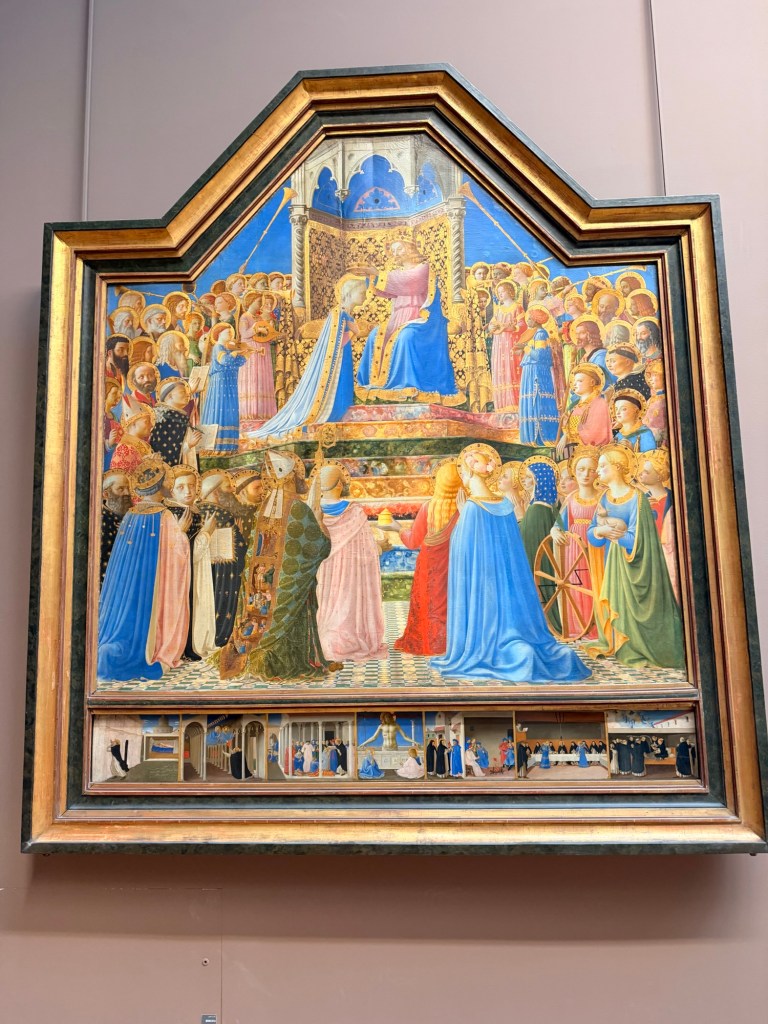
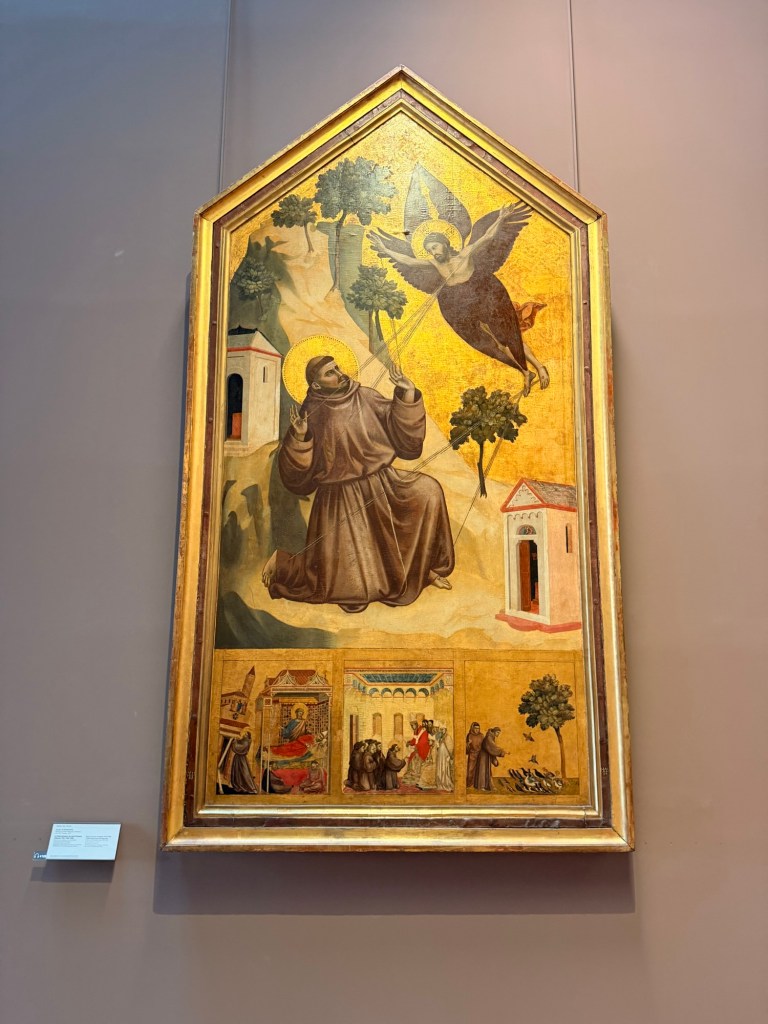
We then entered the Italian wing, starting with early, primitive works. One of the first paintings had scenes along the bottom meant to help viewers understand the story without words. You could clearly see the lack of perspective, something we also noticed throughout the early Italian gallery.
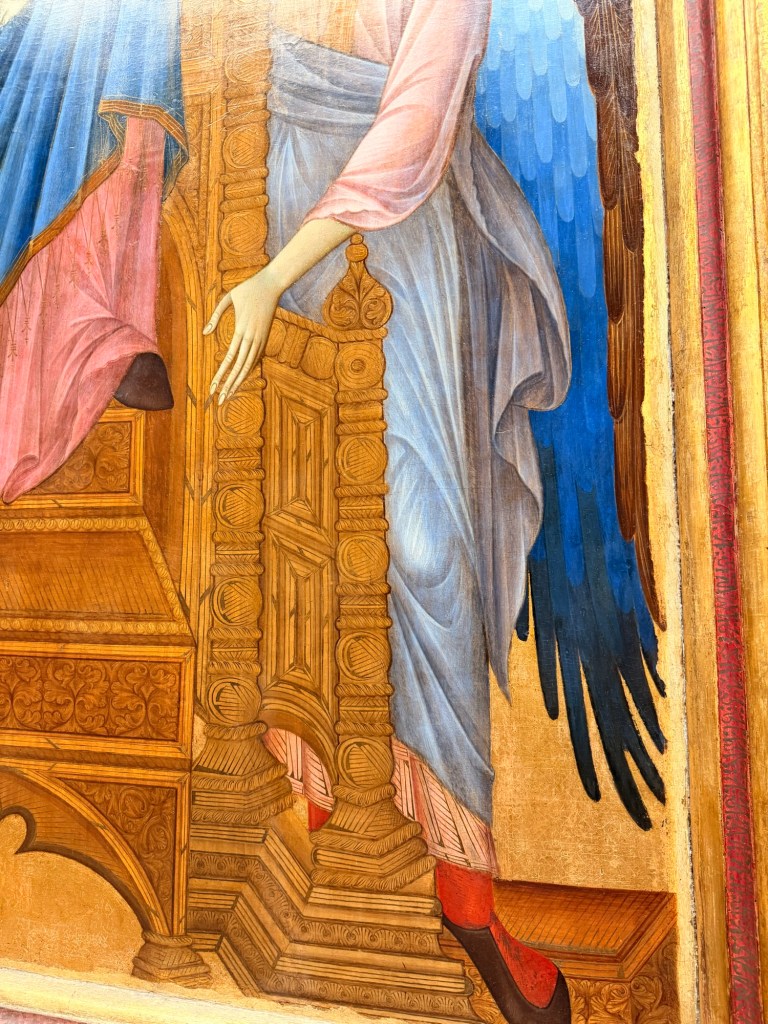
From there, we walked into the spine of the Louvre, one of the longest corridors in the museum. This led us to Leonardo da Vinci’s work and, eventually, the Mona Lisa, which he began painting in 1503. Leonardo was experimenting with a revolutionary new technique, layering pigments to create soft transitions between light and shadow. This contrast, known as chiaroscuro, is part of what makes the painting so compelling. The Mona Lisa is considered his greatest work, though it is technically unfinished.
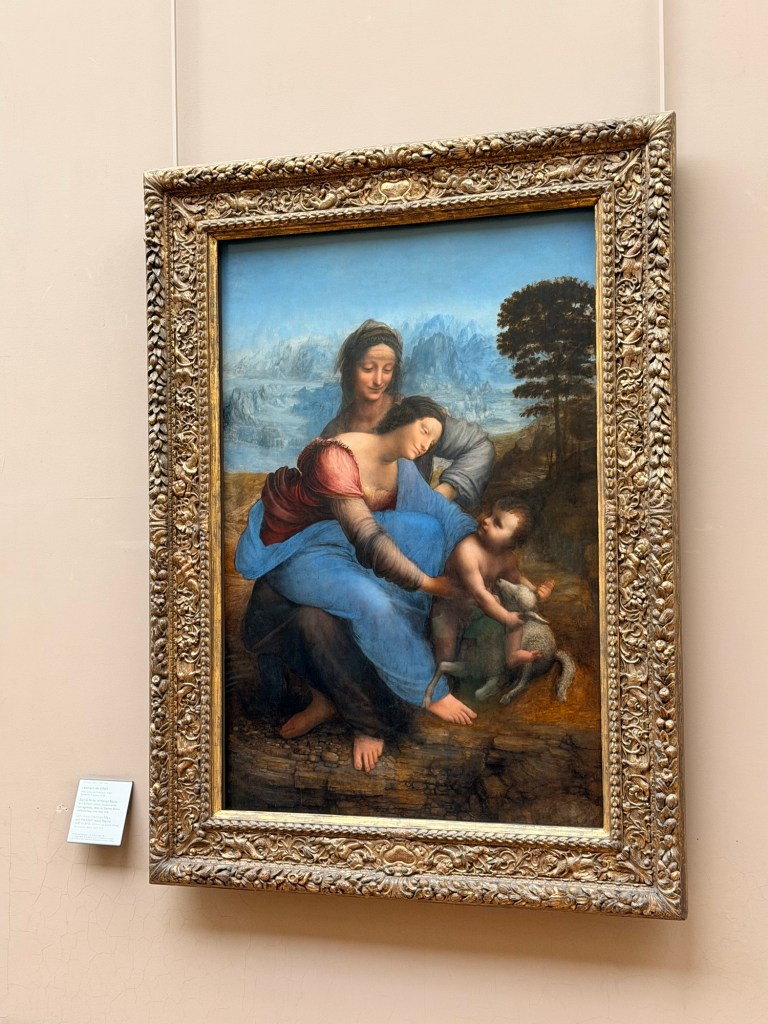
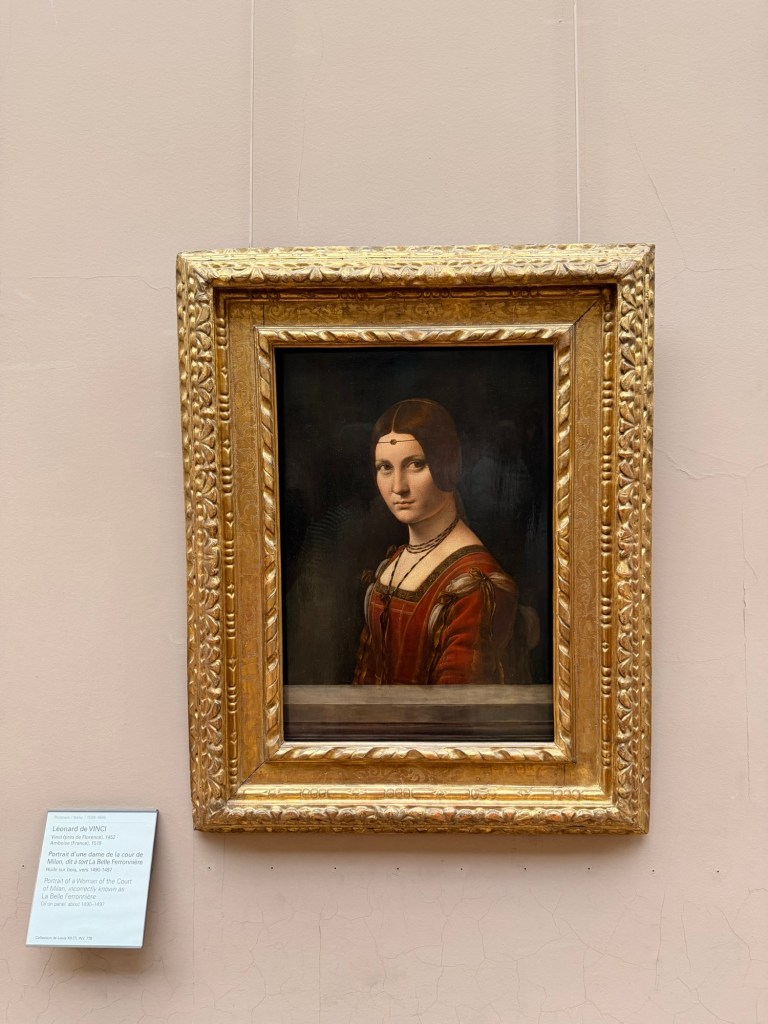
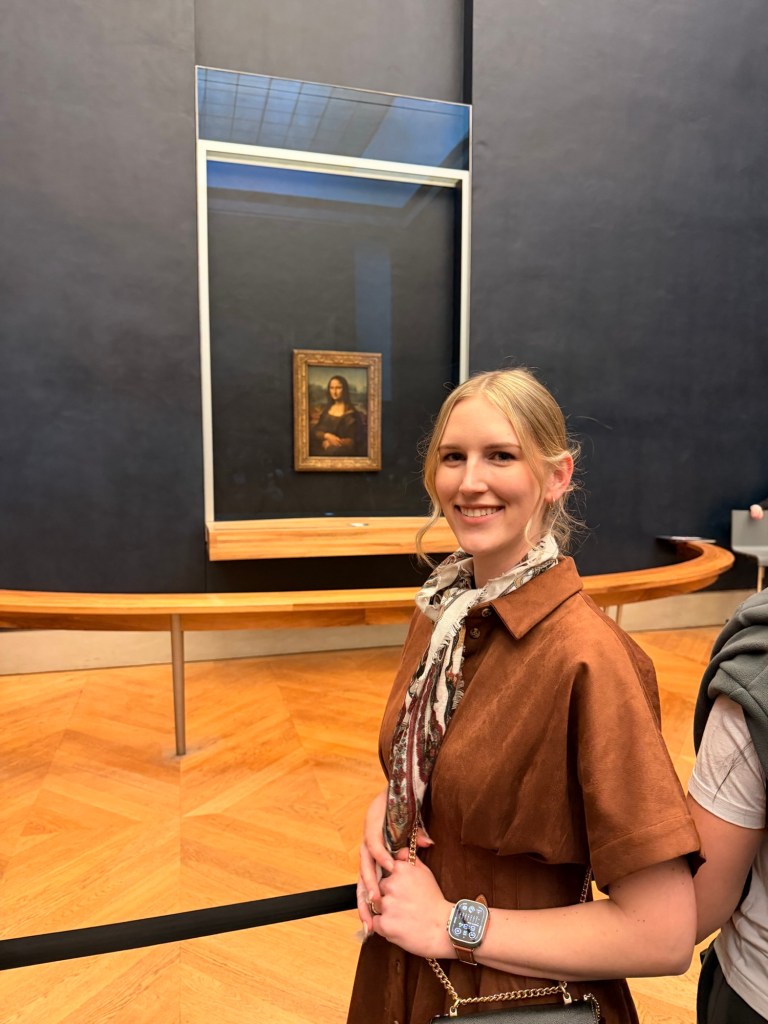
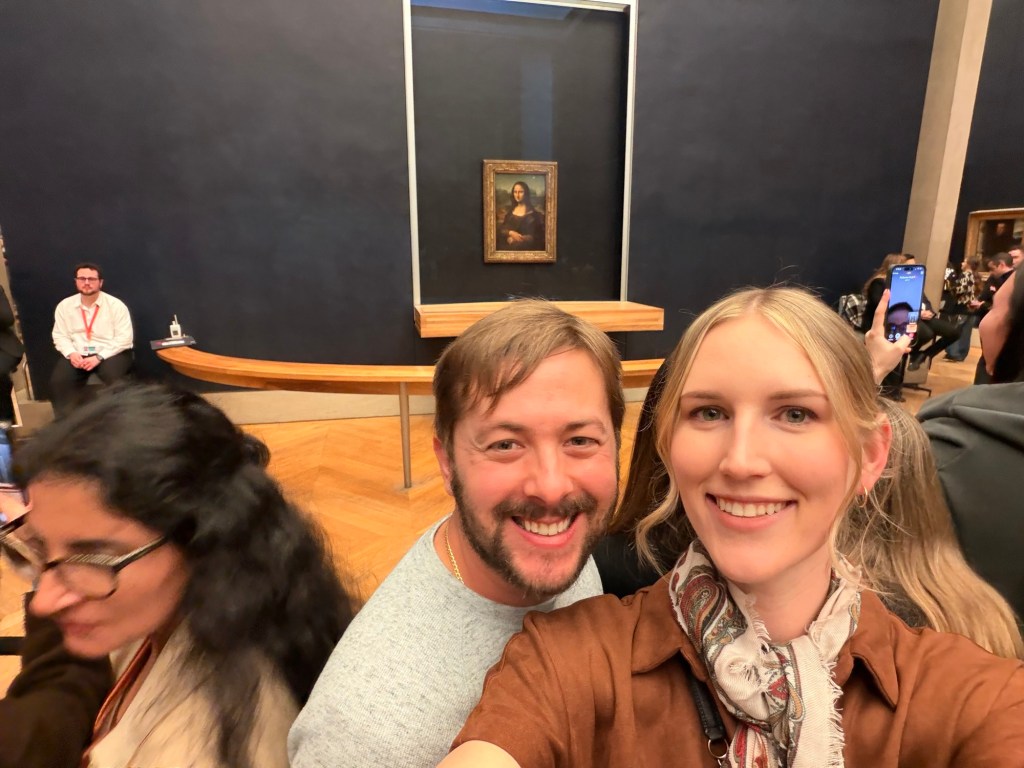
Security around the Mona Lisa has become extremely strict since the jewel heist. Guides aren’t even allowed to talk in the room. When we went in, the crowd was massive, and it was difficult to get close. It’s hard to believe that the Mona Lisa wasn’t always famous. When the Louvre first opened in the 1790s, people could simply walk past it without much attention.
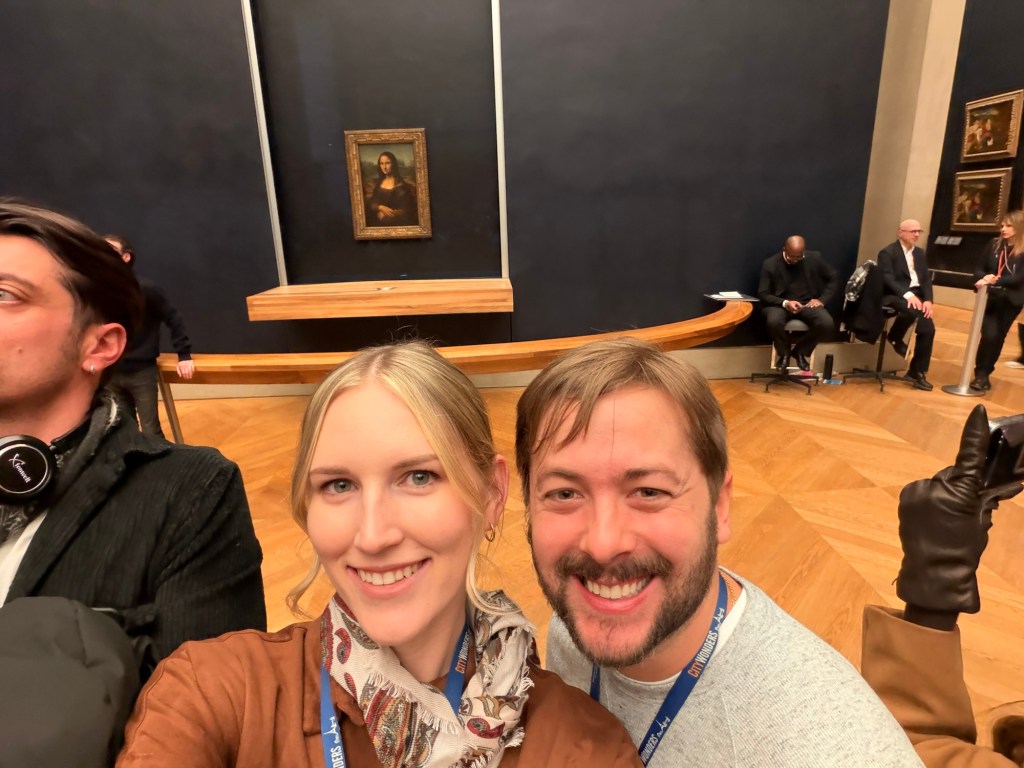
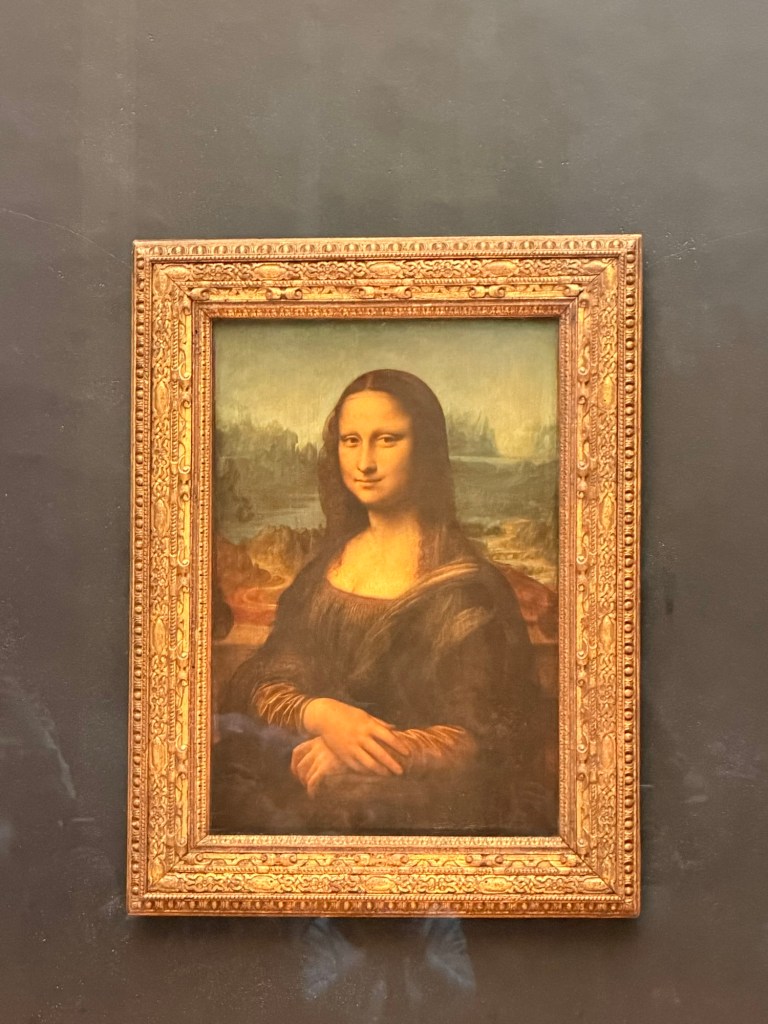
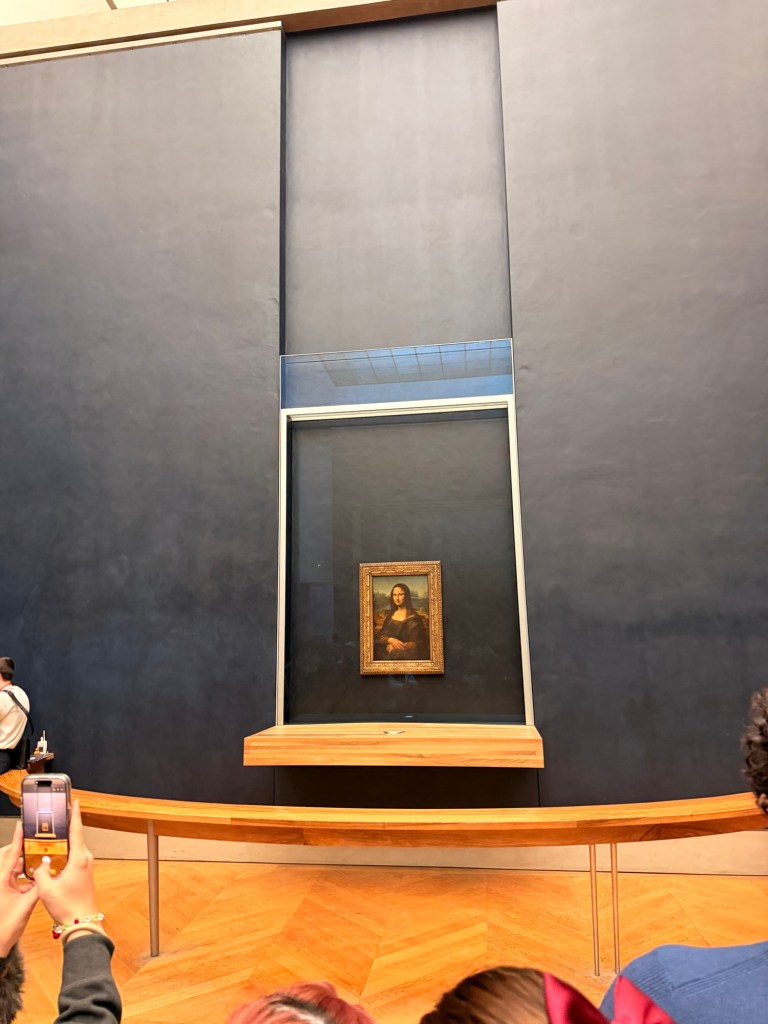
Everything changed in 1911, when a former employee stole the painting. After it was recovered two years later, it became the most talked-about artwork in the world. By 1913, people were visiting the Louvre specifically to see what everyone else wanted to see.
An interesting painting we saw nearby is displayed on a pedestal instead of hanging on the wall. It tells a story on both sides, so you have to walk around it to fully understand it. Both sides depict scenes from David and Goliath, showing the same moment from different perspectives.
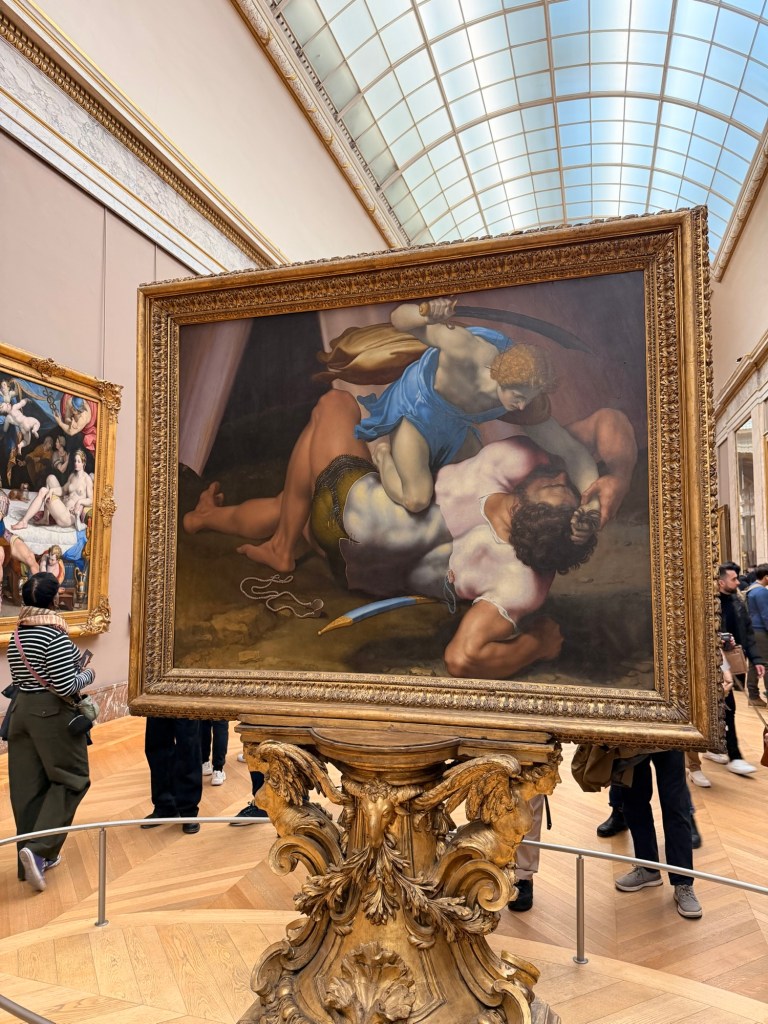
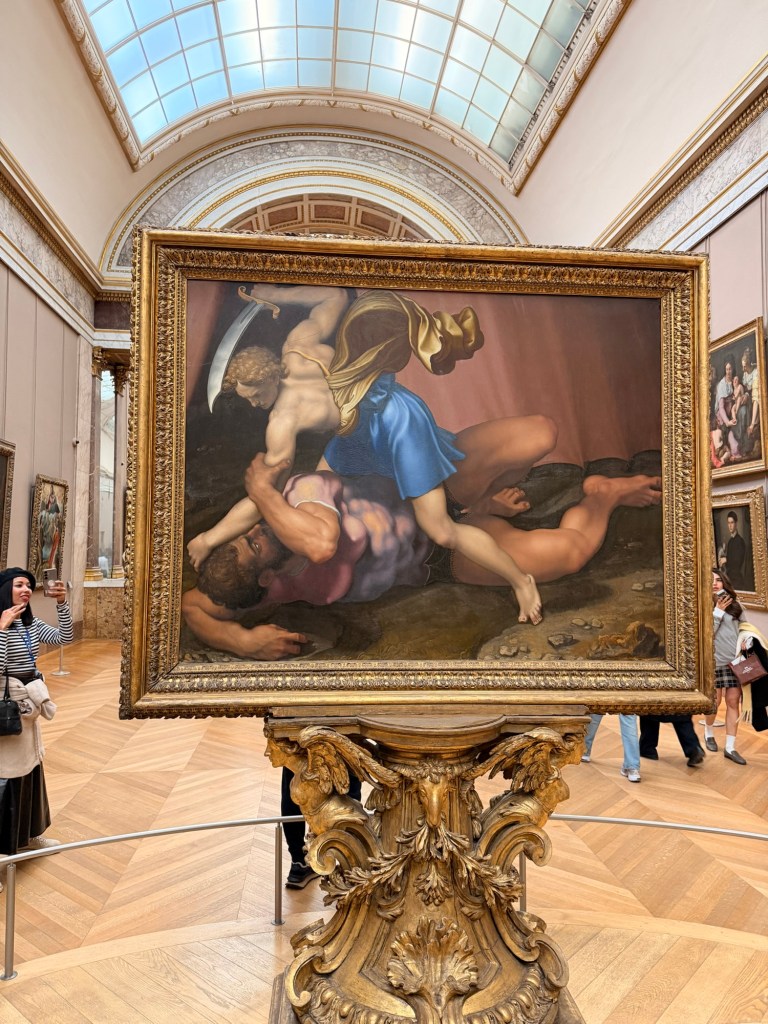
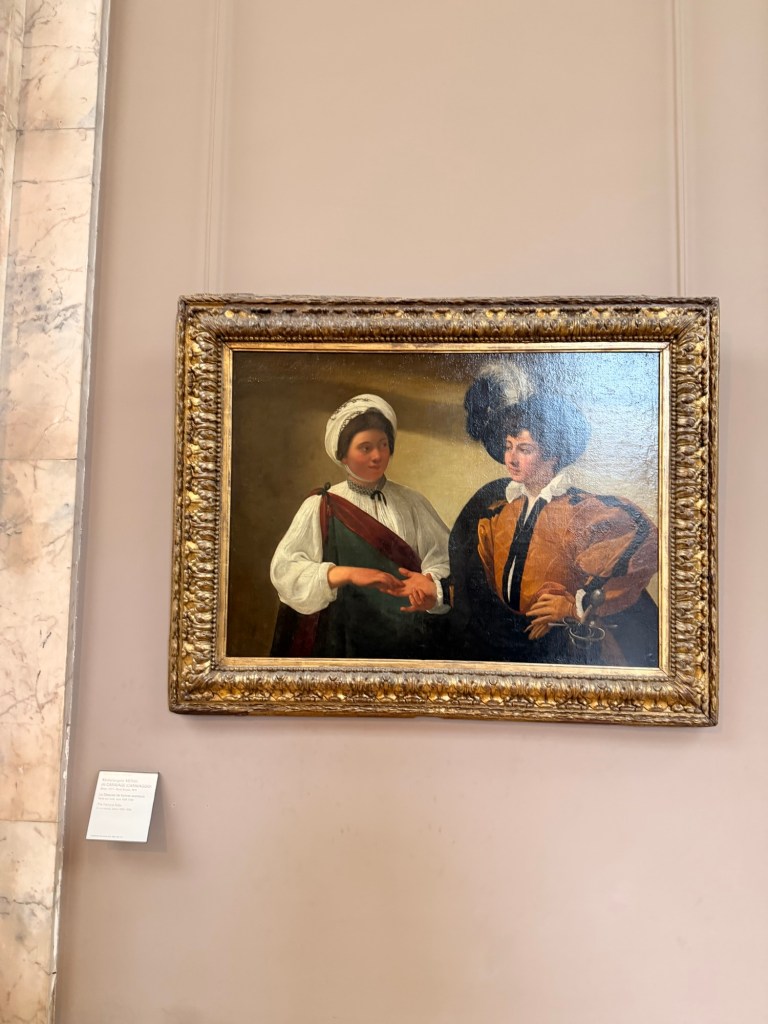
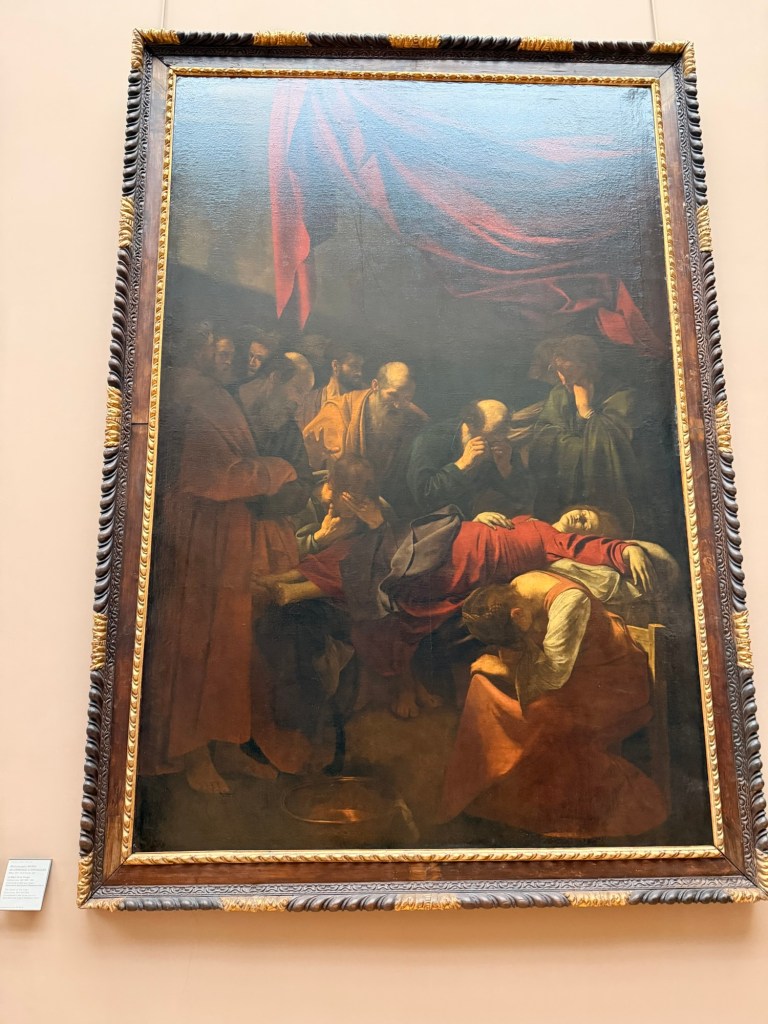
We also saw several works by Caravaggio, which felt especially meaningful after seeing so much of his work in Rome. He was known for dramatic use of dark colors and intense contrast between light and shadow, a technique called chiaroscuro.
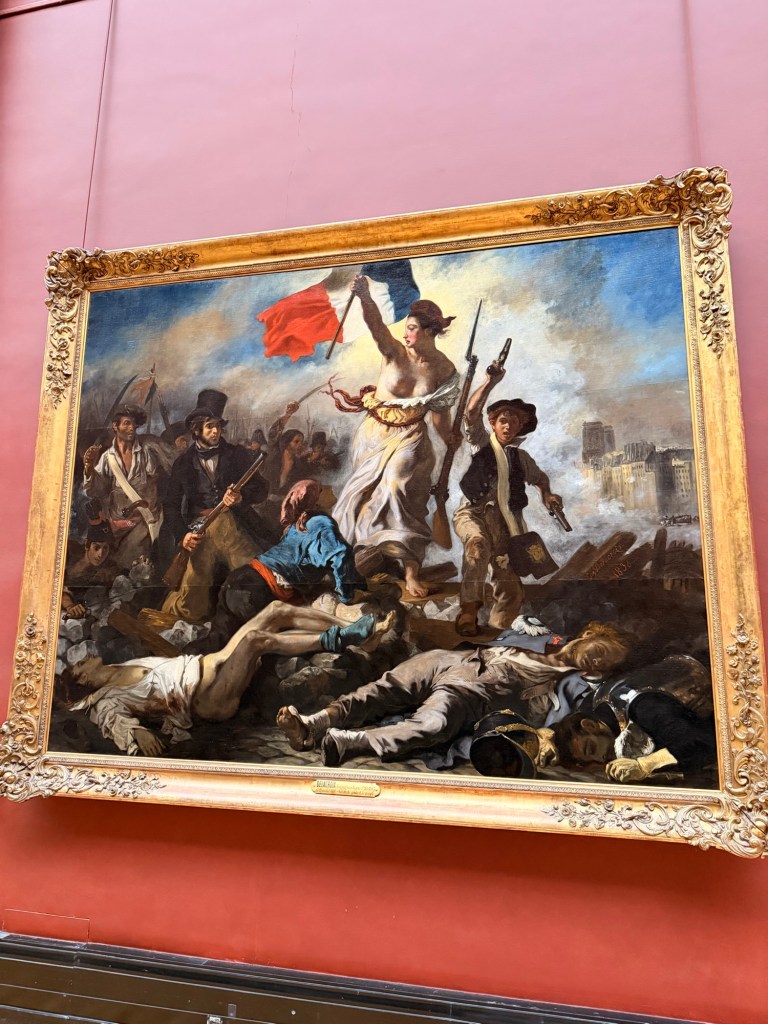
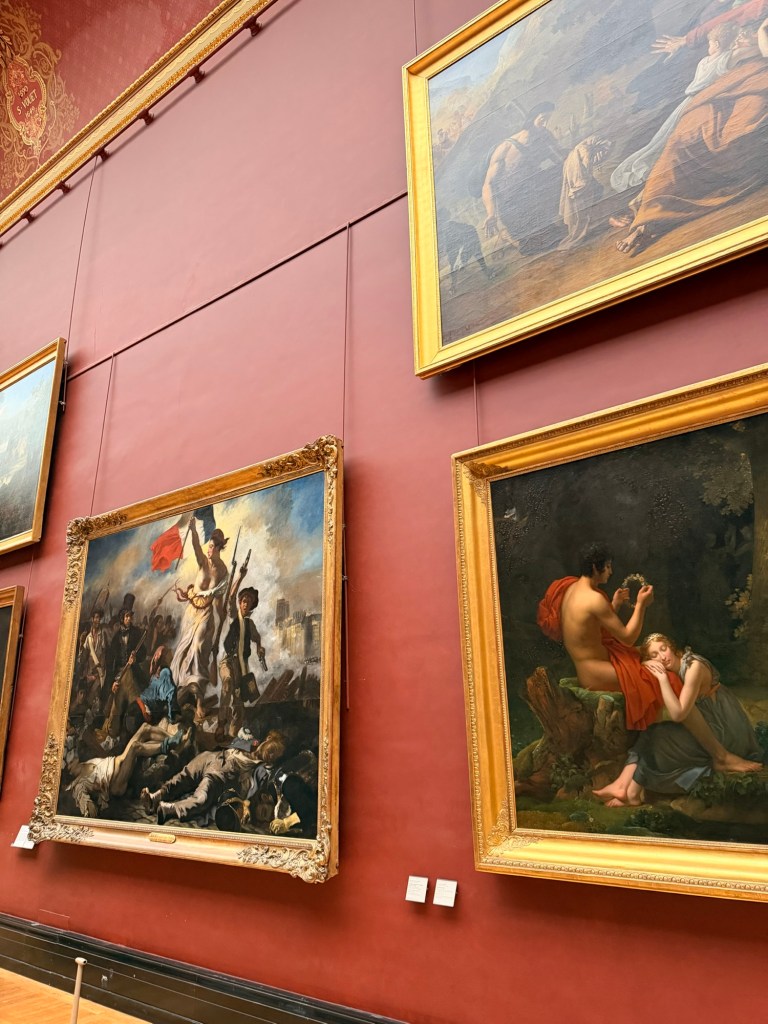
Turning toward the French department, we entered the period of revolution. One painting shows Paris in turmoil, with the towers of Notre Dame visible in the background. This work later inspired Victor Hugo, the author of Les Misérables and The Hunchback of Notre Dame. The painting is strikingly feminist for its time, showing a woman embodying liberty and taking power herself. About fifty years later, this image also inspired the Statue of Liberty.
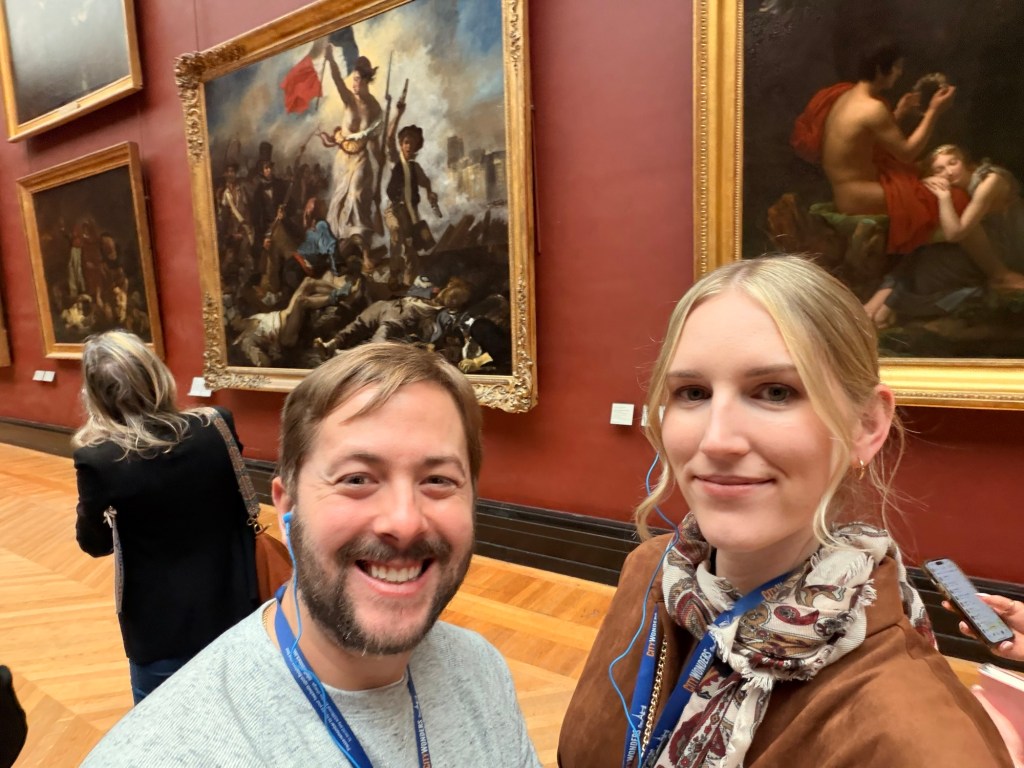
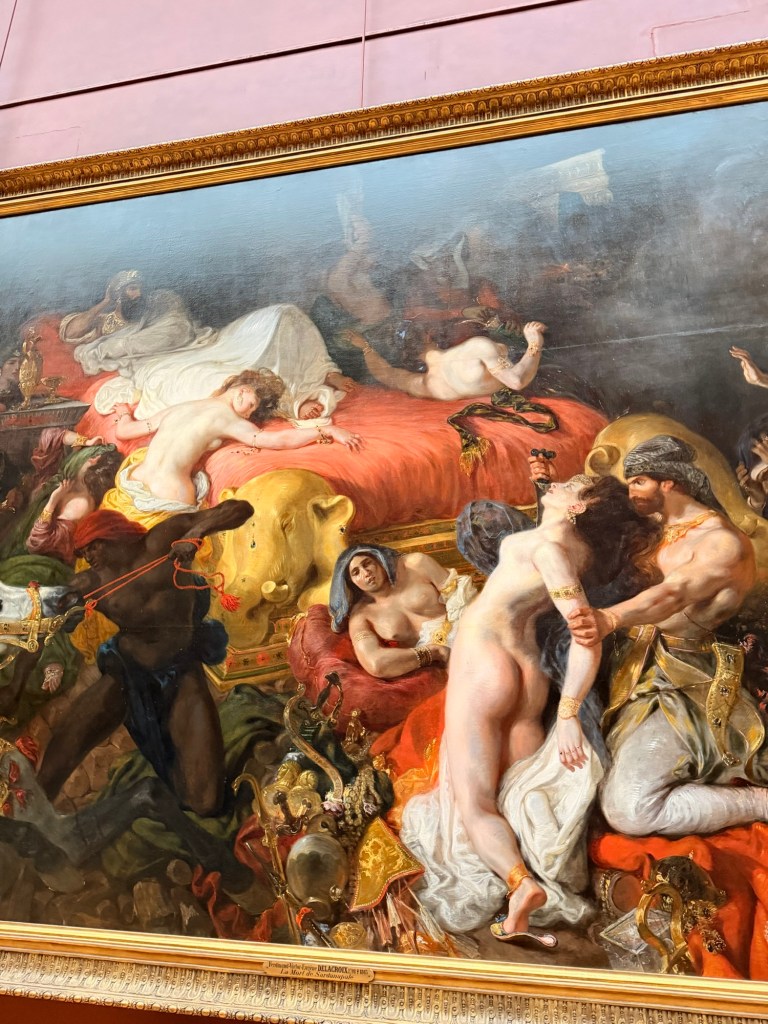
Across from it hung The Death of Sardanapalus, a dramatic painting showing a ruler who chose to destroy everything he loved rather than surrender.
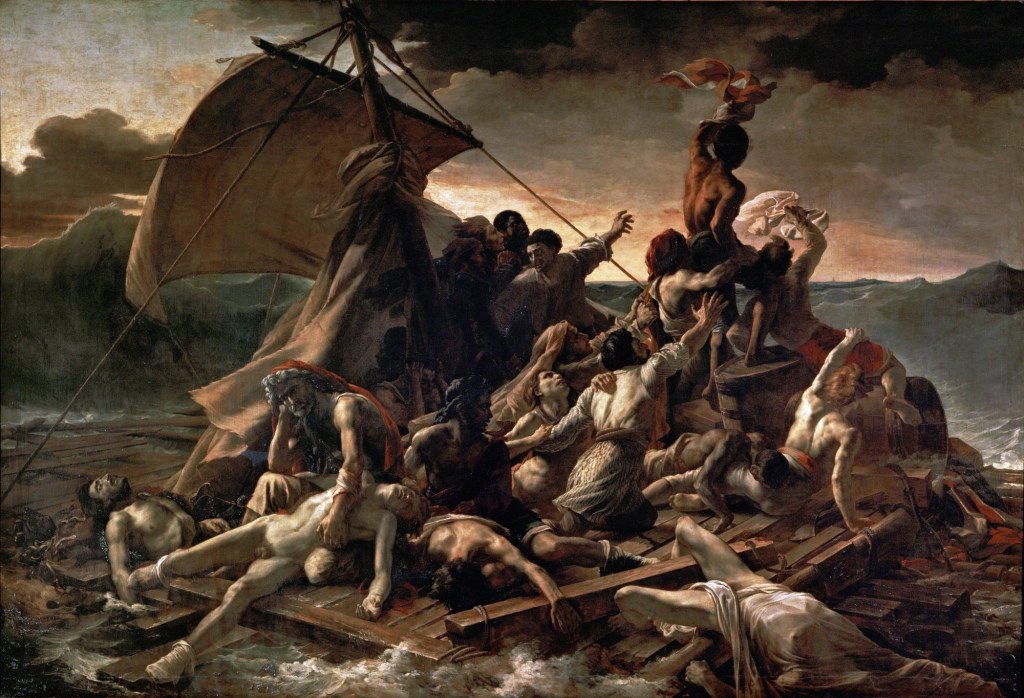
The 19th century marked a turning point in art. Women and people of color began to appear more prominently. Géricault painted a Black man as the hero of his composition in 1816, something rarely seen at the time. He was also a close friend of Delacroix.
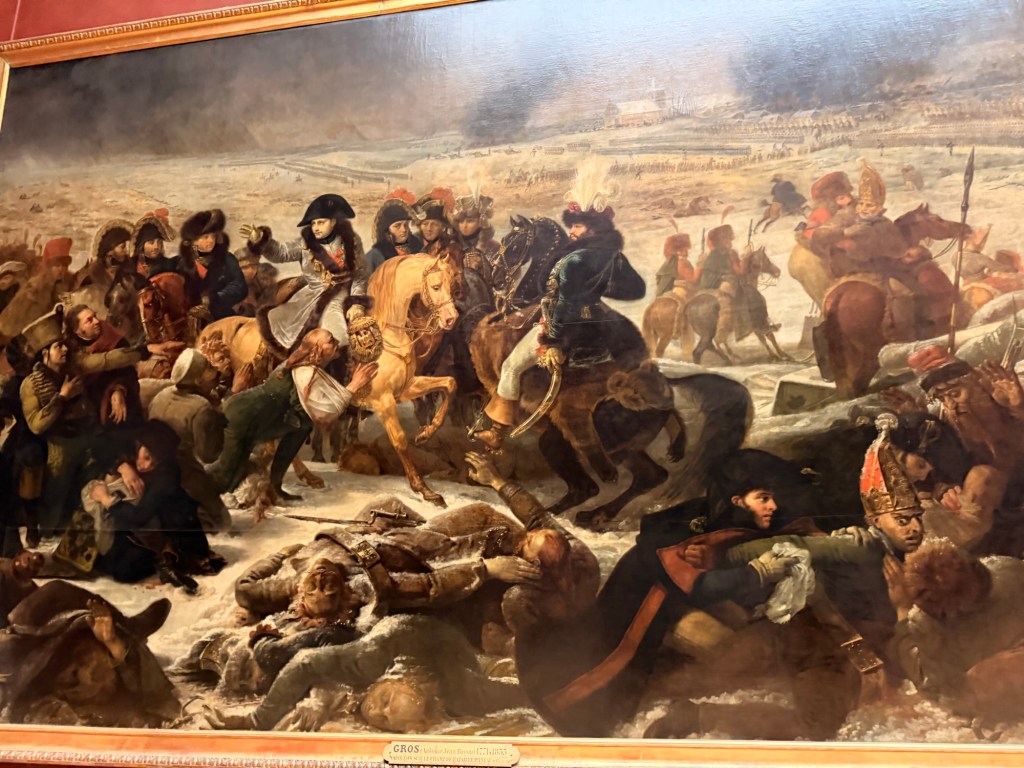
We then saw a clear example of propaganda art. Napoleon is shown winning a battle, because he is never depicted losing one, in France at least.
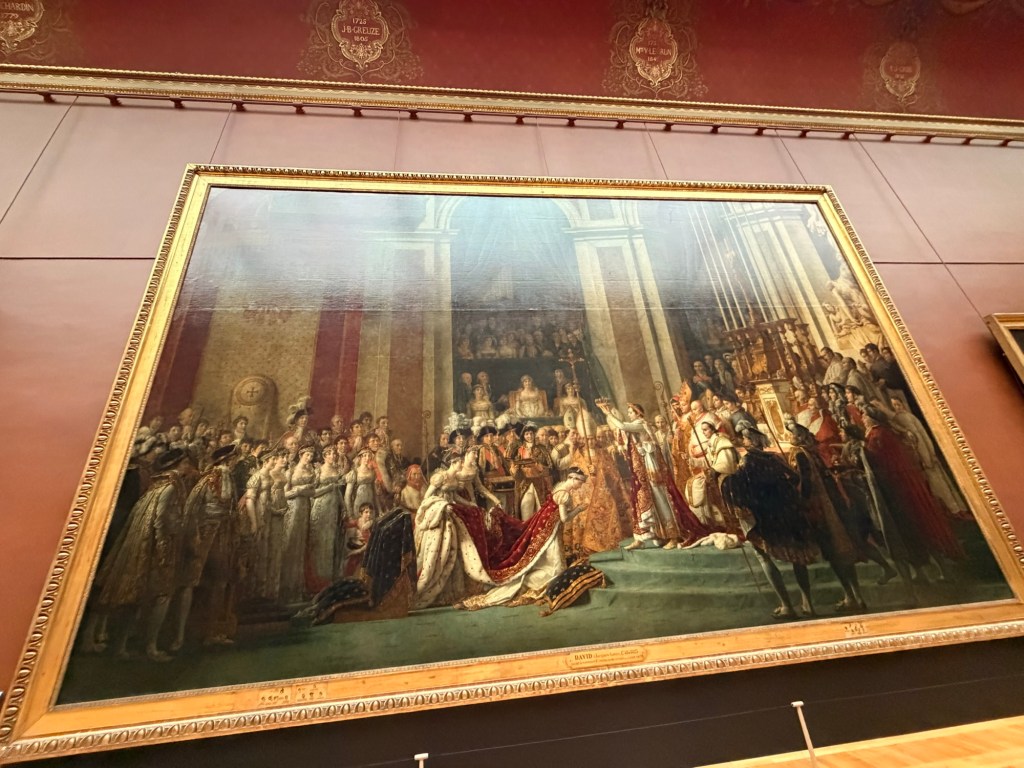
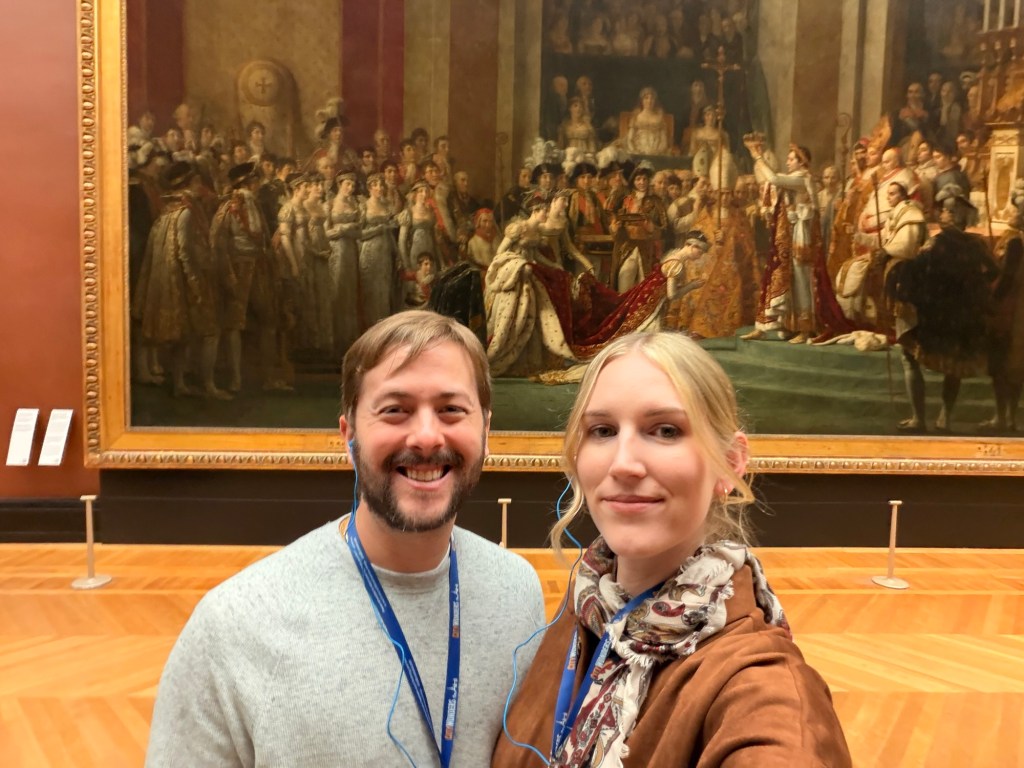
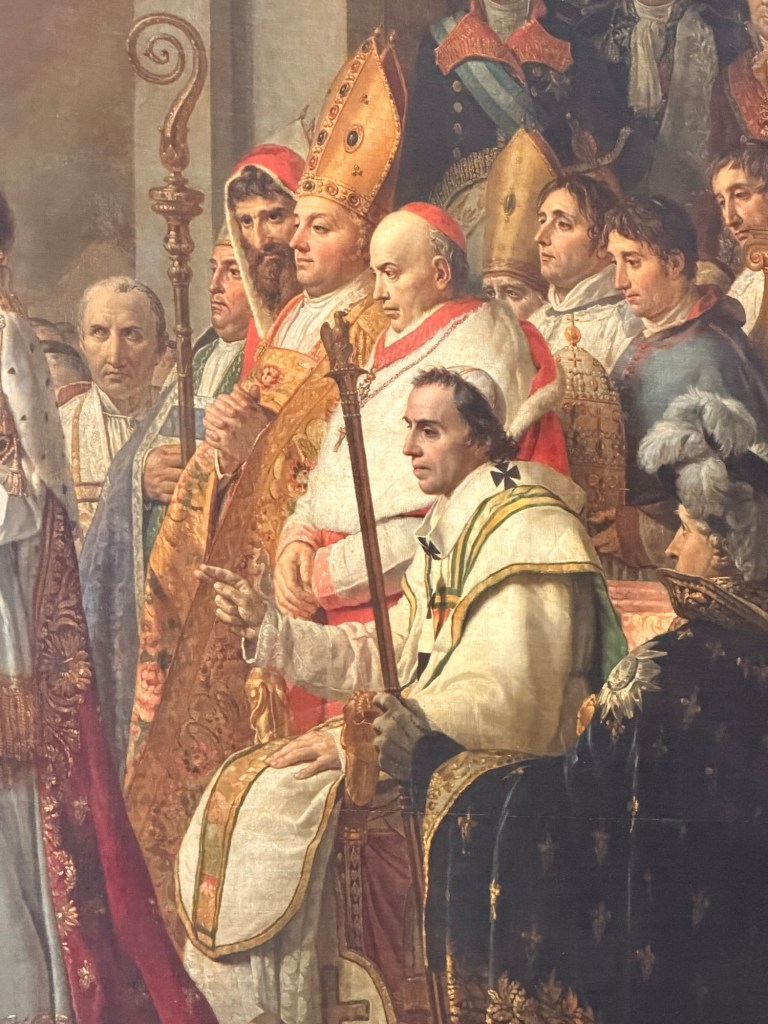
Nearby hung one of the largest paintings in the Louvre, The Coronation of Napoleon by Jacques-Louis David. It shows Napoleon crowning his second wife. A nearly identical version hangs in Versailles, but with one key difference. David originally painted Napoleon’s sister Pauline in pink to highlight her, but Napoleon refused to allow it. Because of this, David had to create a second version. The pope, who was unhappy about attending the coronation at all, is shown seated lower than Napoleon, reinforcing Napoleon’s message that he stood above the Church.
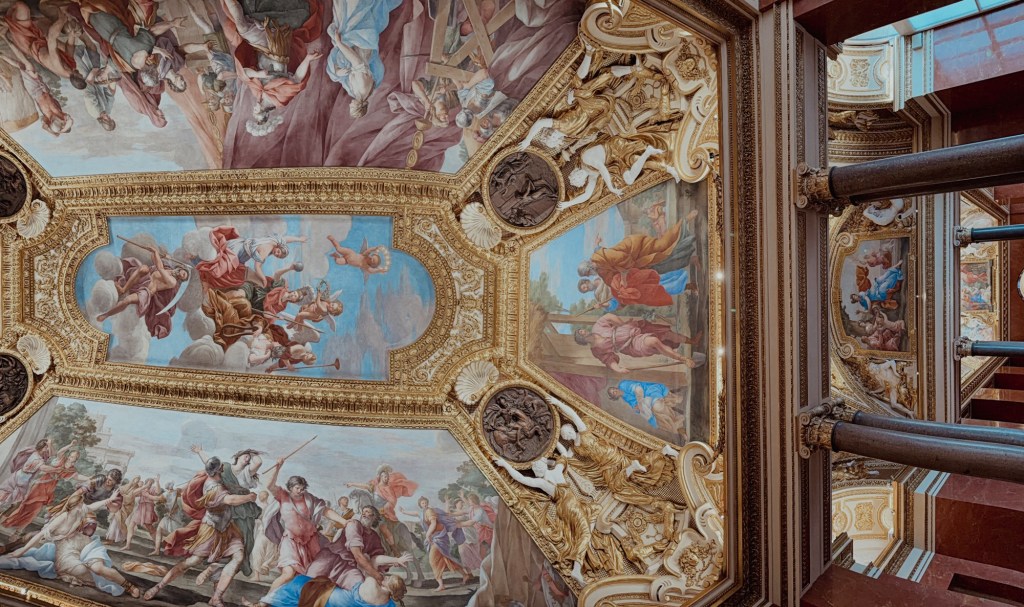
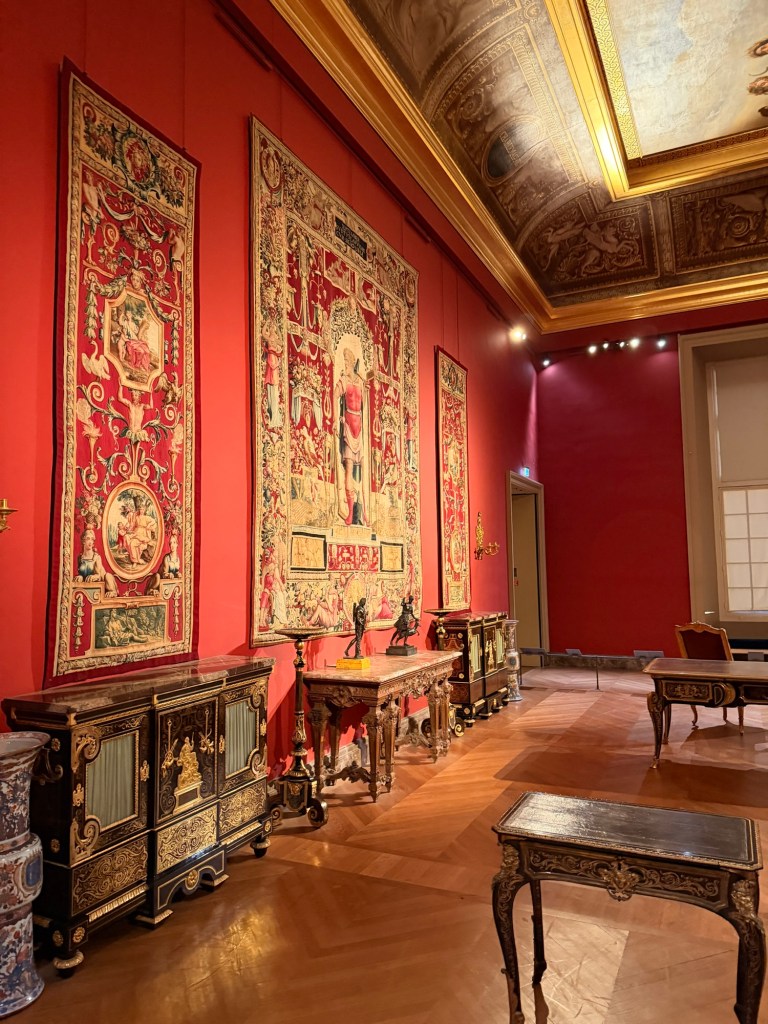
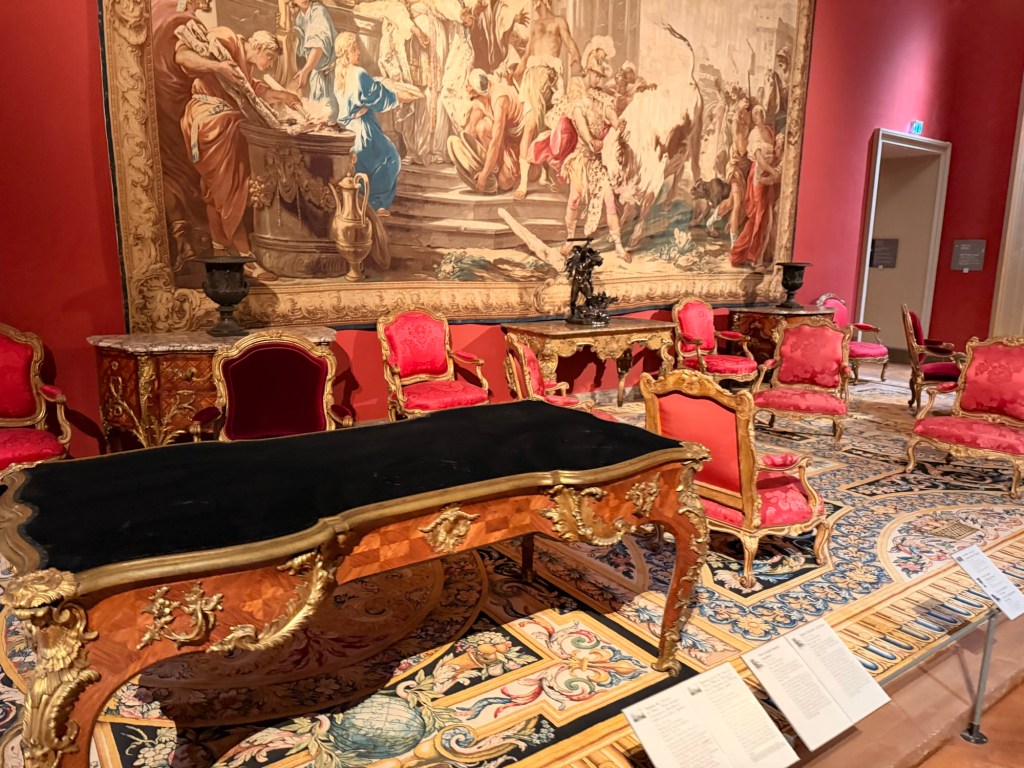
We later visited the apartments of Anne of Austria, the mother of Louis XIV. The ceilings are decorated with real gold, a detail that makes it easy to understand why so many revolutions followed, when people were starving while the monarchy lived like this.
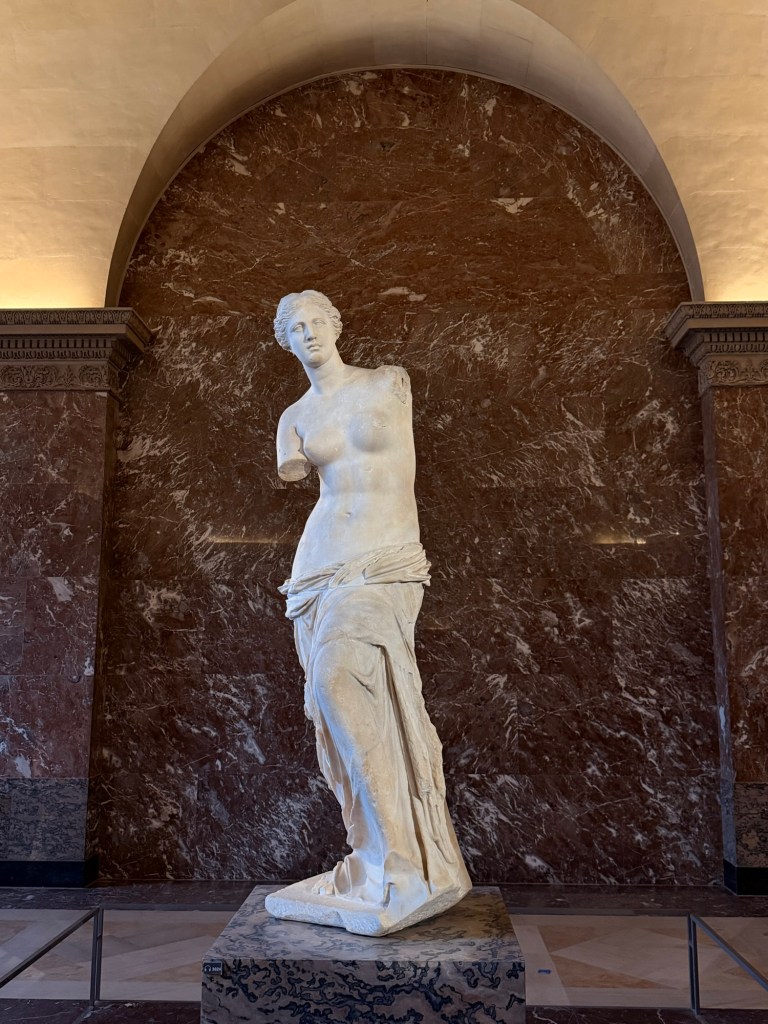
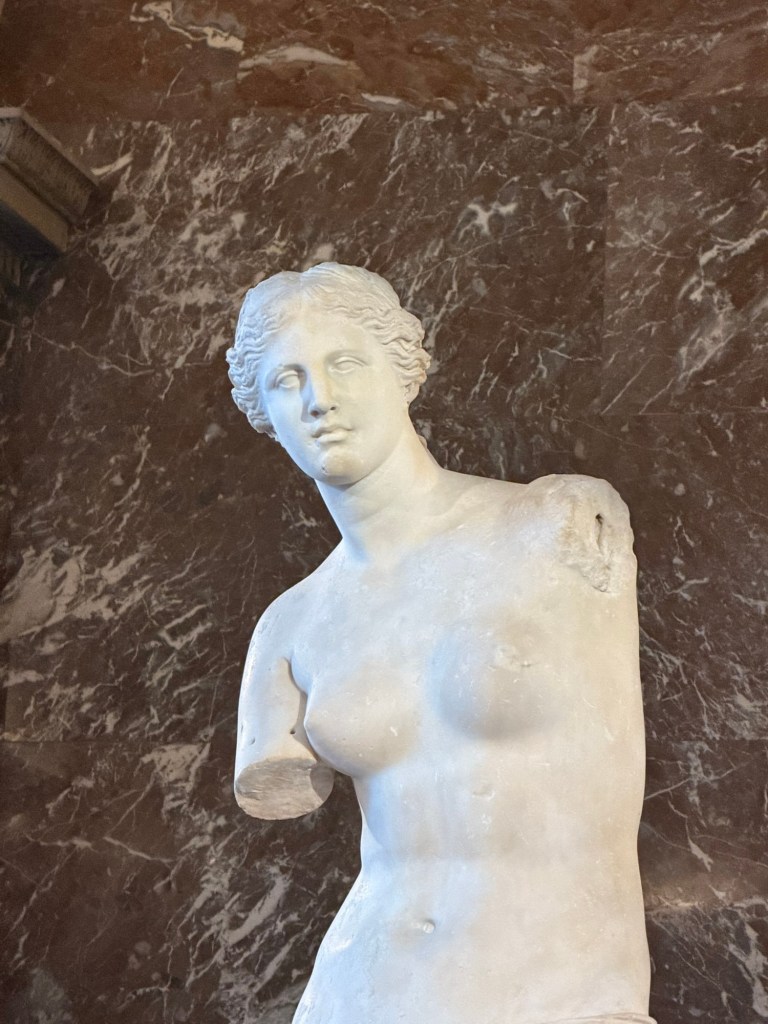
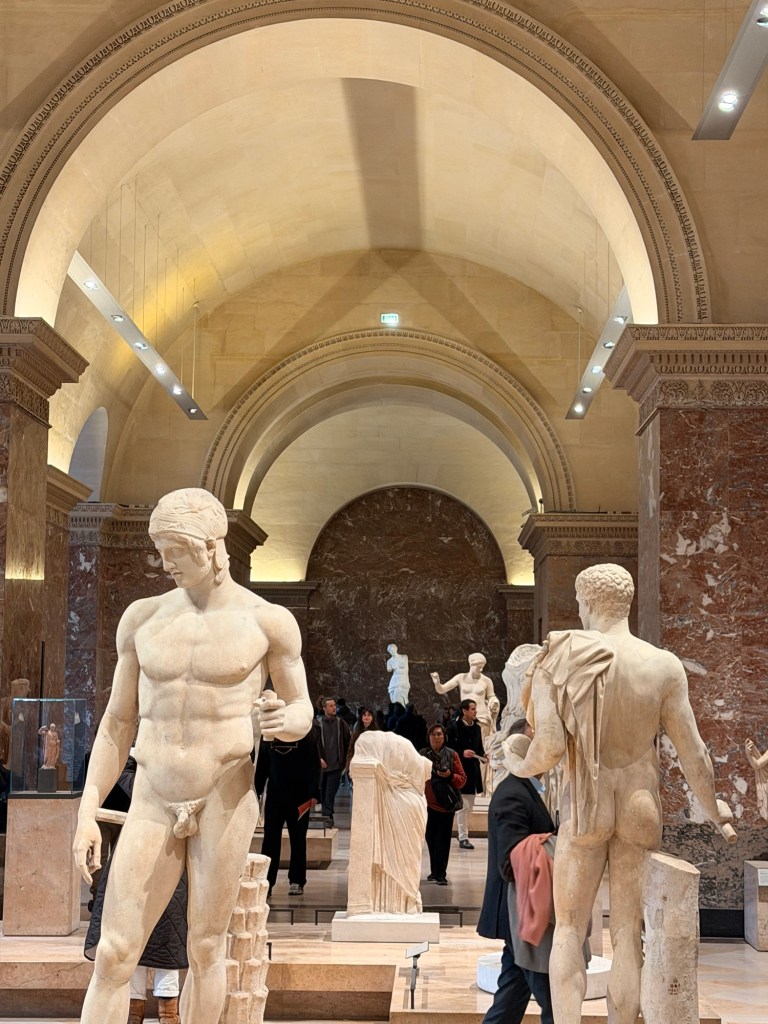
We ended the tour in the Greek antiquities section. We saw the Venus de Milo, dating to the same period as the Winged Victory. She was discovered by accident on the island of Milos by a farmer working his land. The statue was found in two pieces, but her arms were never recovered. Unlike many depictions of goddesses, she appears almost in motion and even has visible abdominal muscles, something rare for the time. The marble is bright and finely grained, and the artist remains unknown.
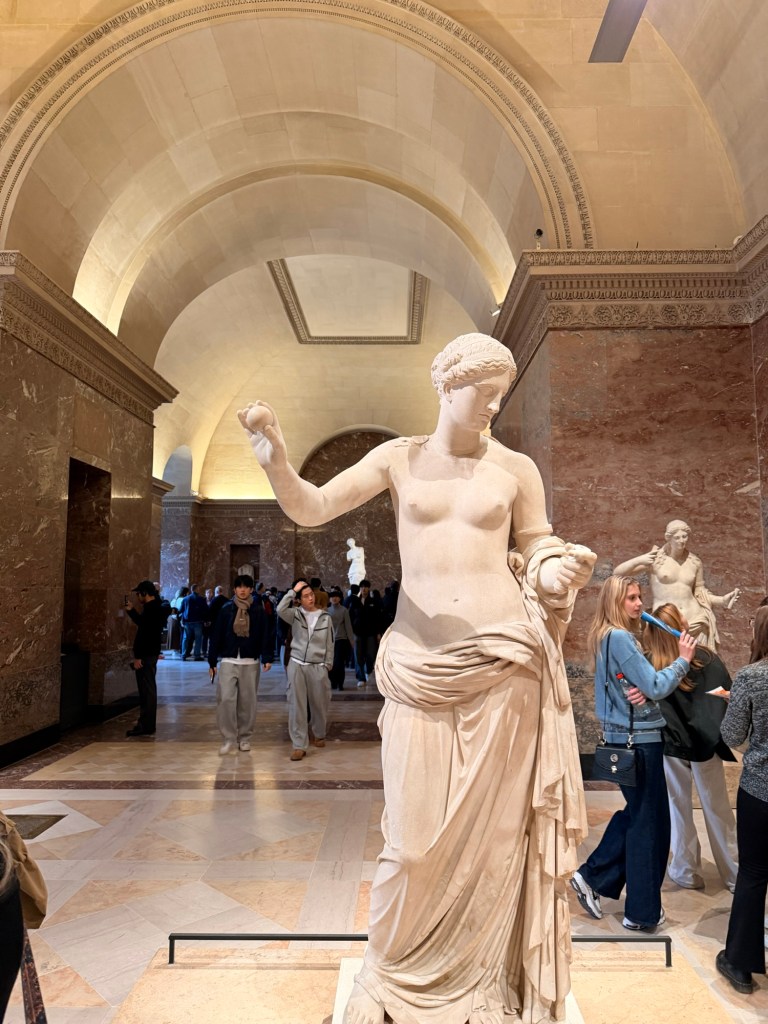
Nearby stood another Venus with softer detail and less vibrant marble, a more traditional academic work. You could really tell the difference in marble when you looked at these two. The first Venus looked like she had a spotlight on her in comparison.
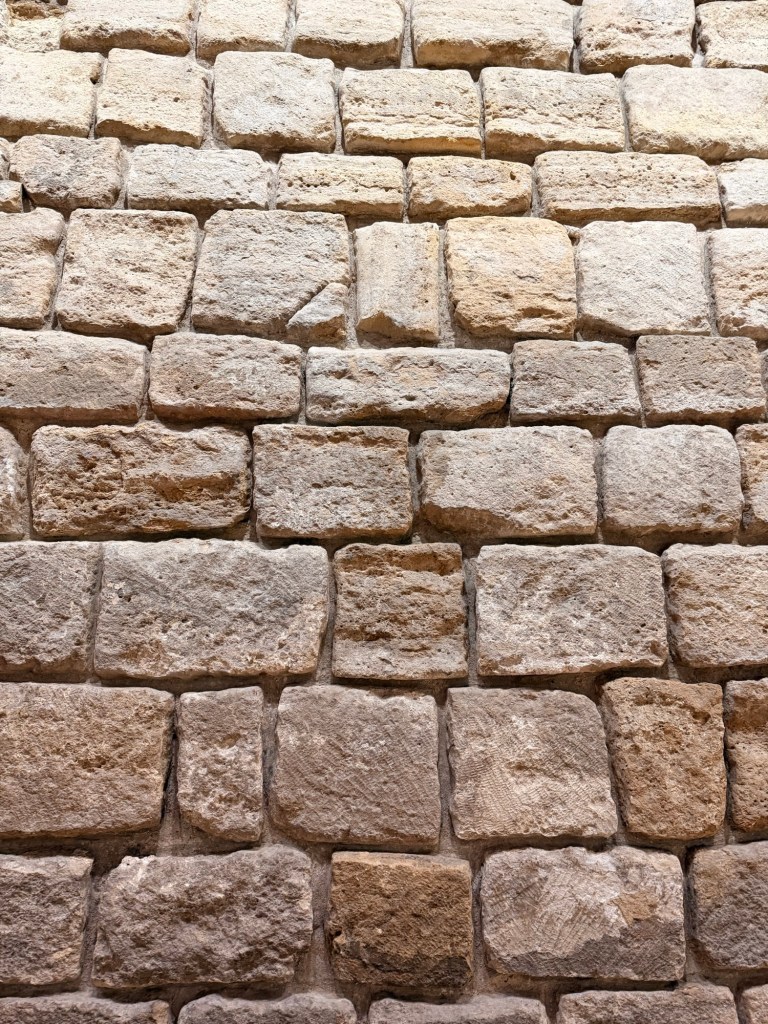
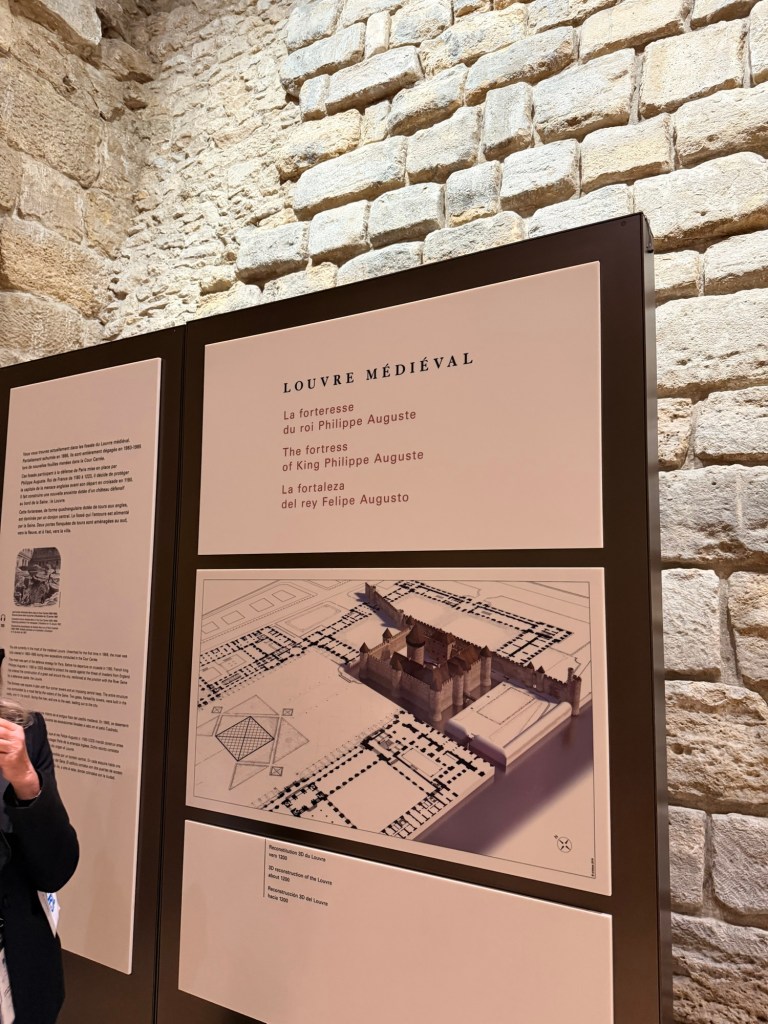
We finished the tour by going back to the very beginning. The Louvre was originally built as a military fortress, and we stood on the remains of the original moat, where you can still see the drawbridge structure beneath the museum.
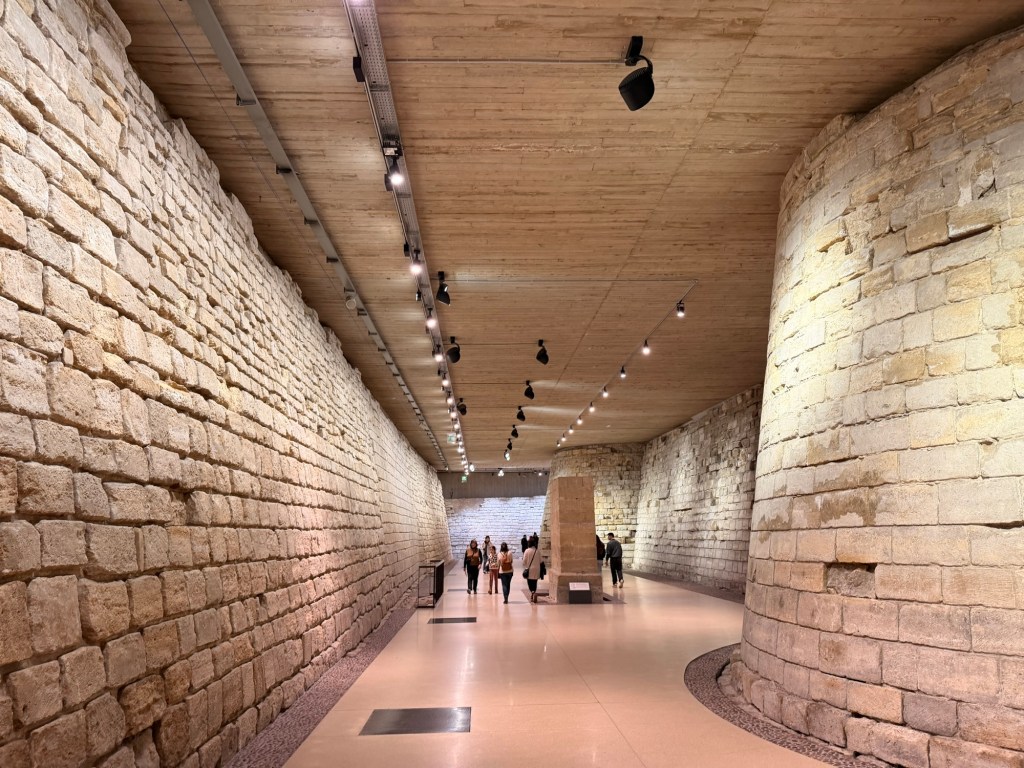
We spent a while after the tour wandering around completely lost trying to find the bathrooms. We even took an elevator down to the first floor just to see if that helped, and somehow accidentally stumbled upon the café we had been looking for. Unfortunately, the café was closed. Still no bathroom luck.
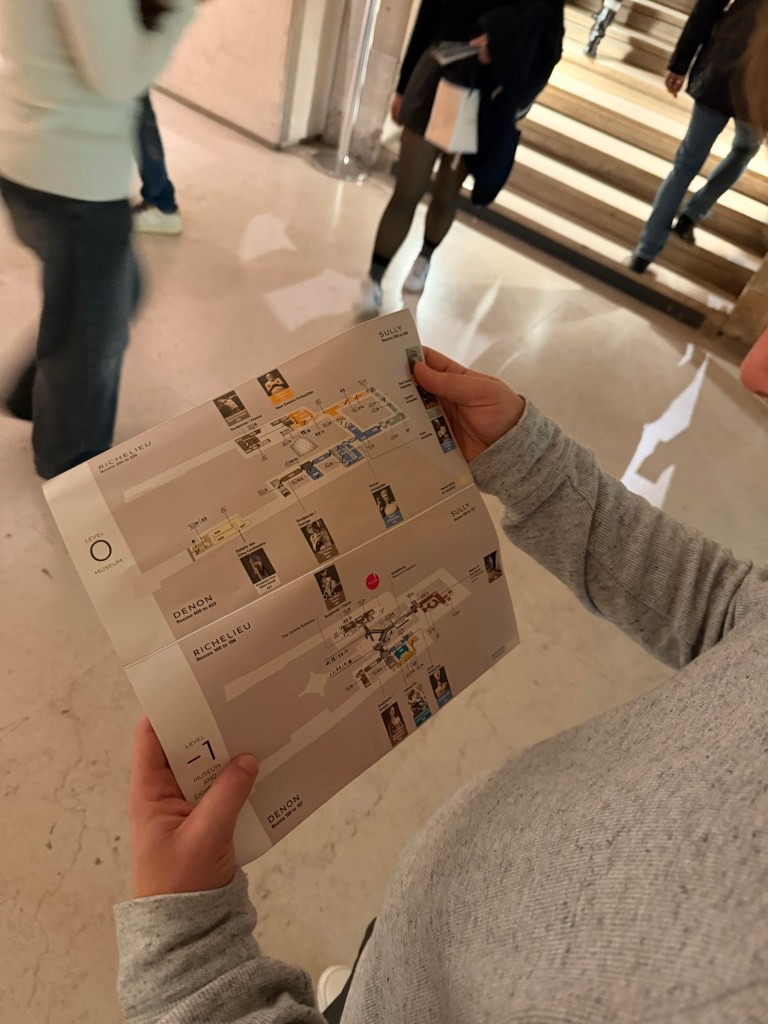
From there, we wandered some more and somehow ended up back by the Mona Lisa again. After that, we tried to find the Ancient Egypt section but instead walked into what looked like apartments. We’re still not sure whose apartment it was, but there was a lot of furniture, so that was confusing.
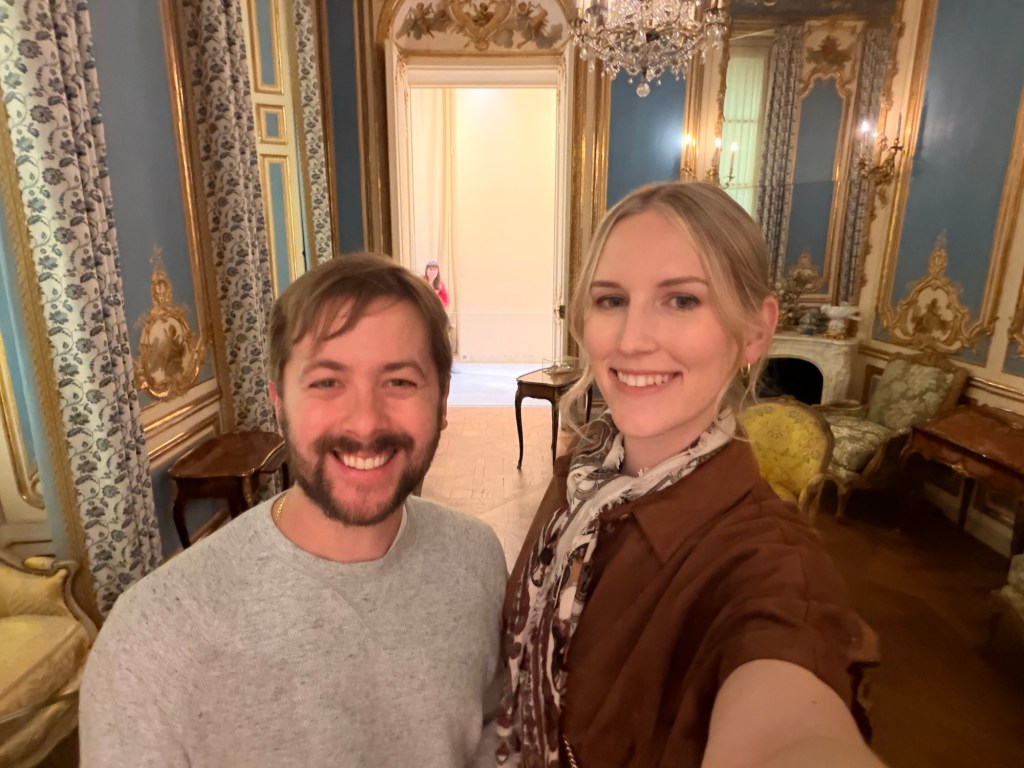
Eventually, we found the correct staircase down to the Ancient Egypt rooms… only to see it was blocked off. After a bit of internal debate, we just stepped over the rope. If they really didn’t want people using the stairs, they probably should’ve blocked the entrance better.
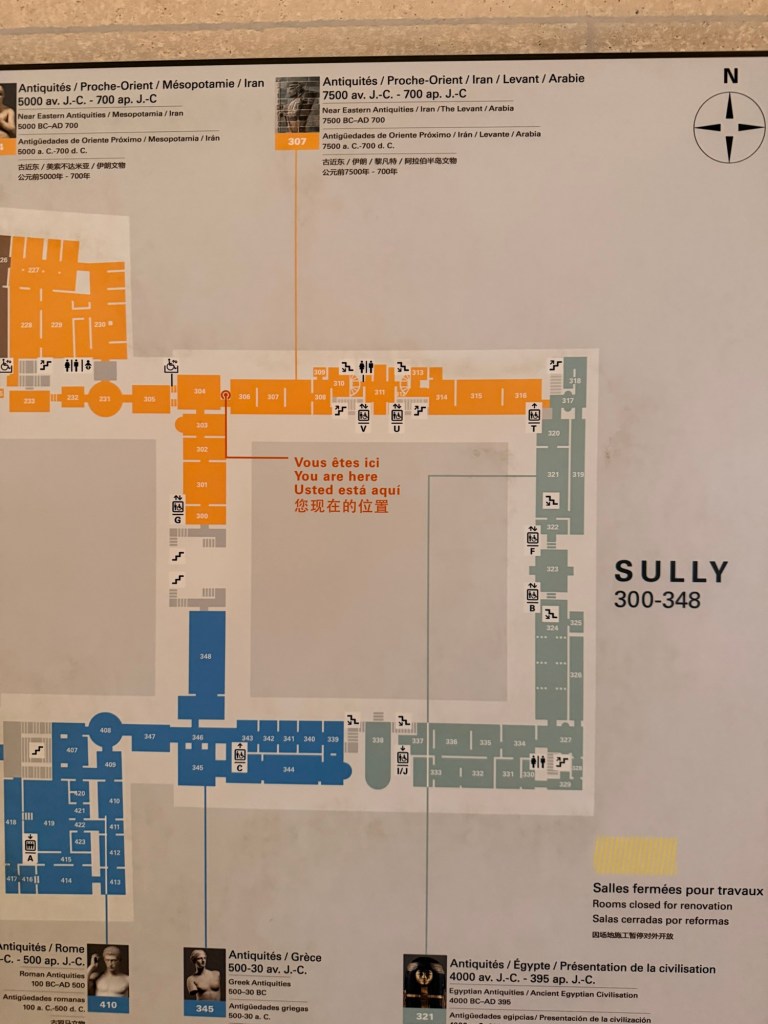
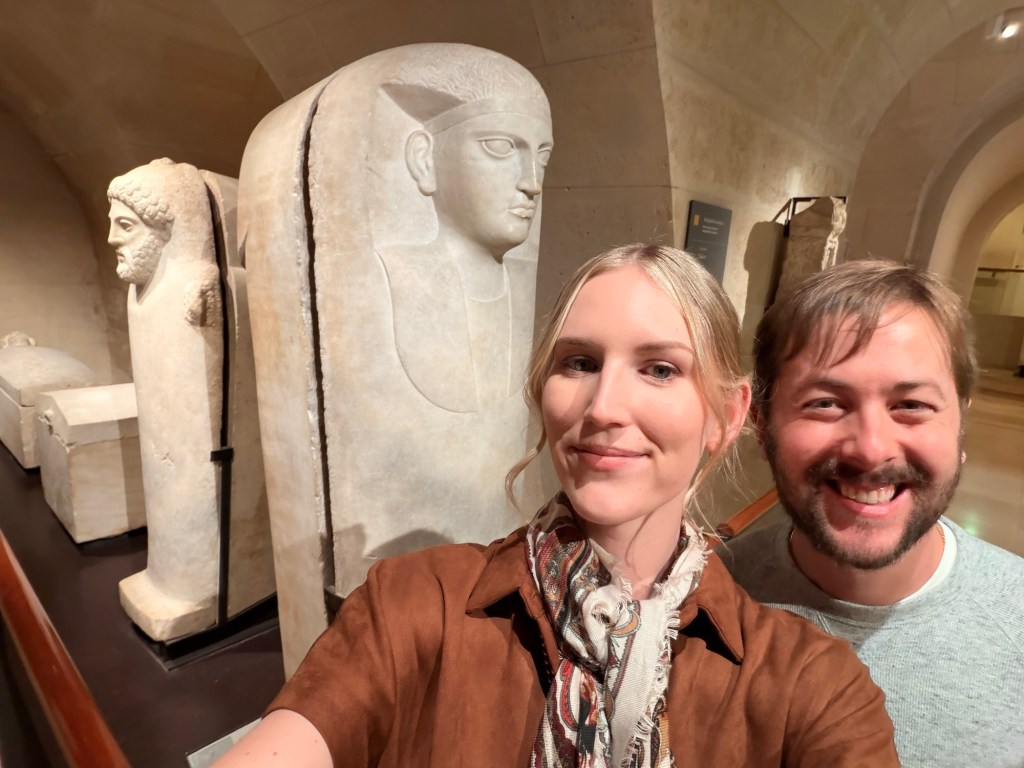
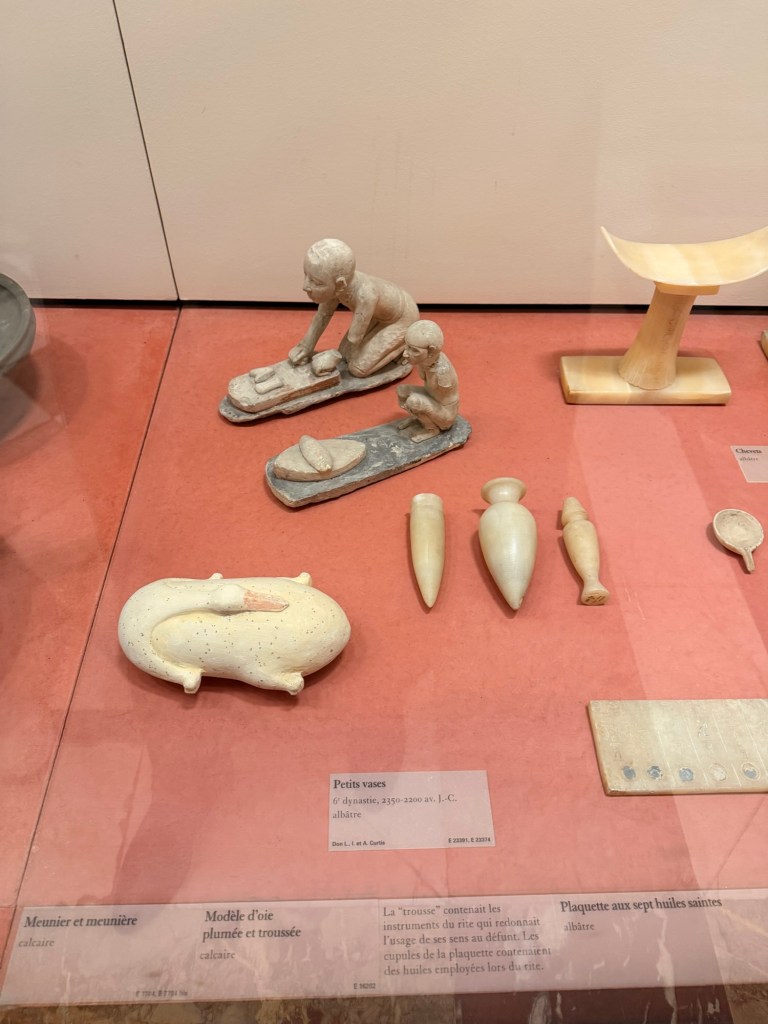
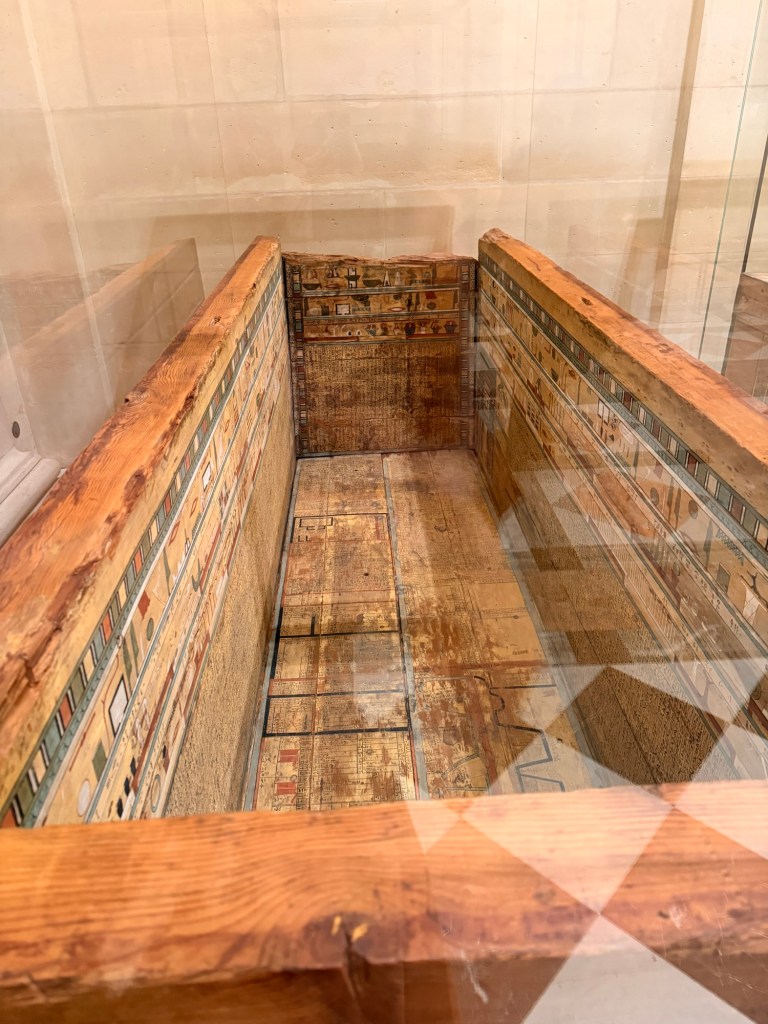
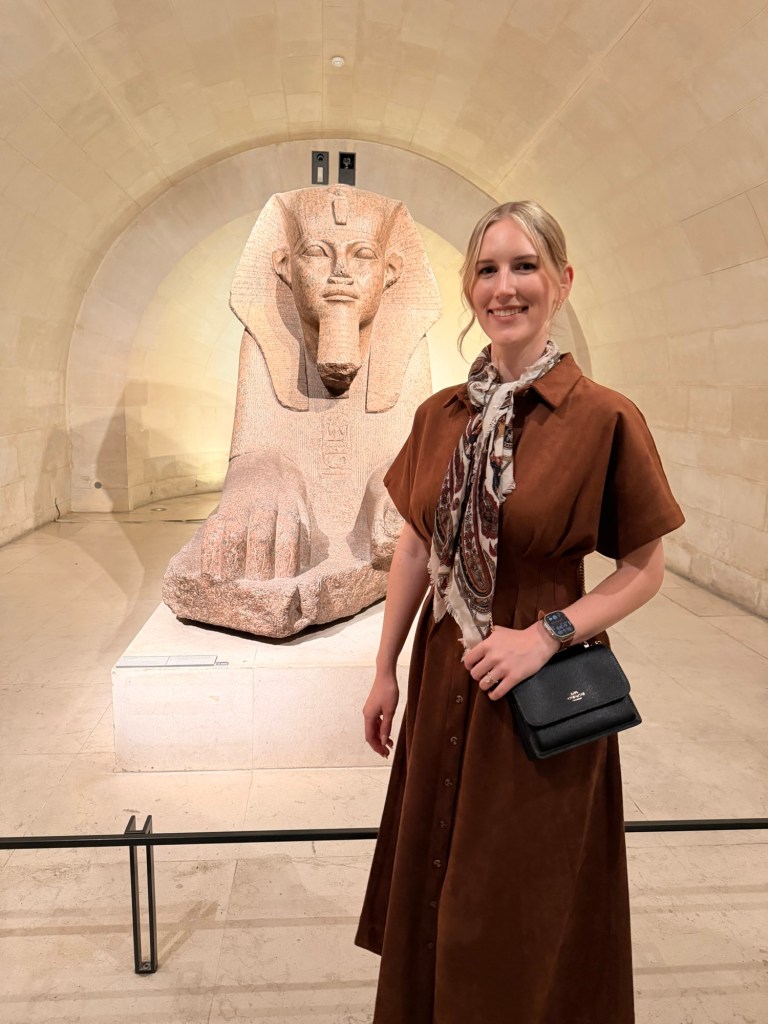
We walked around the Egyptian exhibits for a while, but at this point we were really starting to wear down.
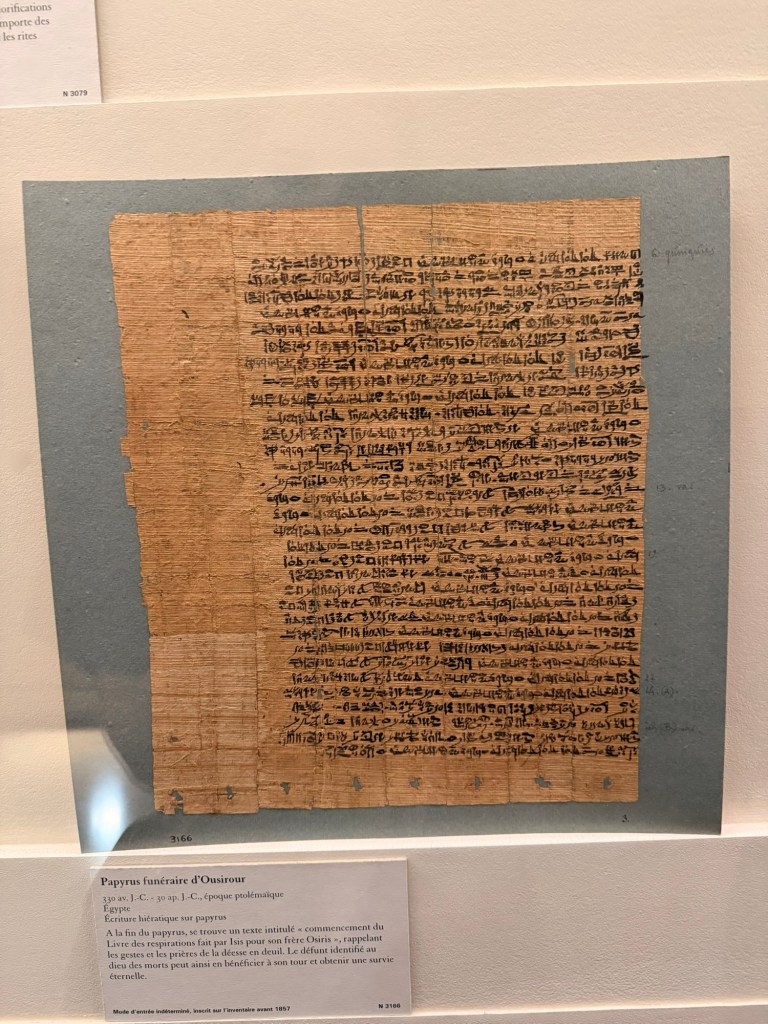
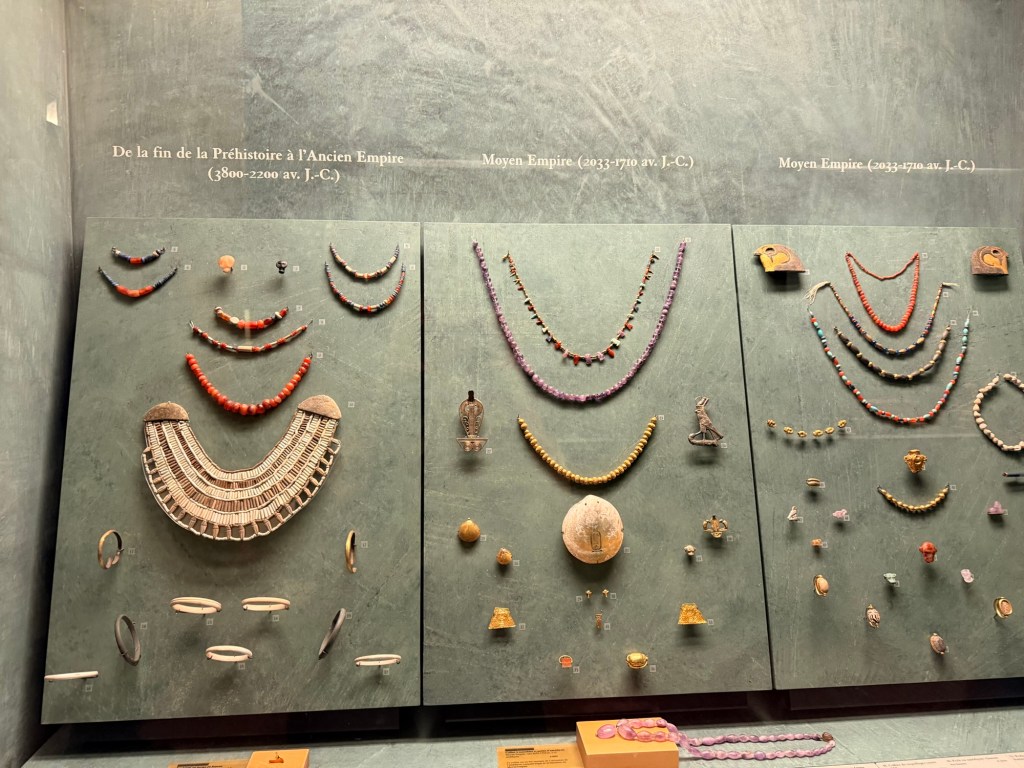
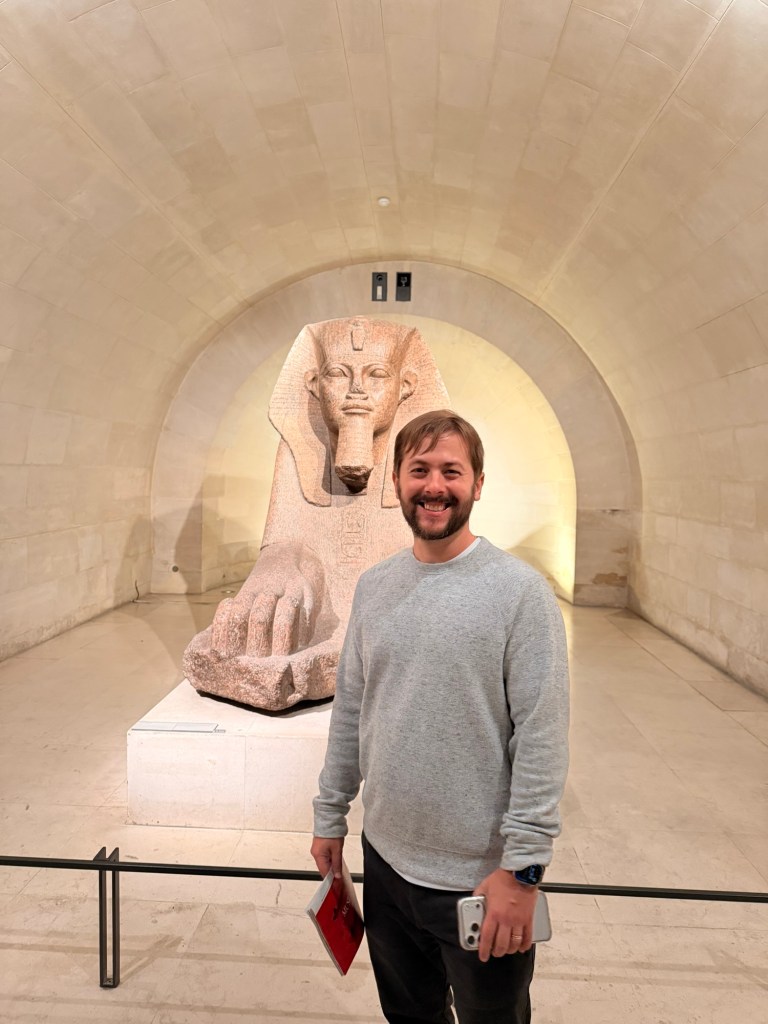
Jordan really wanted to see the Code of Hammurabi, so after some deliberation we decided to try to find it. After a lot more walking, we finally found the door for it… and it was closed.
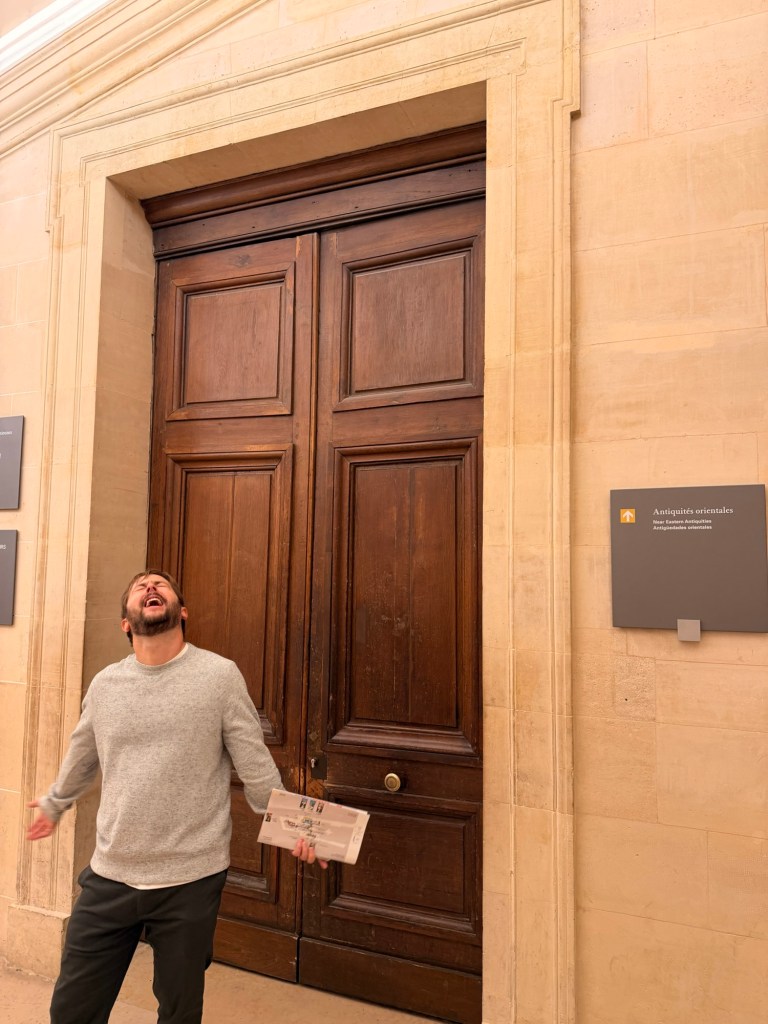
That was our sign to call it. We started trying to make our way to the exit, but of course, right as we got close, Jordan asked about the Mona Lisa. The photos we had already were pretty good, but if the crowd was even thinner I was thinking we could maybe get some even better ones. Against our better judgement, we went back.
We climbed what felt like fifty flights of stairs only to find that the staircase leading to the French paintings was closed. So back down the fifty flights we went. We asked an attendant, who I think told us to go back the way we came, or maybe another direction we hadn’t tried yet. Honestly, it wasn’t super clear. Somehow we ended up back on the medieval level again, trying one last time to find the French paintings.
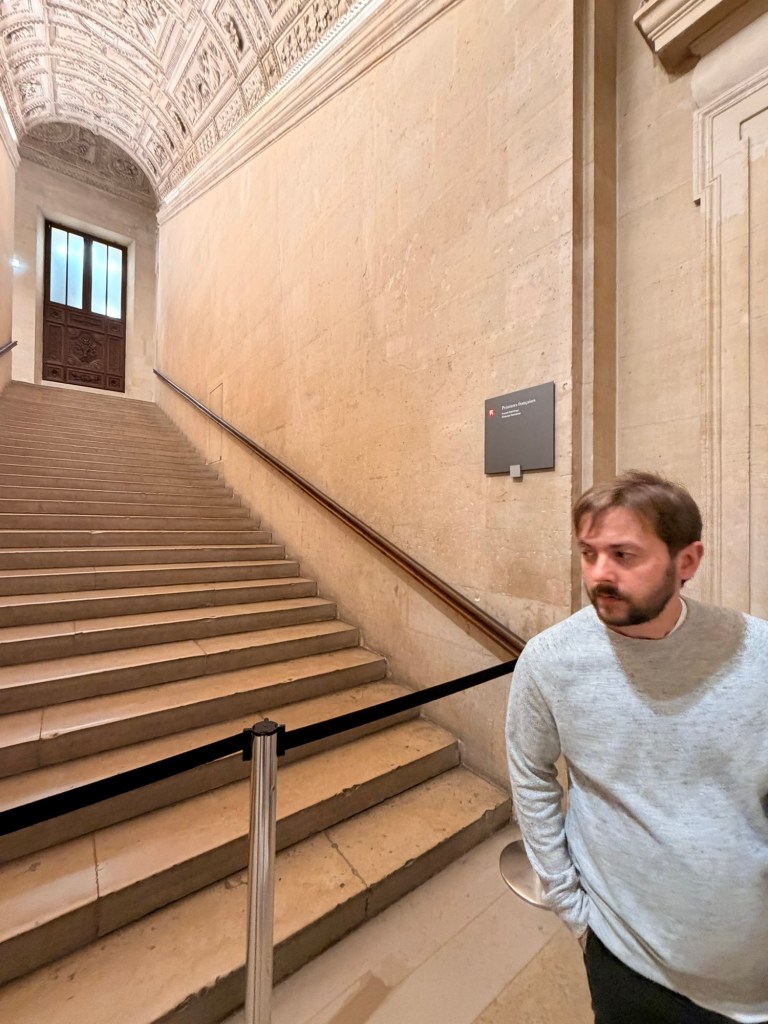
We asked another attendant, who confirmed that the exhibit or at least the route to it was closed. That was finally it. We officially gave up and headed downstairs to the exit.
We picked up our coats and grabbed a quick snack at one of the cafés near the exit, then headed outside to take pictures at the iconic pyramid.
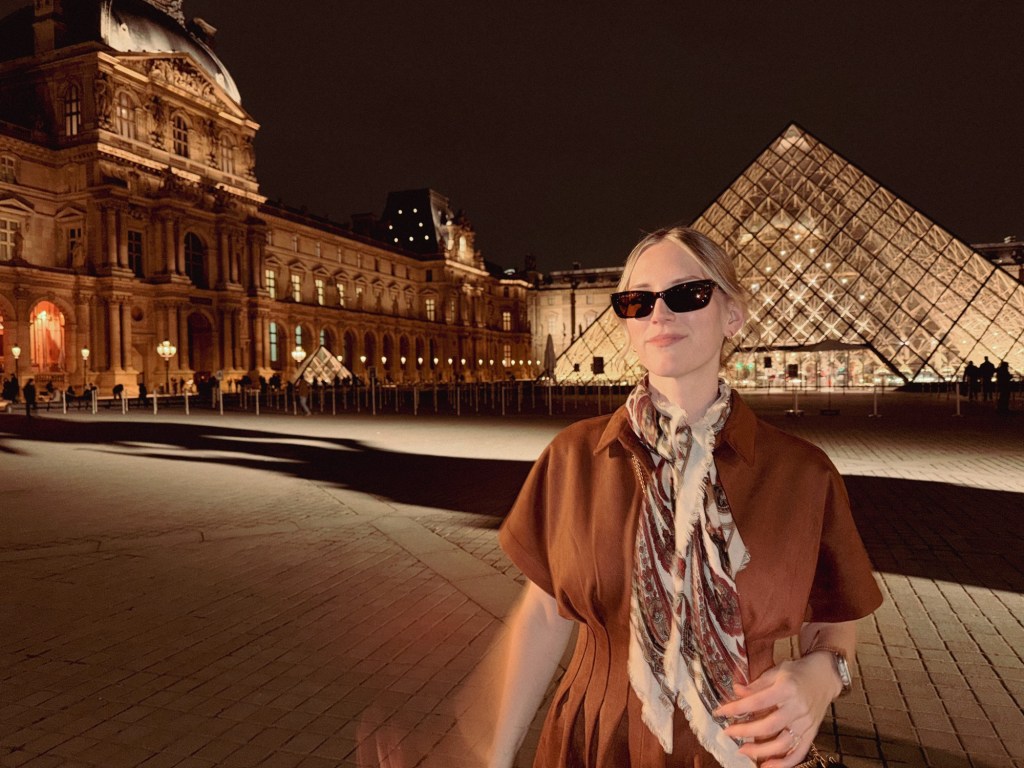
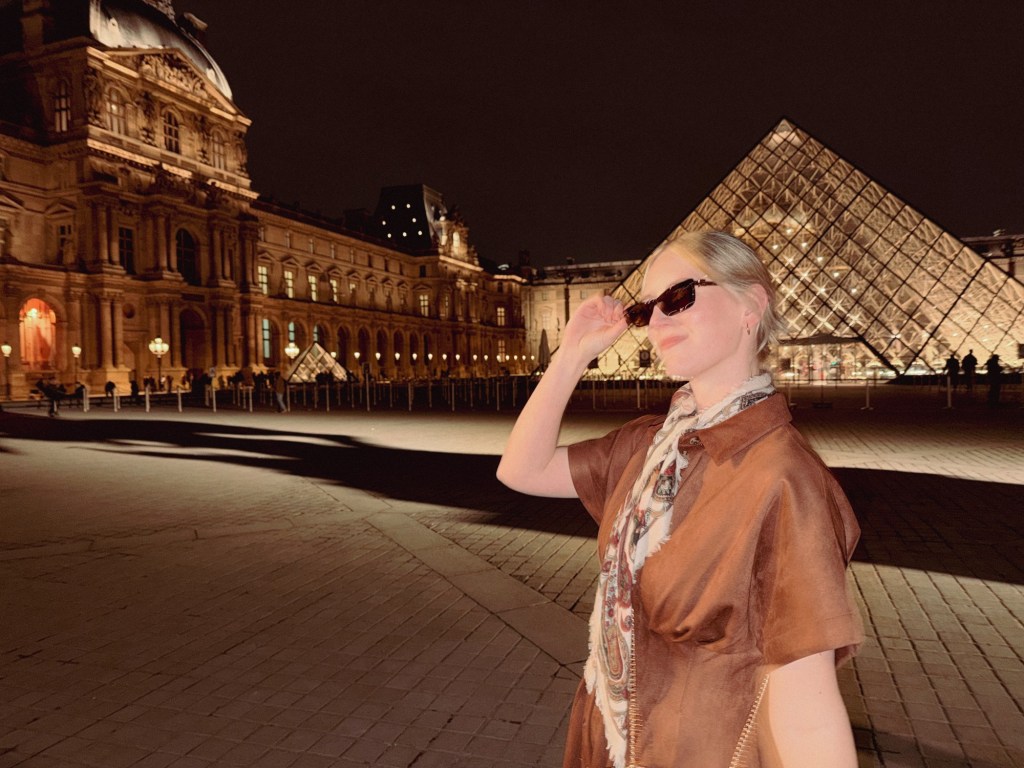
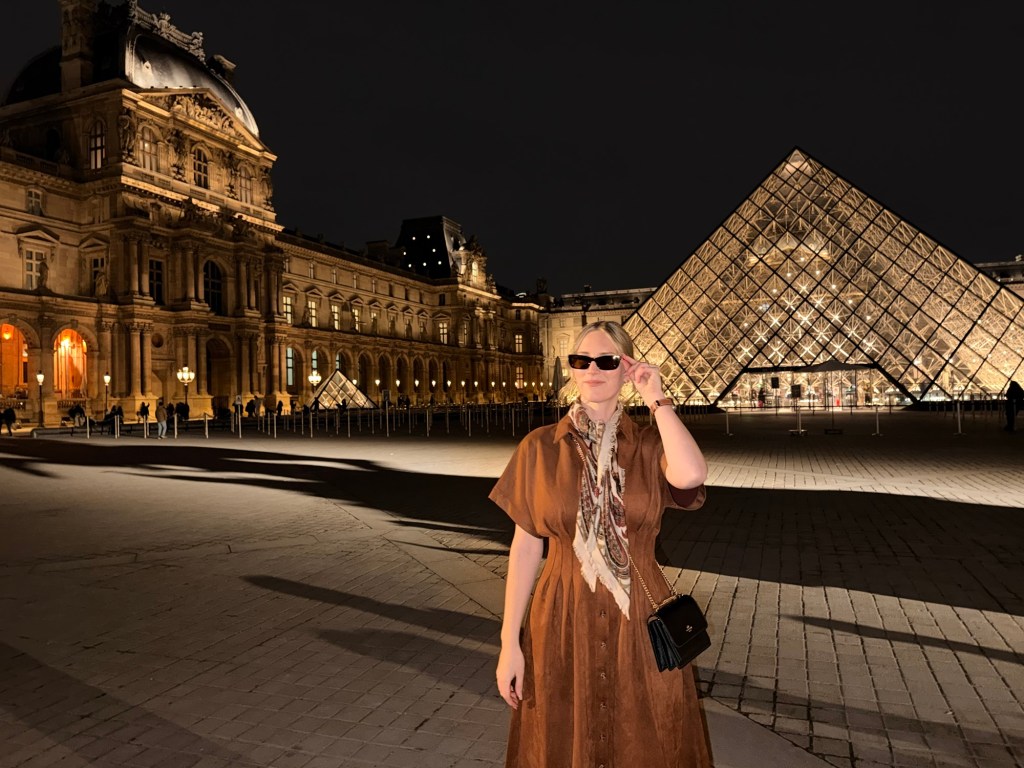
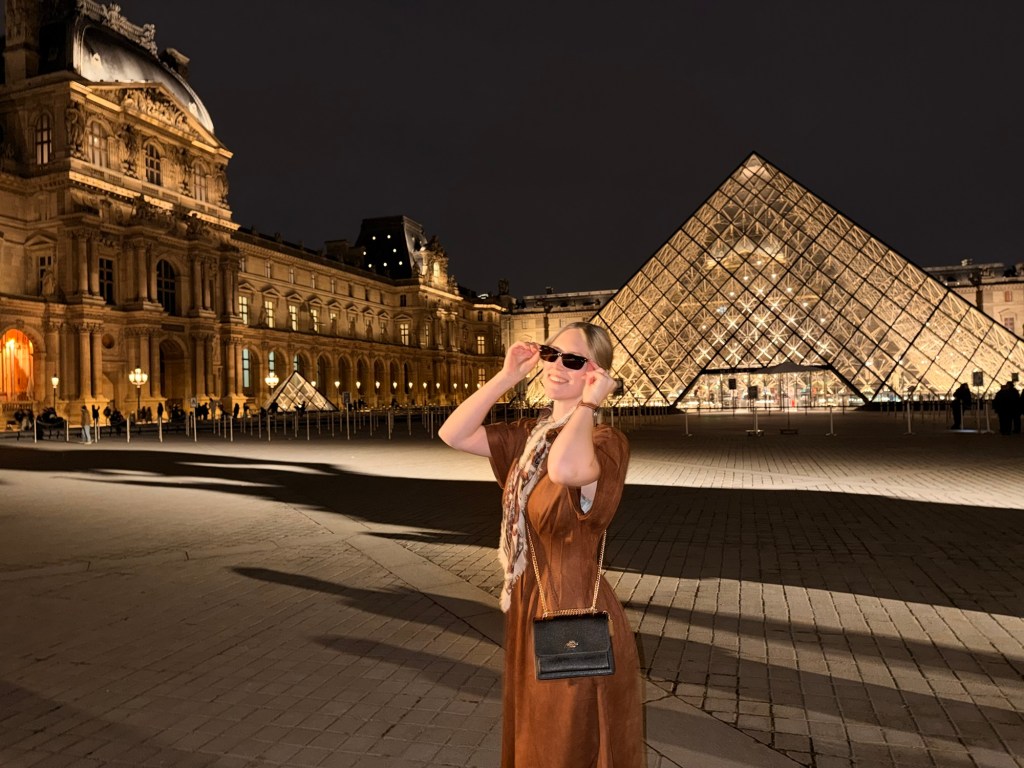
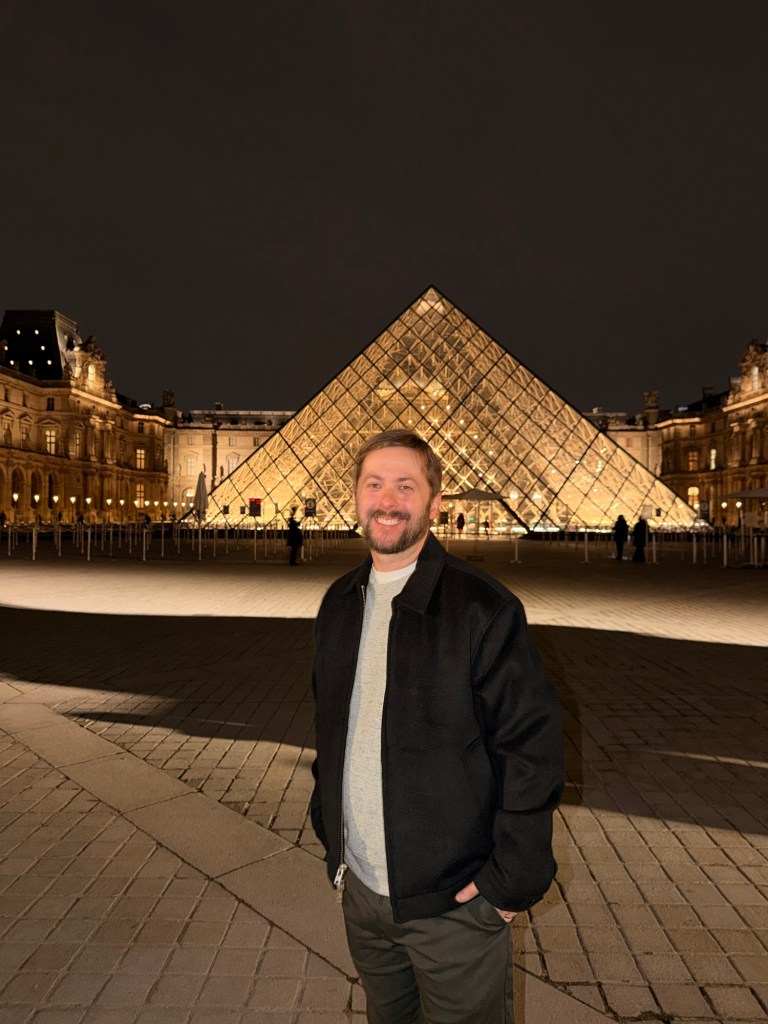
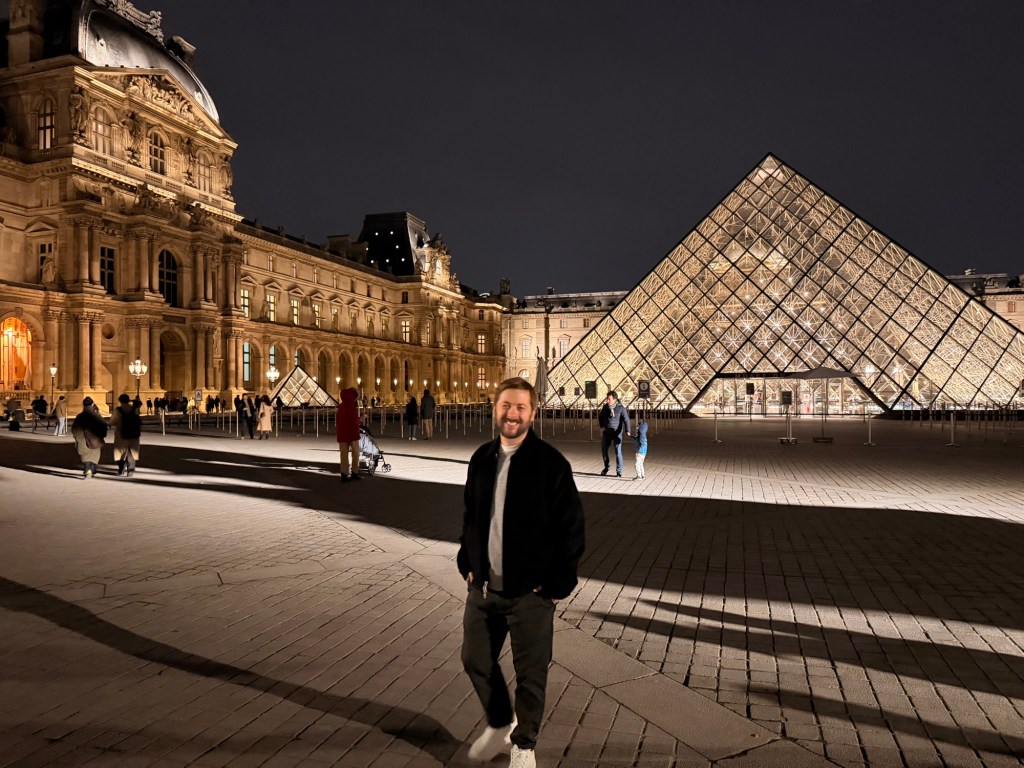
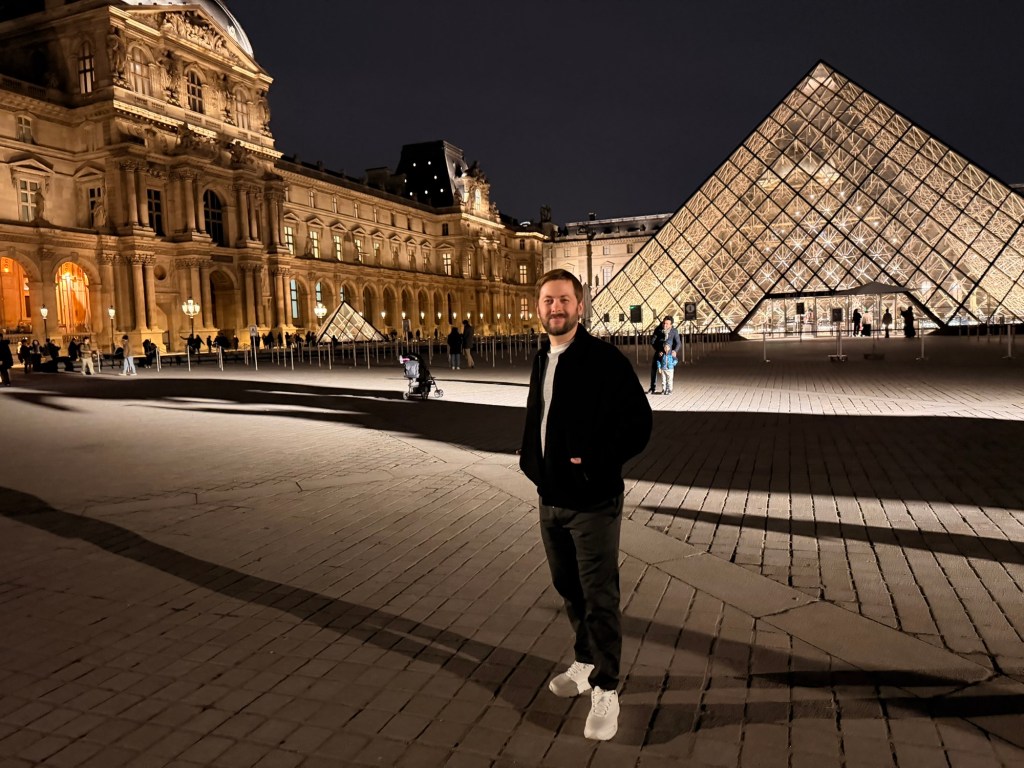
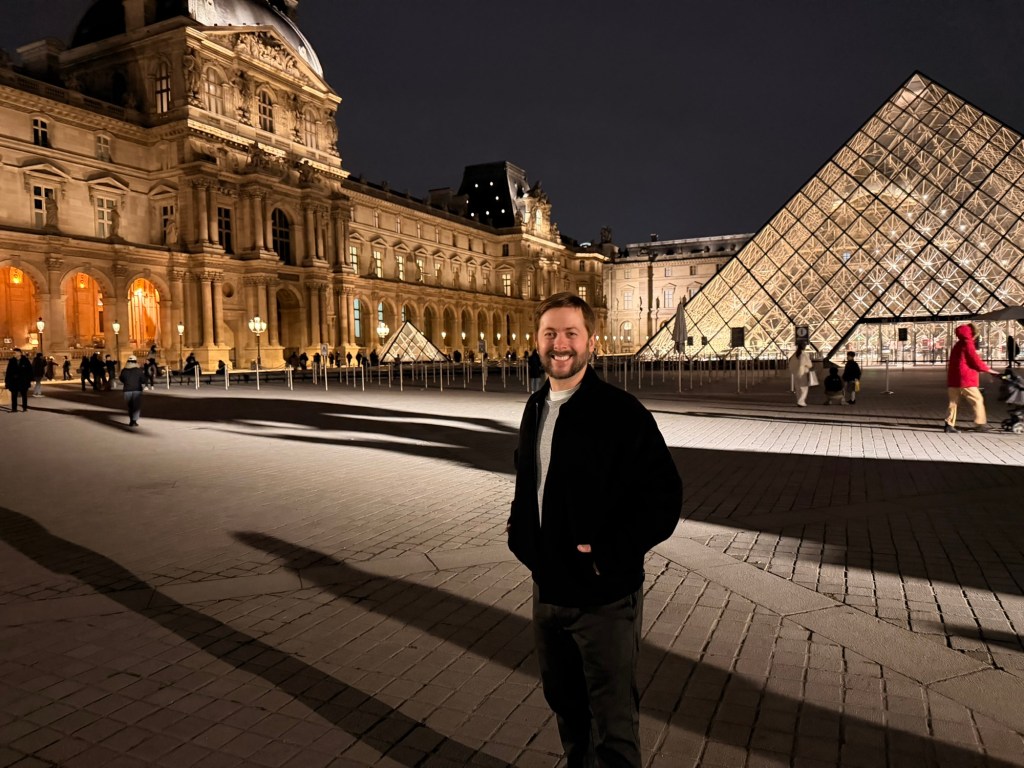
When Jordan checked the metro app to get us back to the hotel, it was a bit of a slap in the face. We realized that if we had taken just one more stop on the metro that morning, we would have been way closer to our tour meeting point. Pain.
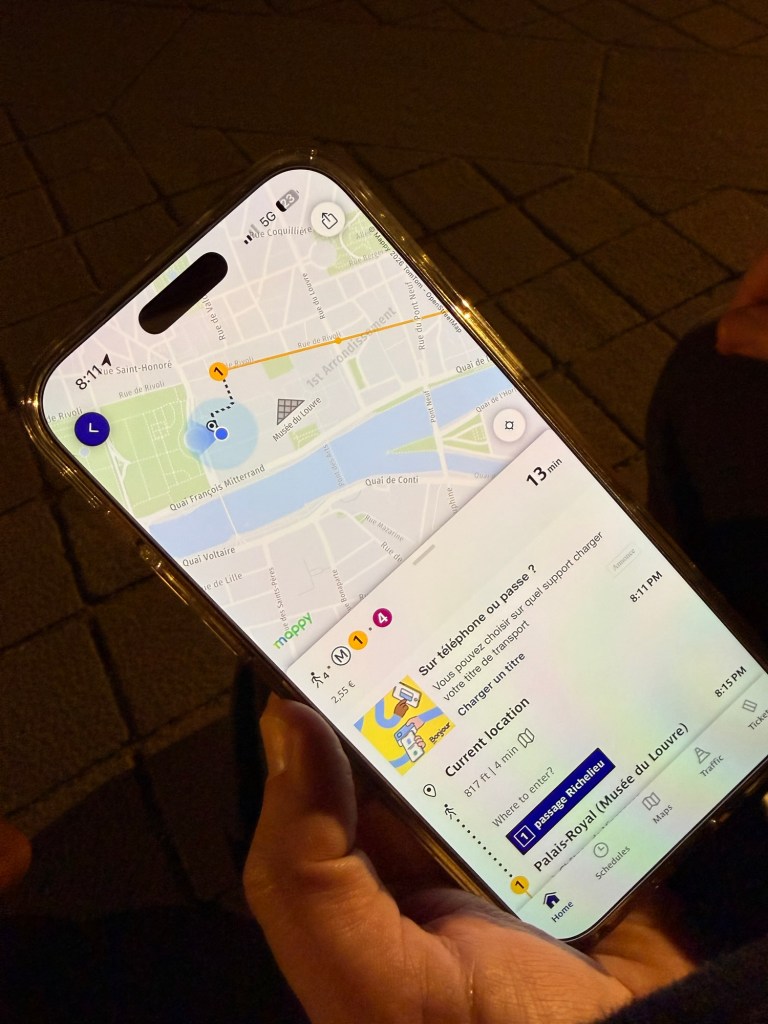
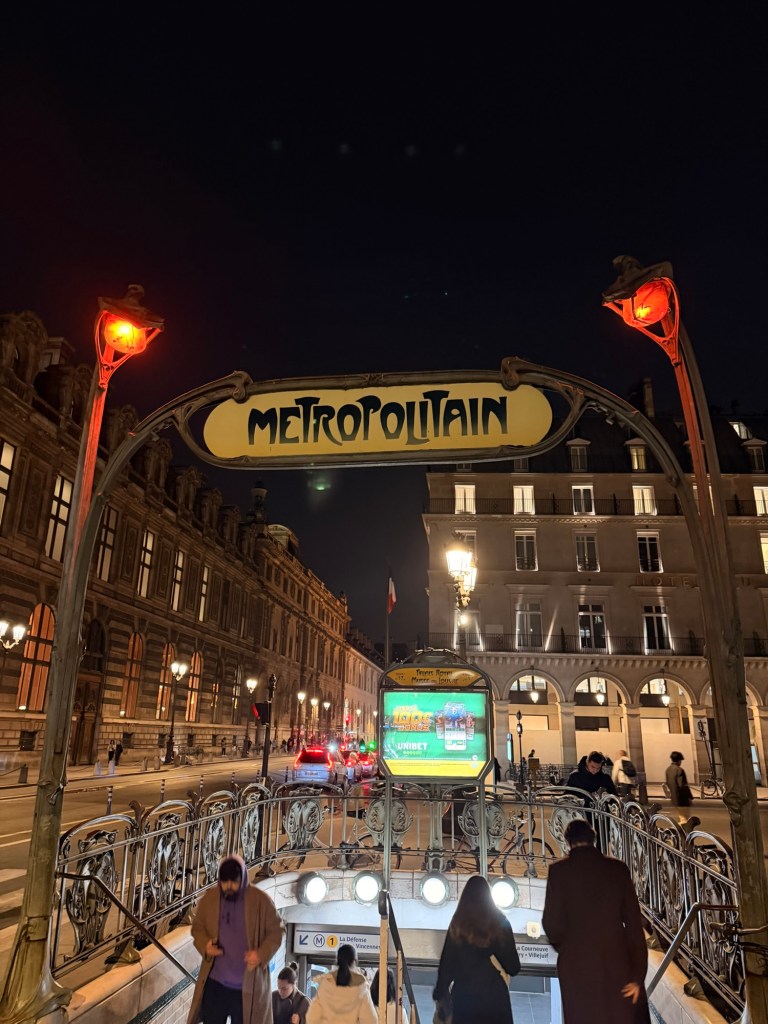
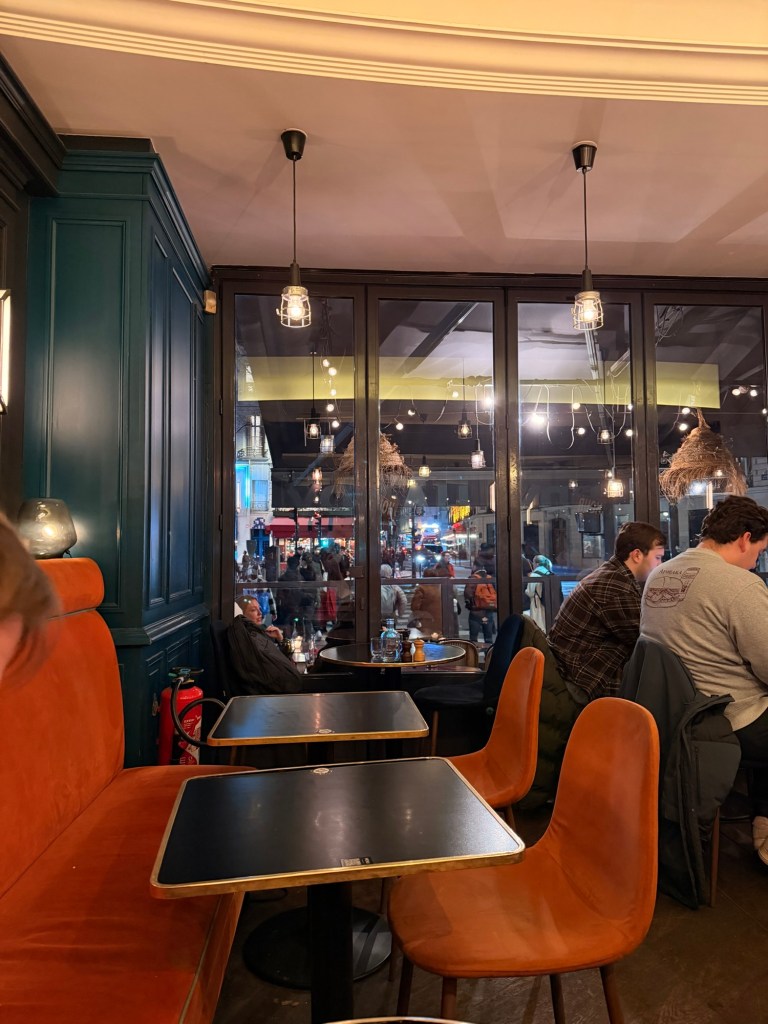
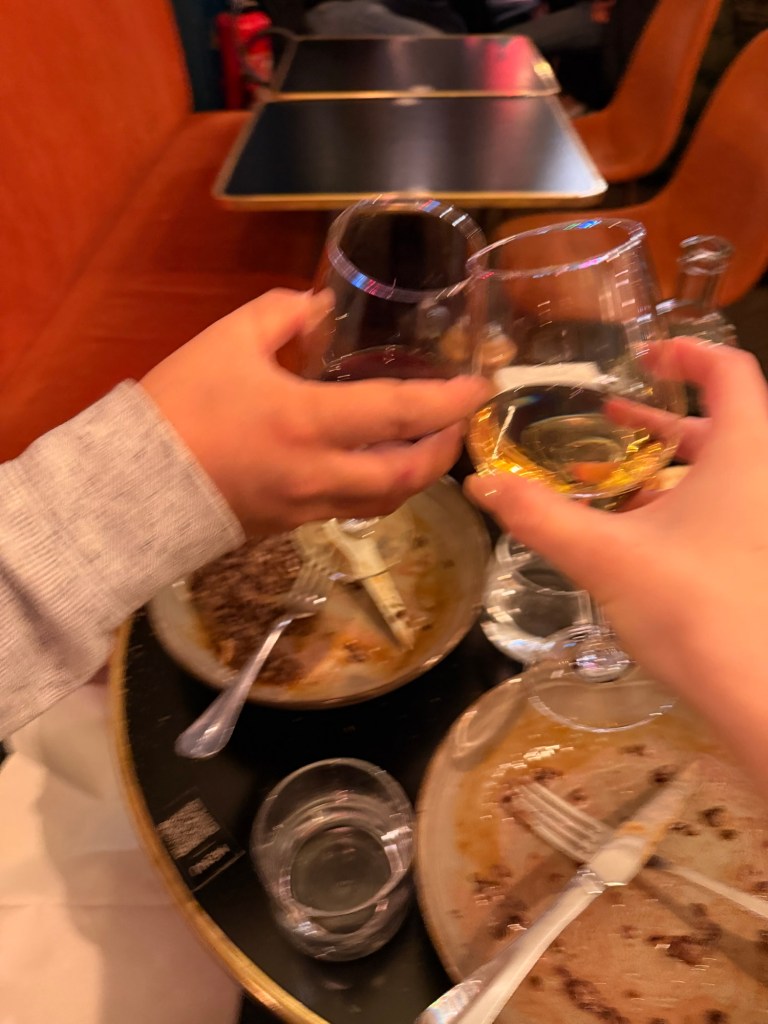
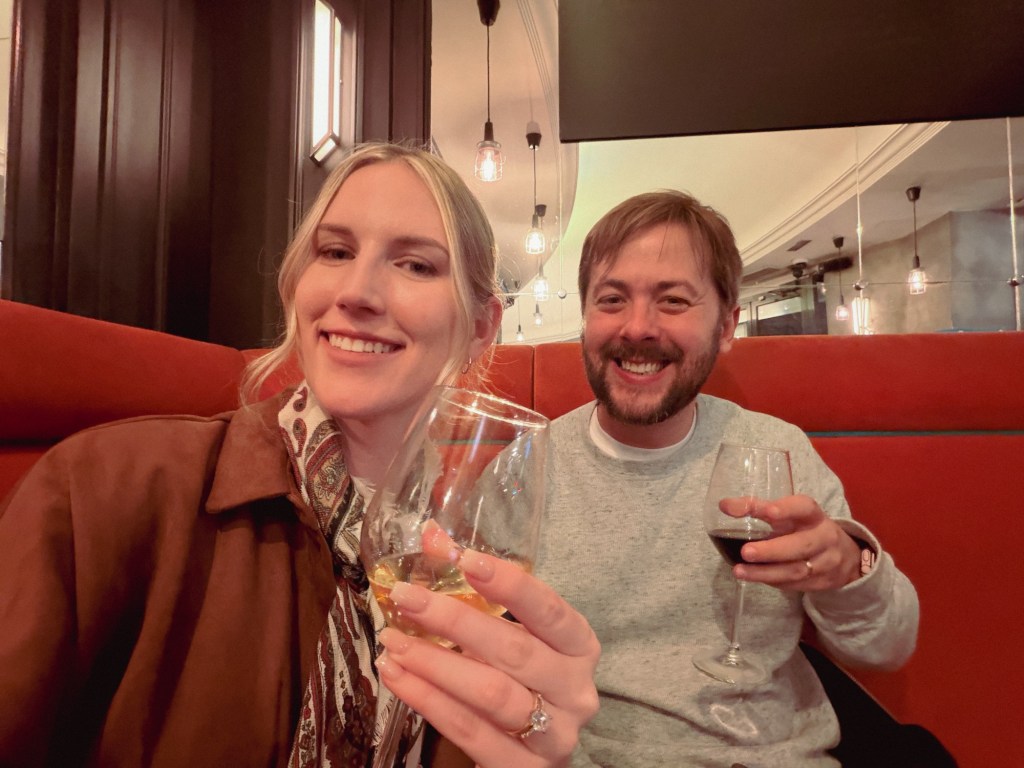
We hopped on the metro back toward our hotel and started looking for dinner. We ended up choosing a spot right outside the metro stop and were seated in a cozy corner booth.
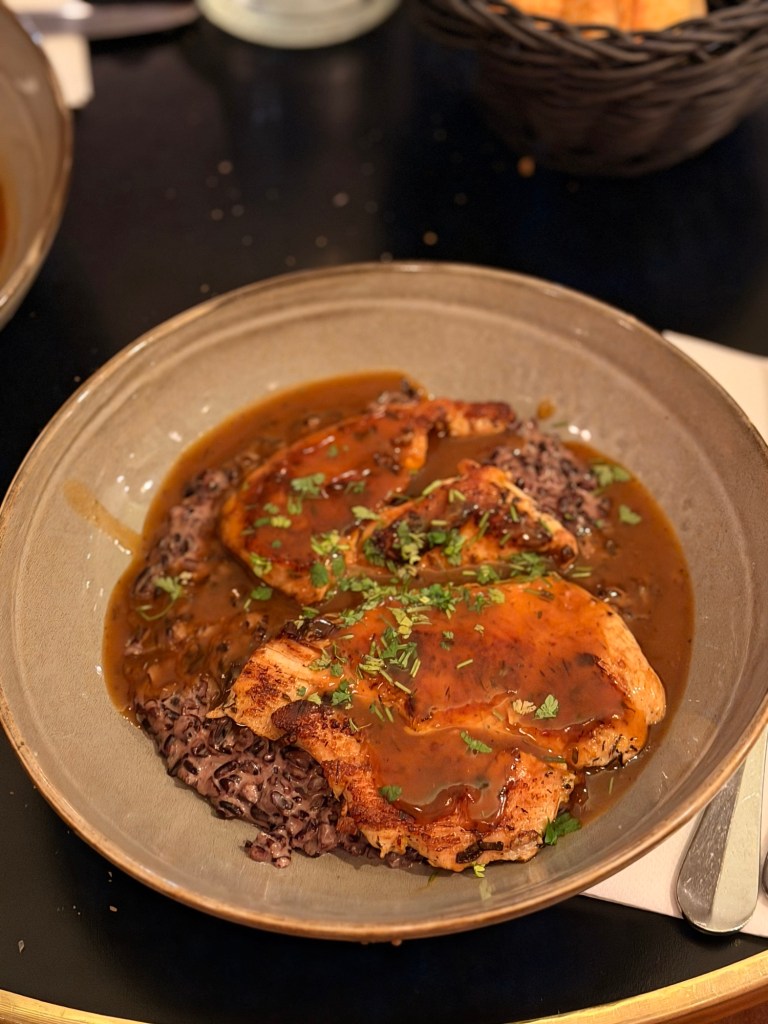
We ordered the paillard de poulet, a citrus chicken paillard, and it was delicious. It came with risotto and wild rice, and the sauce reminded me a bit of a marsala. We hadn’t really eaten since breakfast at Paul’s, where we only had a pain au chocolat, half a quiche, and a cappuccino, so it absolutely hit the spot.
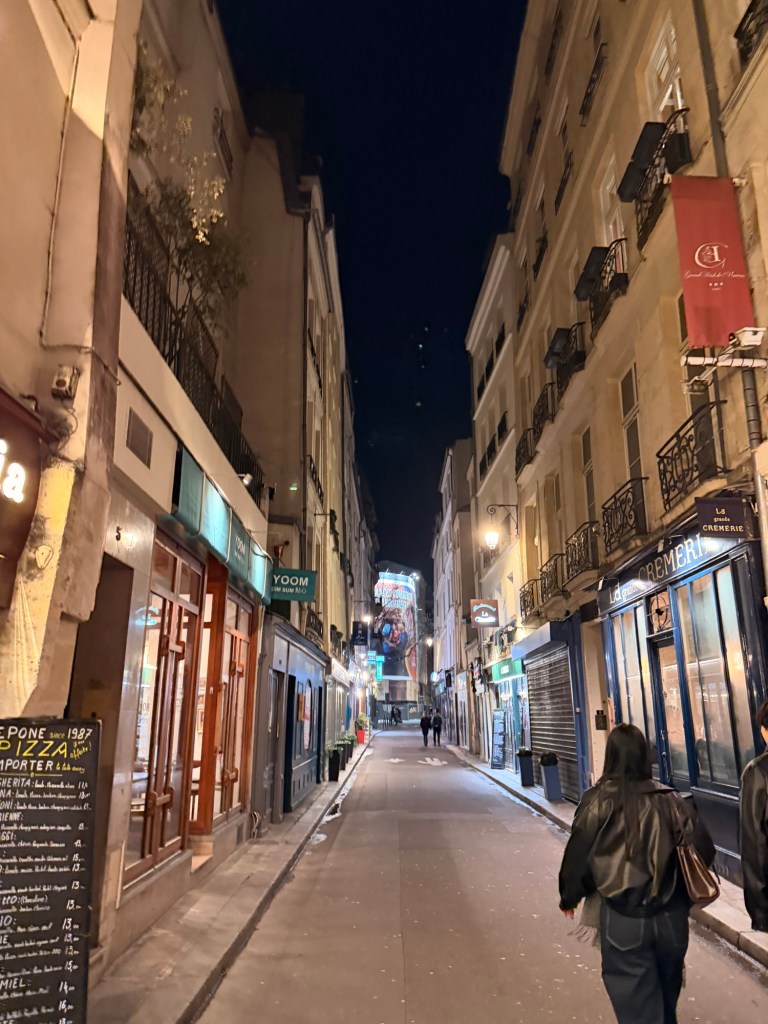
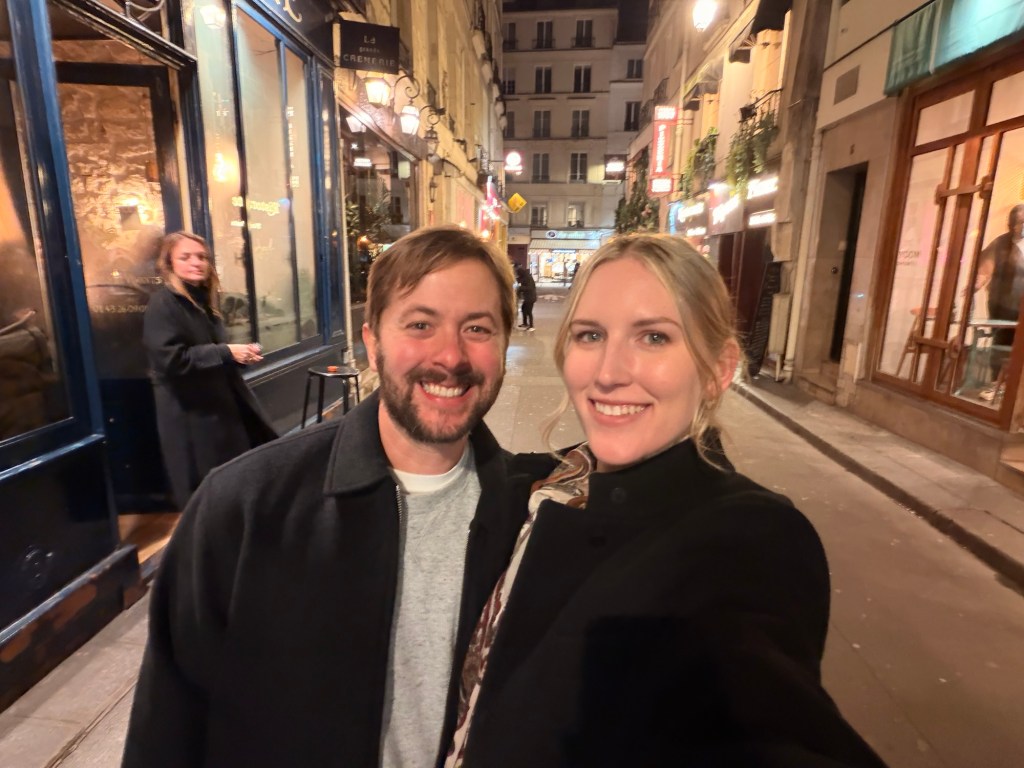
After dinner, we walked back to the hotel to get ready for our next big day: Versailles!

 Lauren and Life
Leave a comment