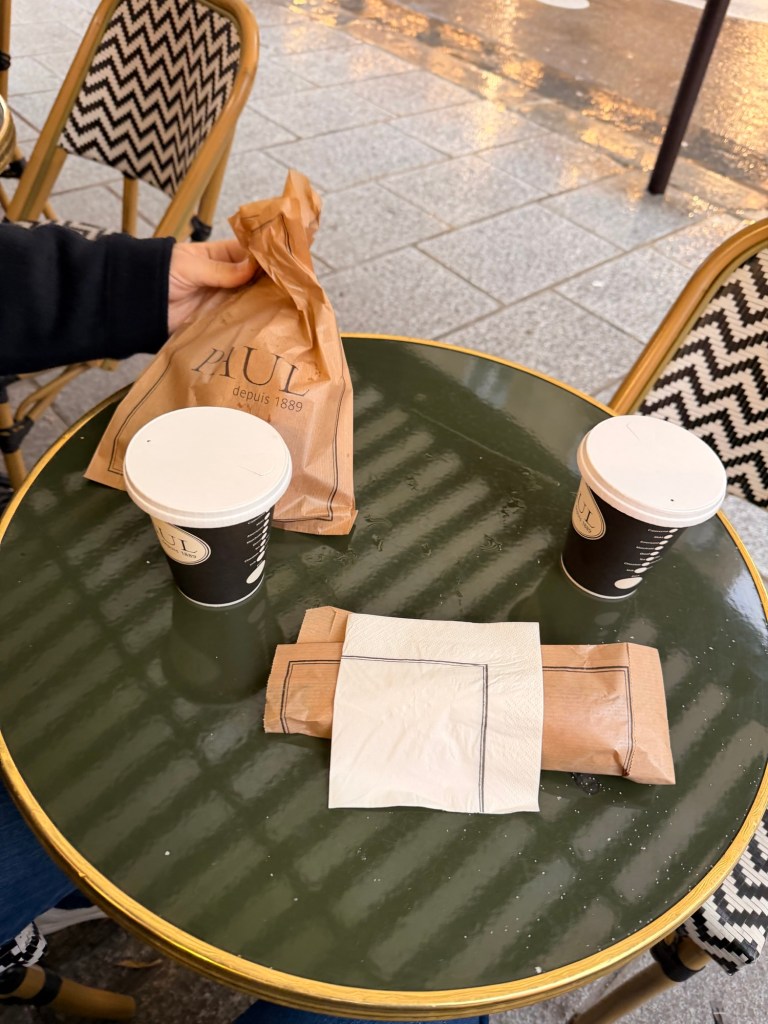
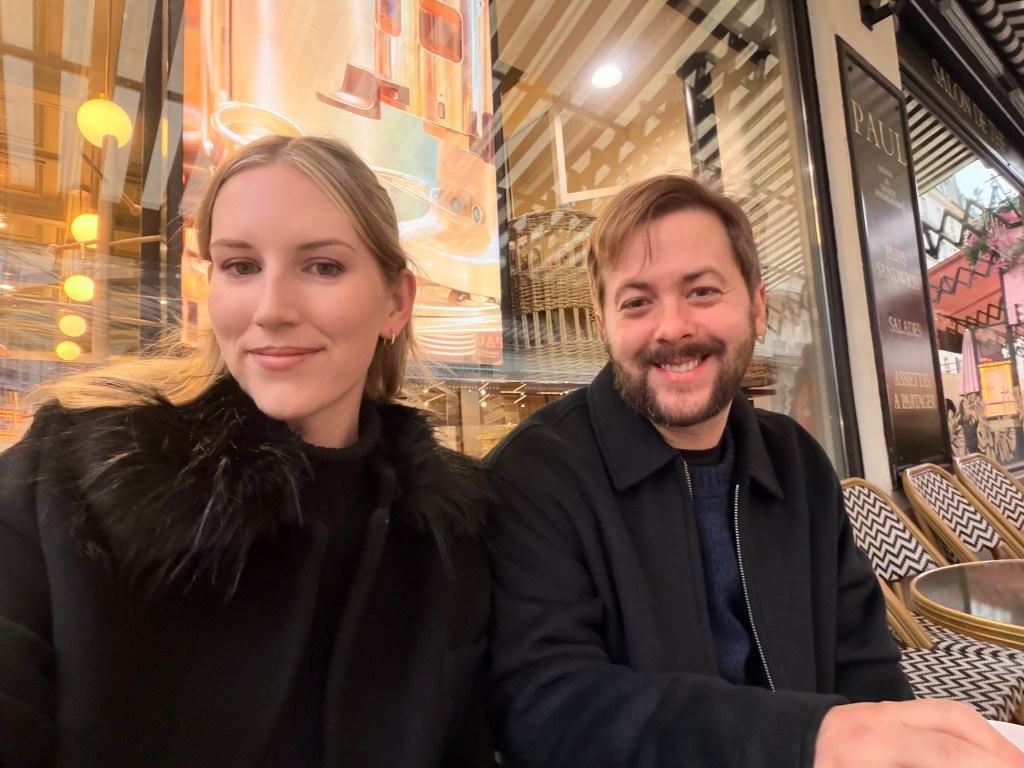
We started our day at Paul’s Cafe with a few pain au chocolats before our big museum tour. We like this place because you order and pay at the counter, so there’s no table service to worry about. We’re still getting used to the dining culture here, especially having to ask for the check, so it was nice to keep things simple.
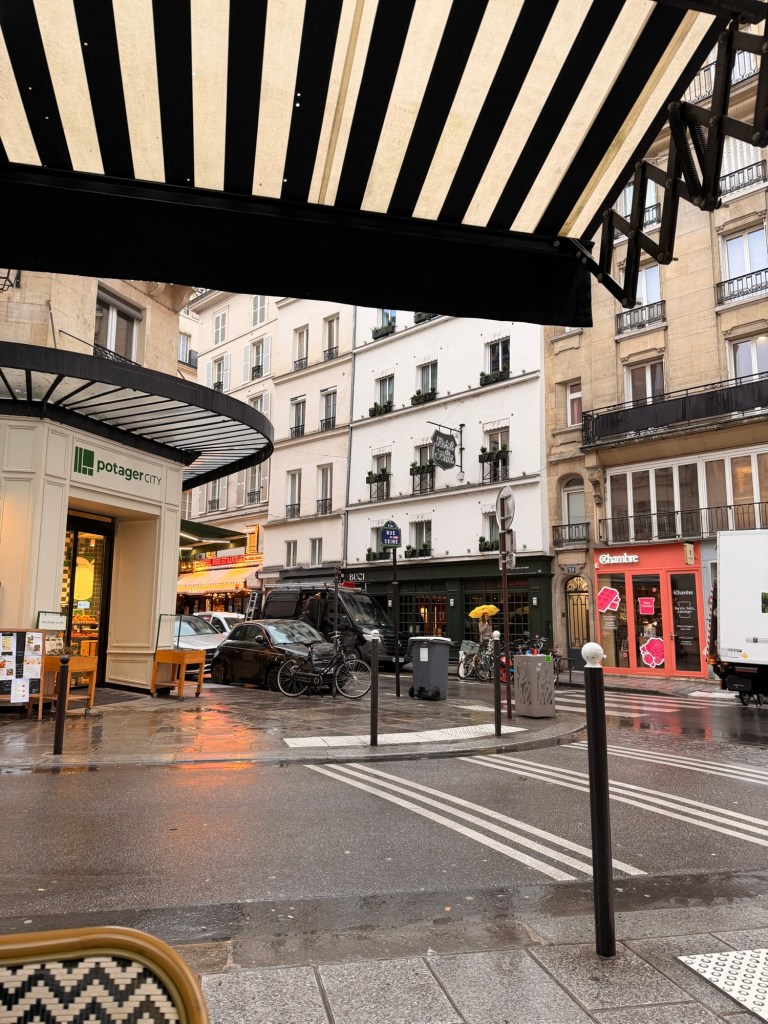
Feeling fueled, we started our walk to the museum. It was a bit rainy and wet that morning, which wasn’t ideal, but thankfully the walk wasn’t too long.
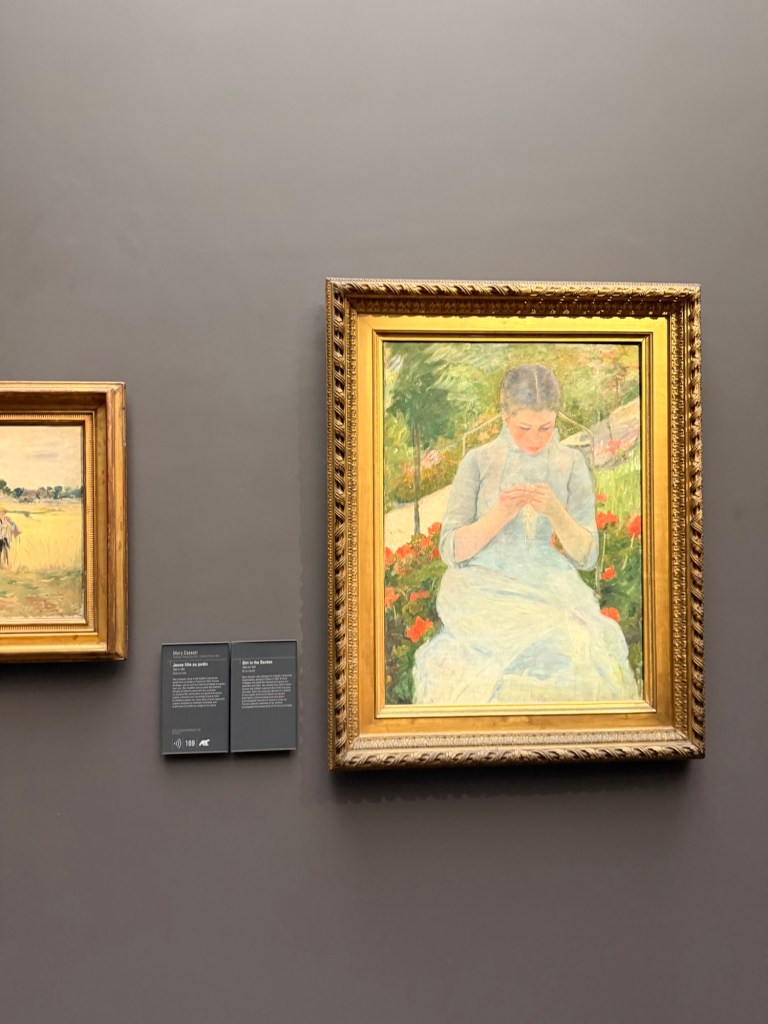
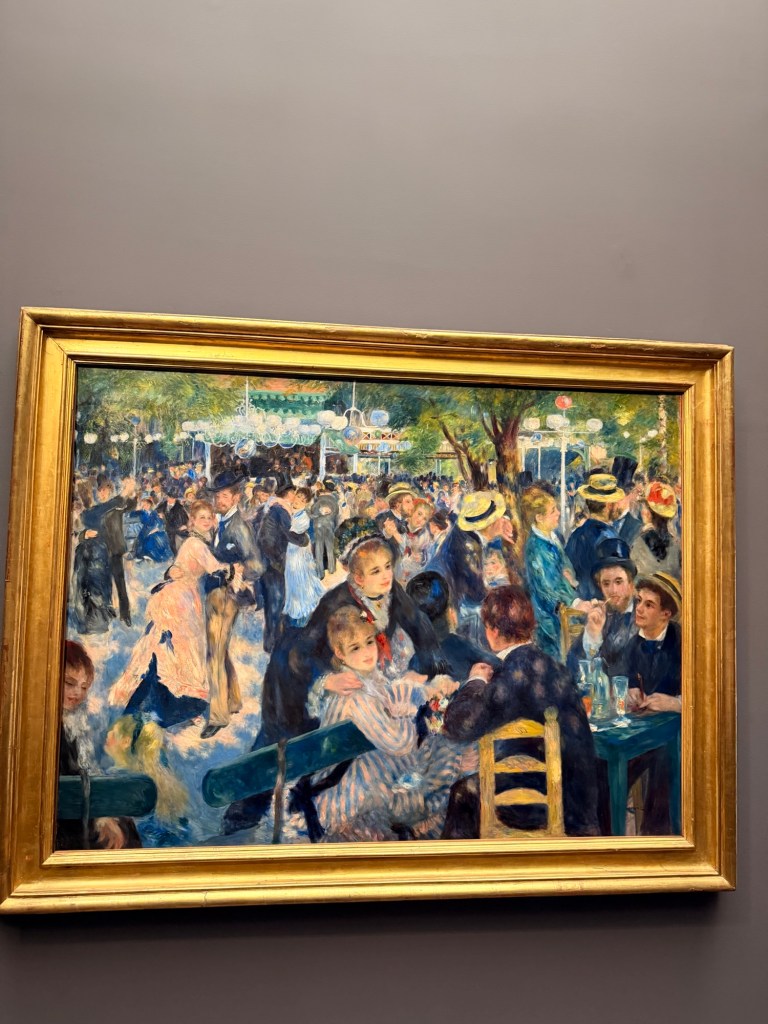
The Musée d’Orsay holds the largest Impressionist collection in the world, with major works by Degas, Monet, Renoir, and Van Gogh. Walking through it feels like watching art history unfold in real time. I’m so glad we did a guided tour because there are so many details we would have missed. Like this entire story I’m about to detail! Scroll if you just want to see pictures, because there is about to be a ton of art history here.

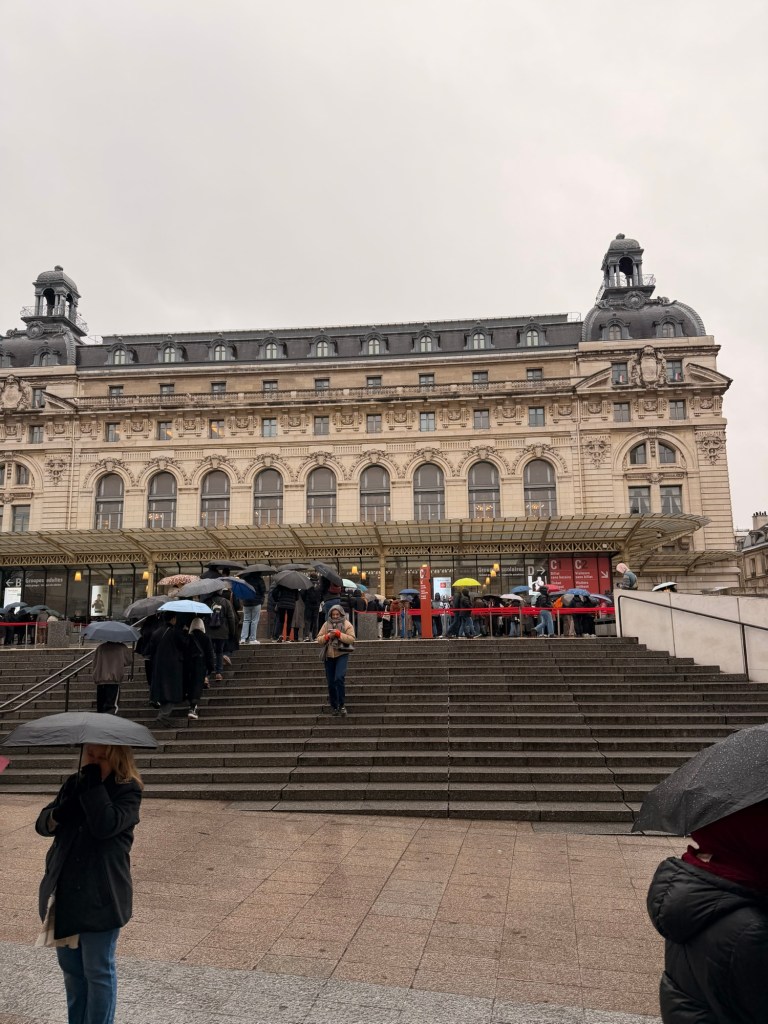
The museum itself is part of the story. We found out it was originally a train station, built with the same industrial materials used for the Eiffel Tower. At the time, this iron-and-glass style was considered ugly and controversial, which feels fitting for a museum that now houses art that was once rejected and criticized.
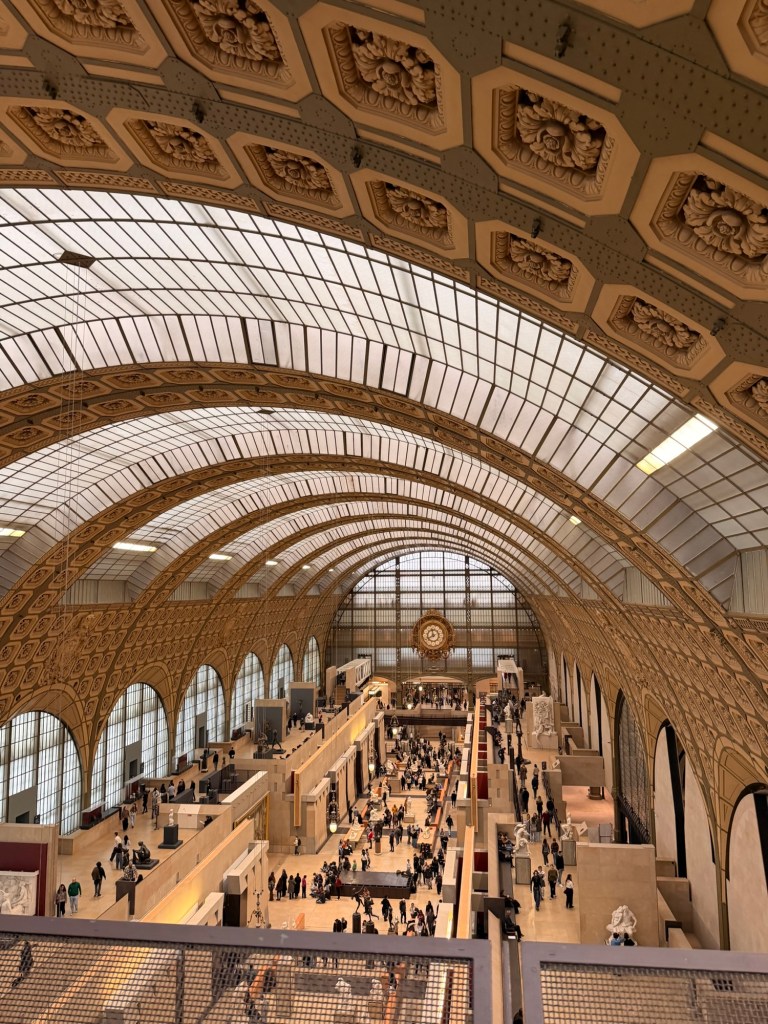
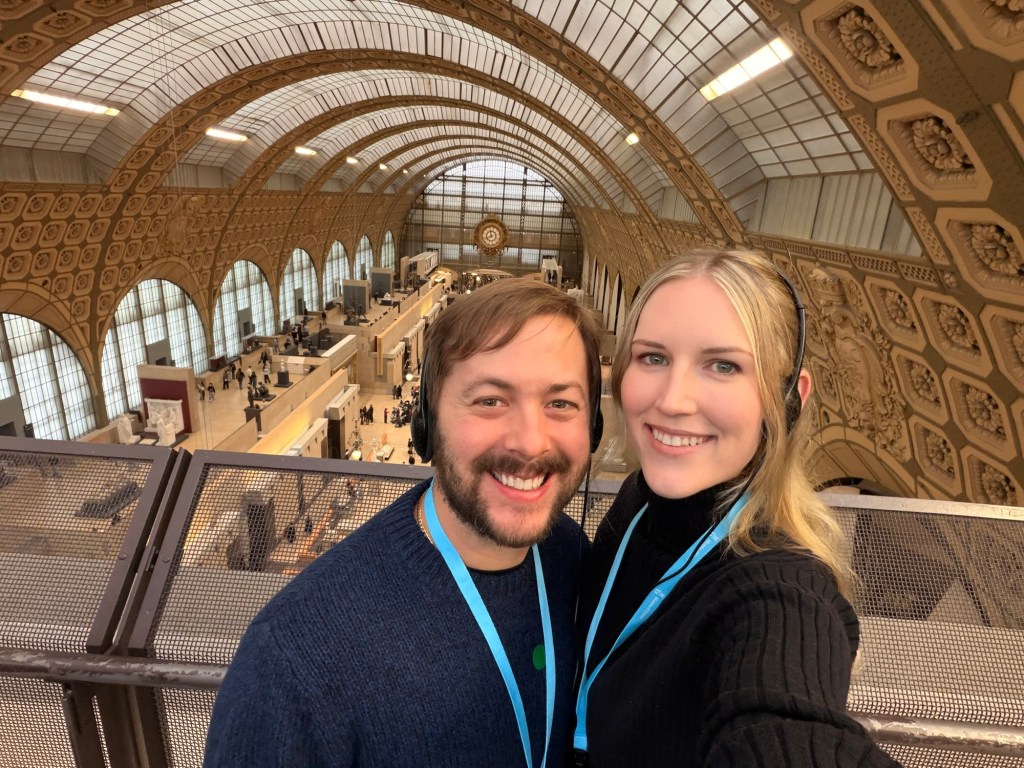
We started on the first floor, which focuses on pre-Impressionism and helps explain why Impressionism even existed in the first place. At the time, the Academy of Fine Arts controlled what was considered “good” art, and everything was ranked using the Félibien classification system. History and mythology were considered the highest form of art, followed by religion and portraits. Scenes of daily life came much lower, with landscapes and still life ranked near the bottom. According to the academy, there were objectively “good” paintings and “bad” paintings.
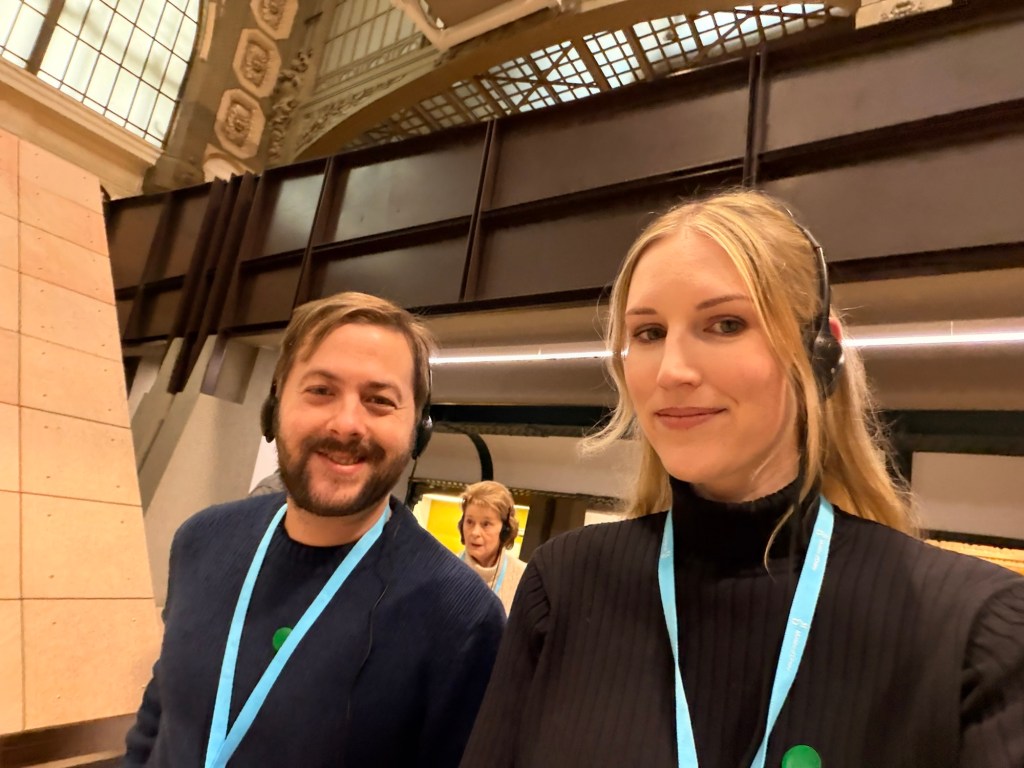
Ingres, considered one of the greatest French painters of the 1800s, represented everything the academy valued. His work was highly polished and technically perfect. Even the materials mattered. Blue pigment made from lapis lazuli was one of the most precious colors available, so simply using it was a sign of prestige and importance.
Directly across from the first Ingres hung another painting that, by the standards of the era, was considered bad. Our guide explained that the loose brushwork, chaotic composition, and lack of fine detail were exactly why it was criticized. Where Ingres was controlled, polished, and precise, this painting broke the rules, using bold color and movement instead of technical perfection.
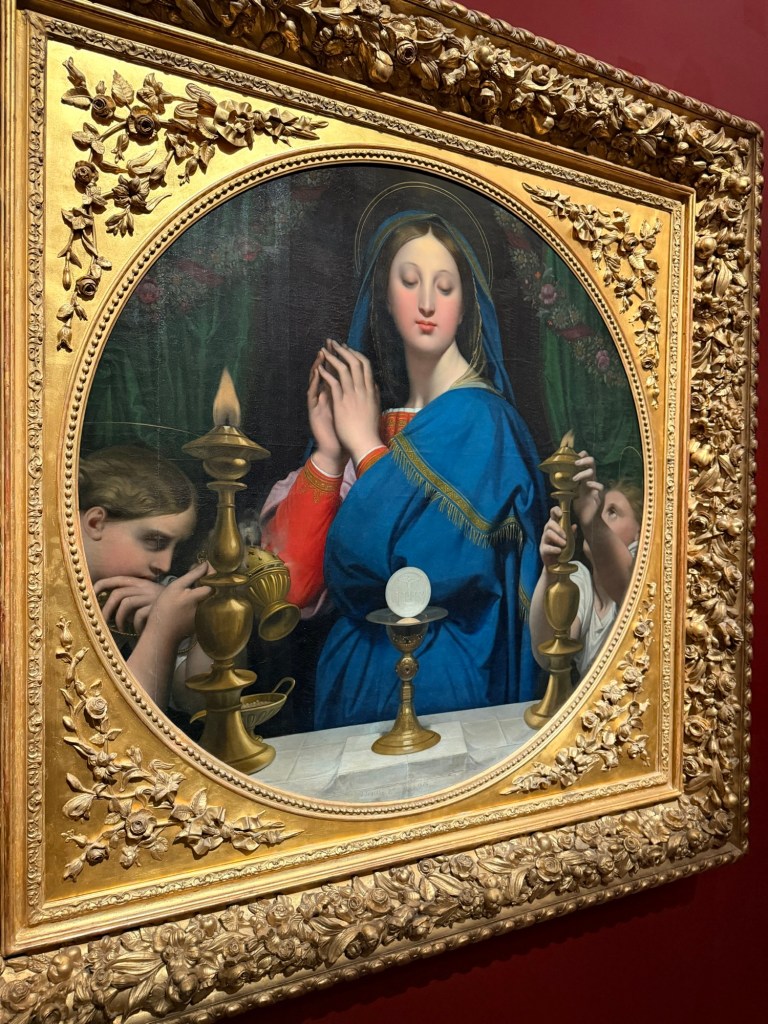
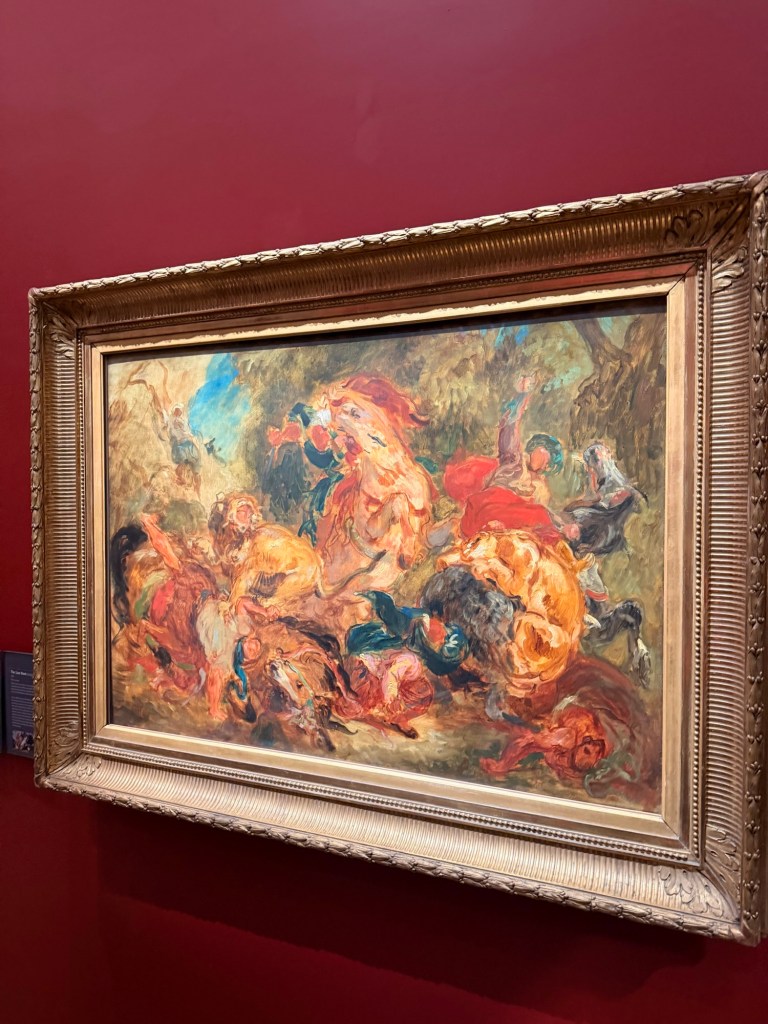
Each year, artists submitted their work to an official art exhibition run by the Academy of Fine Arts. A jury decided which pieces were worthy of being shown, and acceptance alone could make or break an artist’s career. The top honor went to the yearly winner, who received full tuition to study at the academy.
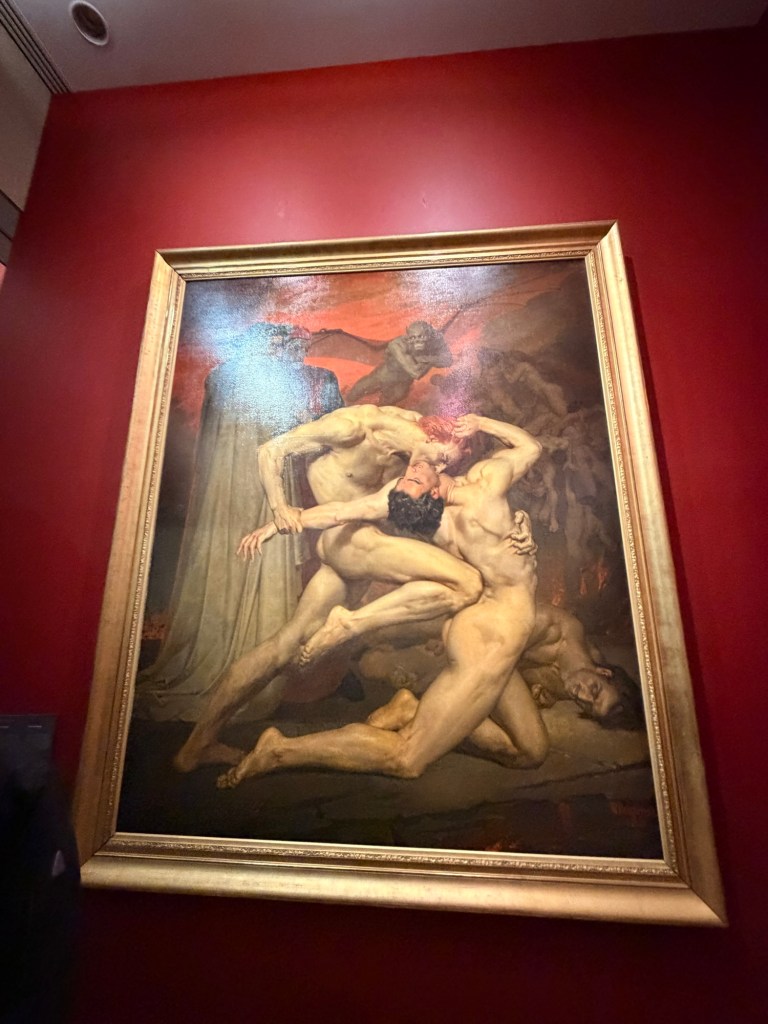
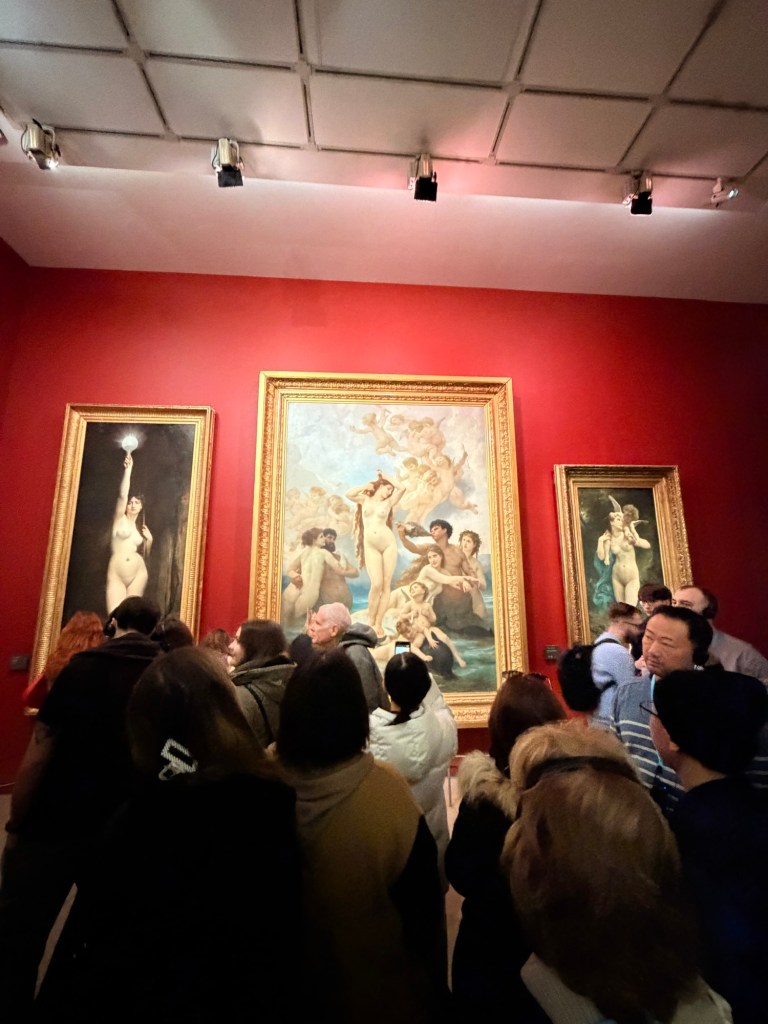
One of the most interesting discussions centered around realism and nudity. Being nude was acceptable if the subject was a goddess or a mythological figure. Being naked, however, was not. A real woman, with signs of age or imperfection, was considered inappropriate. As a member of the academy jury, you were not supposed to see that. A naked, real woman implied prostitution, and realism like that went directly against tradition.
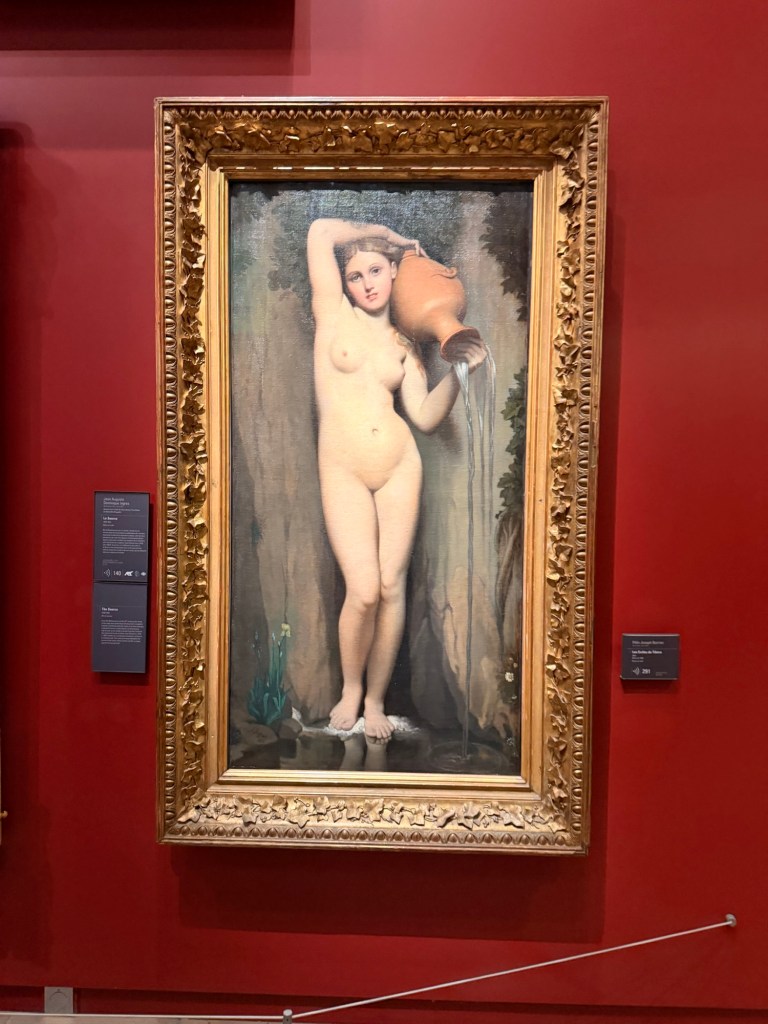
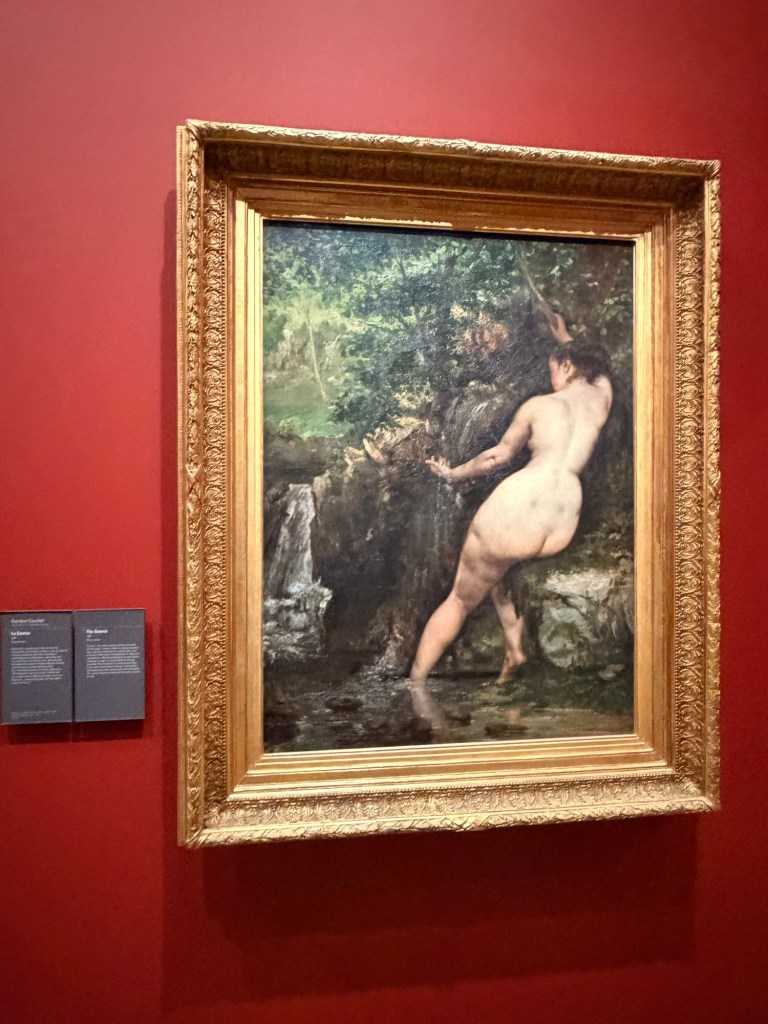
Artists who challenged these rules were often rejected. If a painting was refused by the academy, it was literally stamped with an “R” on the back, making it extremely difficult to sell later.
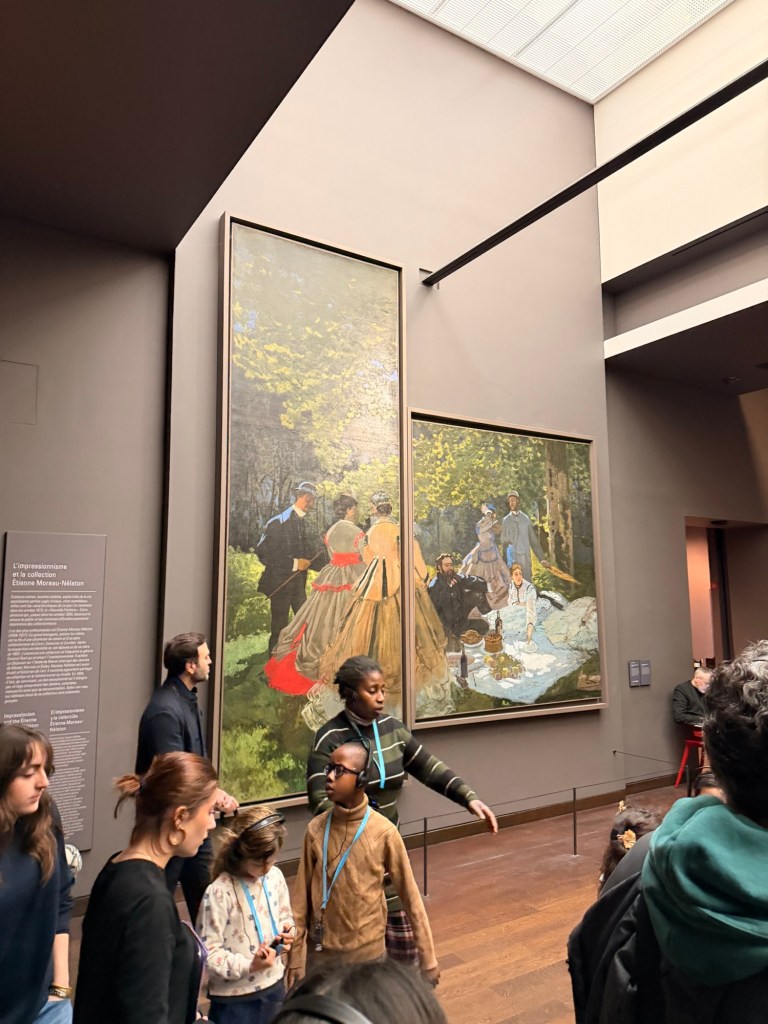
Manet famously pushed boundaries by hiring a well-known prostitute, Victorine Meurent, to recreate a classical painting of the Goddess Venus. The scandal was so intense that the Salon des Refusés was created, a separate exhibition space for rejected artworks. Claude Monet later insisted that France purchase this rejected painting for 20,000 francs, recognizing its importance long before it was widely accepted.
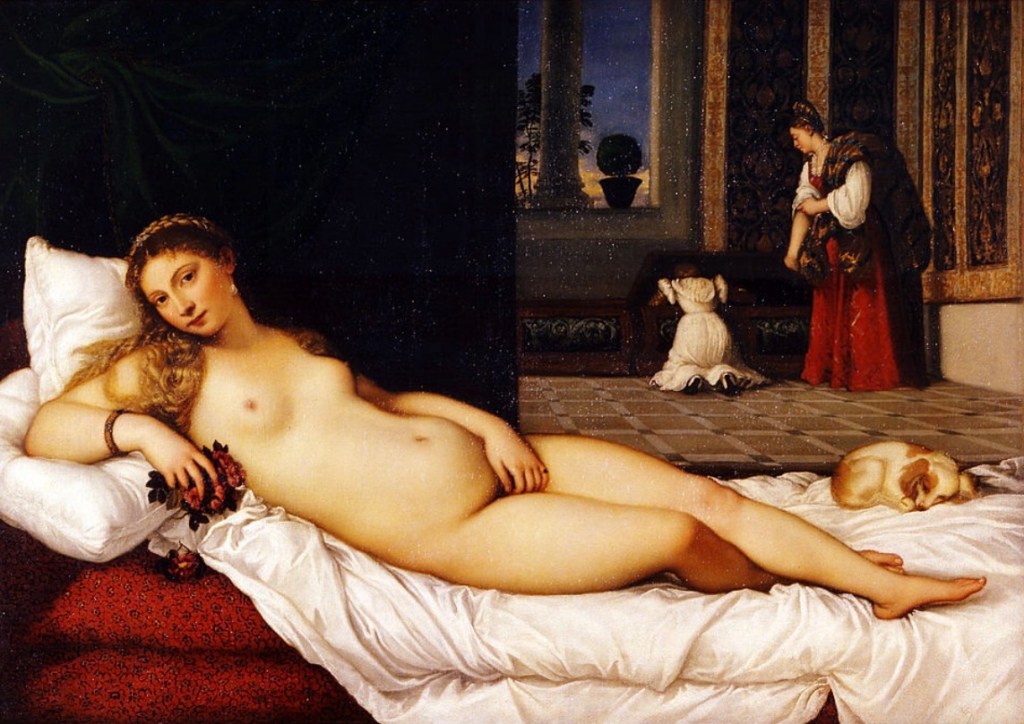
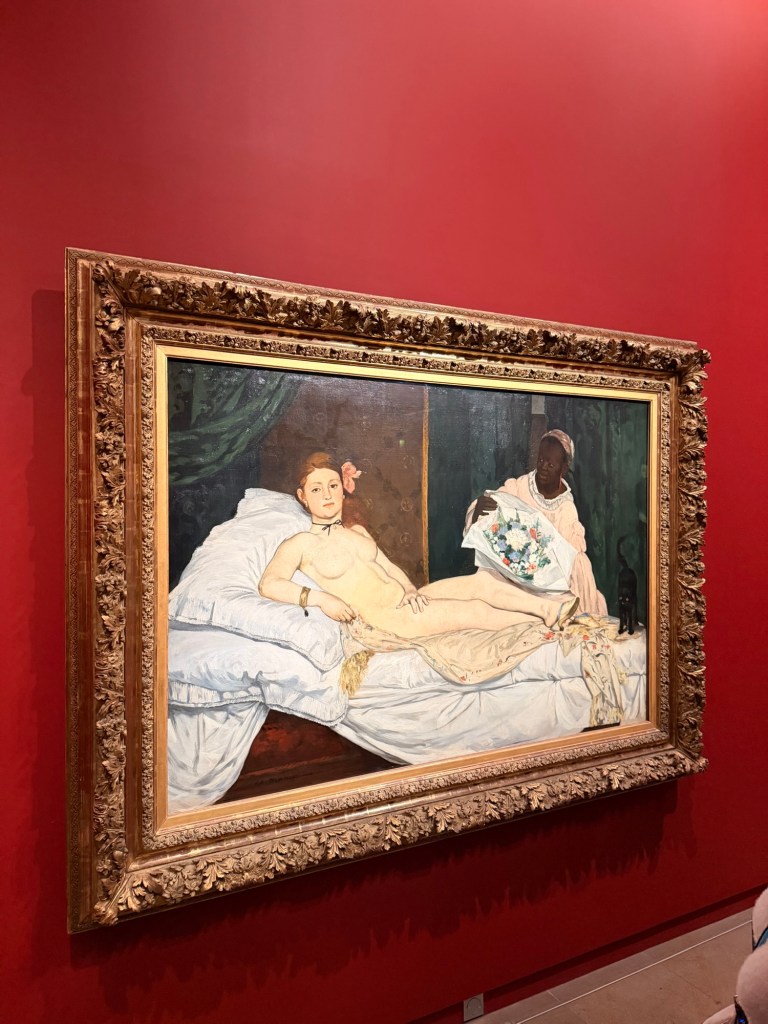
Another huge shift came with the invention of the camera in 1838. It was the fastest-spreading invention the world had ever seen. Painters suddenly had to ask themselves why someone would sit for hours for a portrait when photography existed. This pushed artists outdoors and toward landscapes, everyday scenes, and fleeting moments.
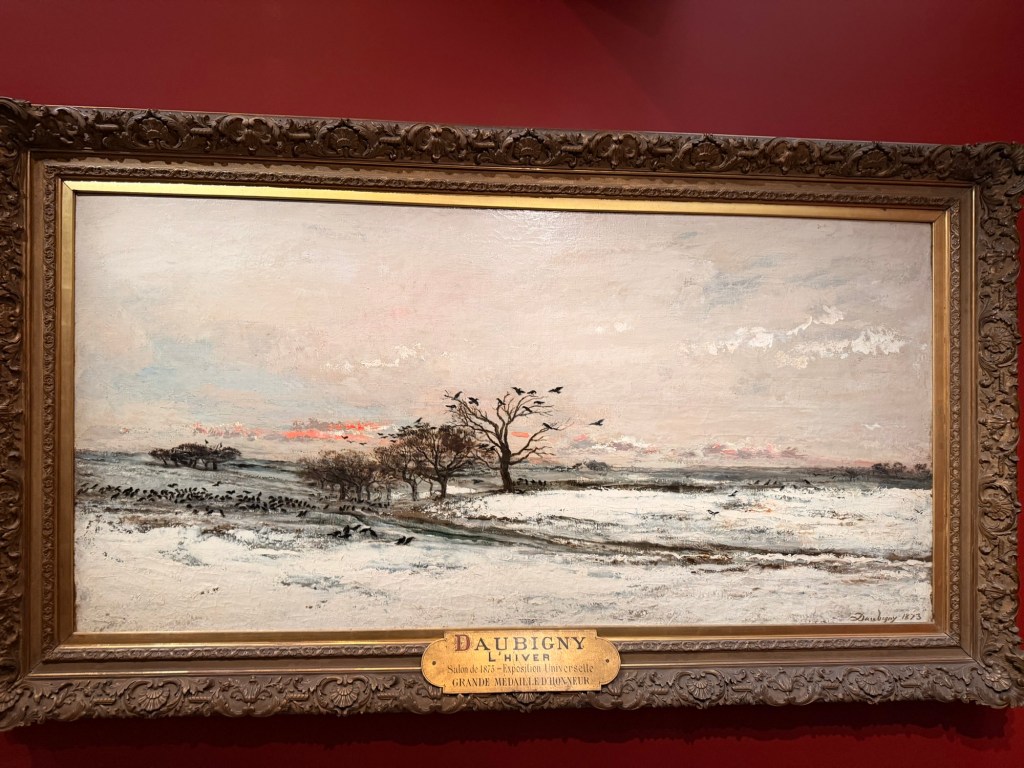
Once we went upstairs, we fully entered the Impressionist era. An art critic once mocked a group of these painters, saying their works weren’t finished paintings, just impressions. Instead of rejecting the insult, the artists embraced it, and Impressionism was born.
One Monet painting stood out because of its unusual history. At the time, Monet was struggling financially and used the painting to pay his rent. It sat for years in a damp basement. Once he became famous, he bought it back, but the damage was so severe that he cut part of the canvas away. That missing section is still gone today.
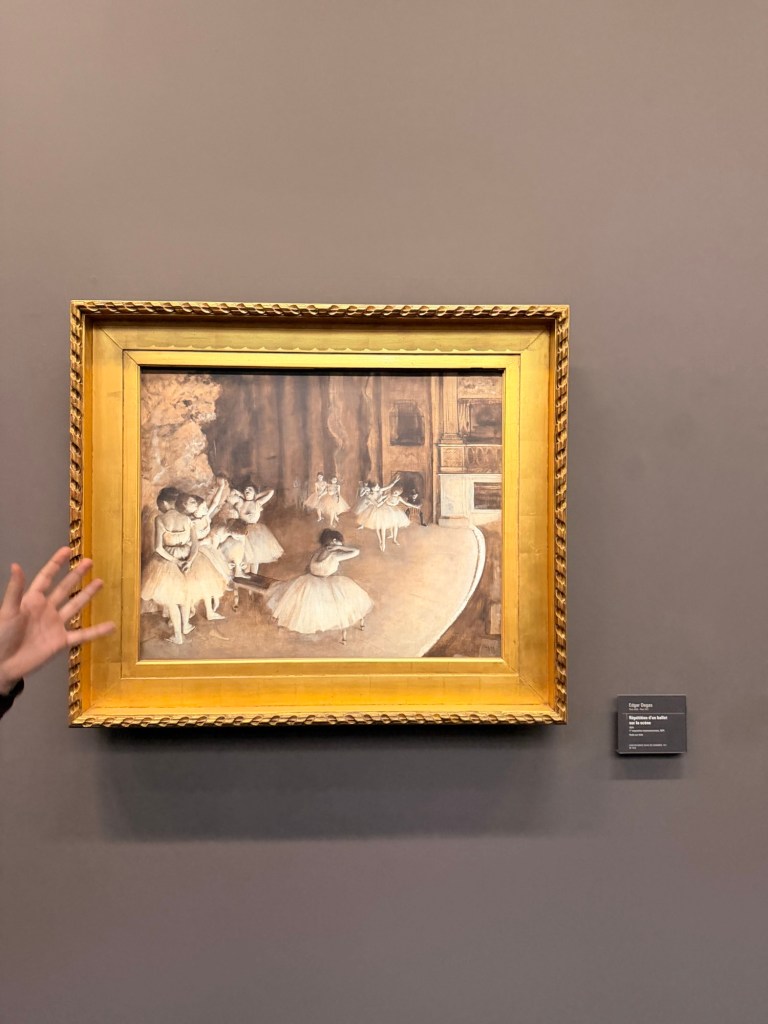
We came to a room showcasing Degas’ work next. He was deeply influenced by photography and even wanted his work to be compared to it. He often used sepia tones and unusual angles, and he painted many ballet scenes as opera and ballet became wildly popular in the 1870s.
Impressionists wanted to capture a moment, not a perfectly polished scene. Speed mattered. If a painting took too long, the moment was lost. Many smaller works were completed in a single day or within a week.
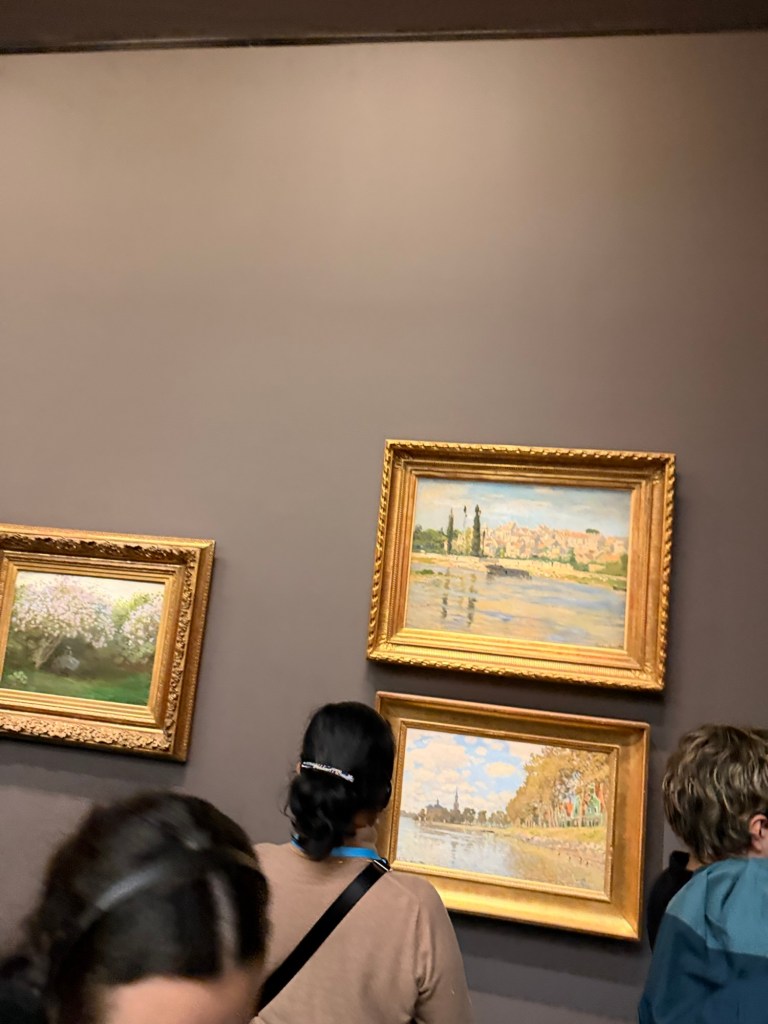
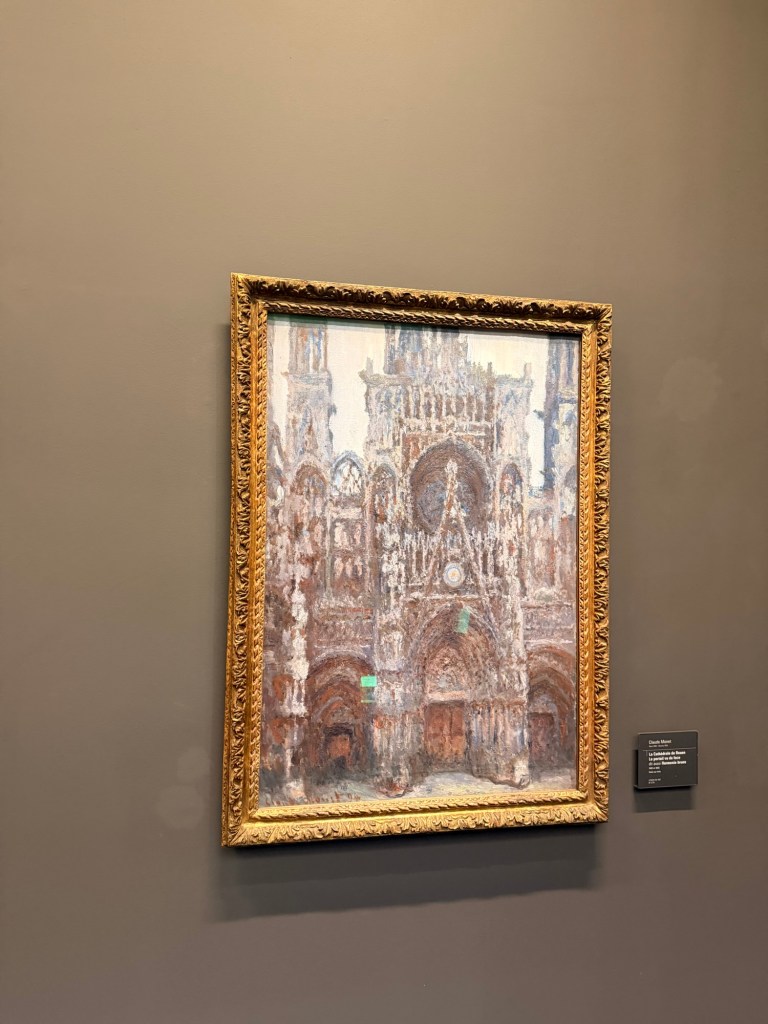
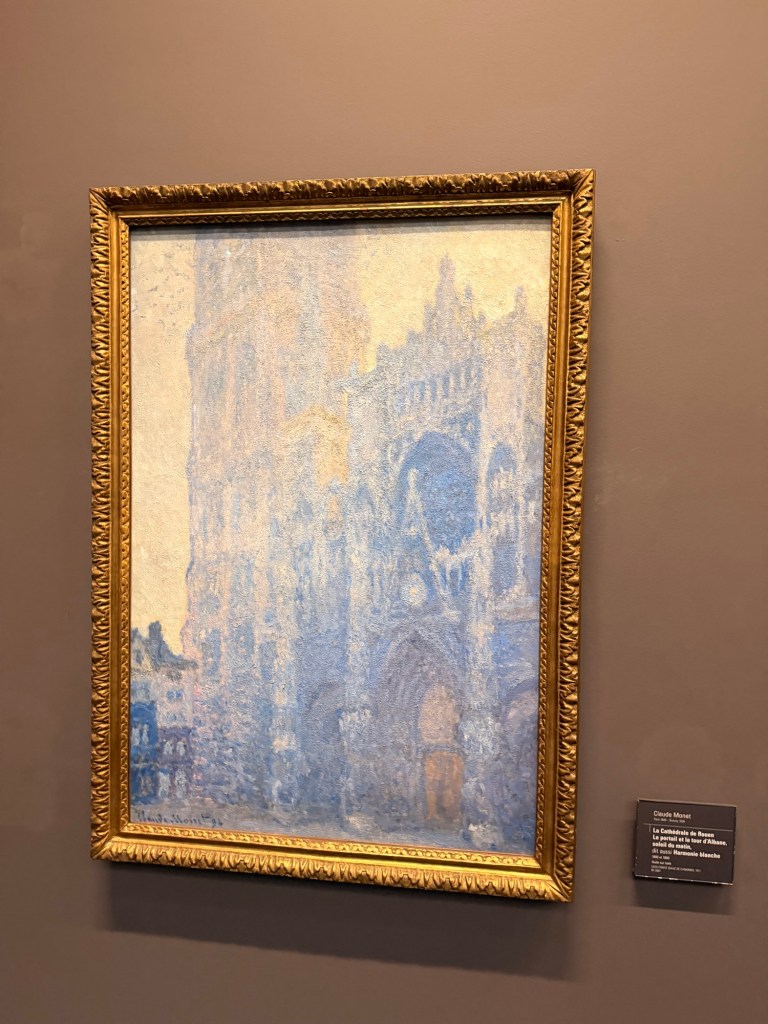
Claude Monet is the most famous Impressionist and the only one who remained committed to the style his entire life. He believed the best way to capture a moment was to paint the same subject over and over again. We saw multiple paintings of Notre Dame that showcases this.
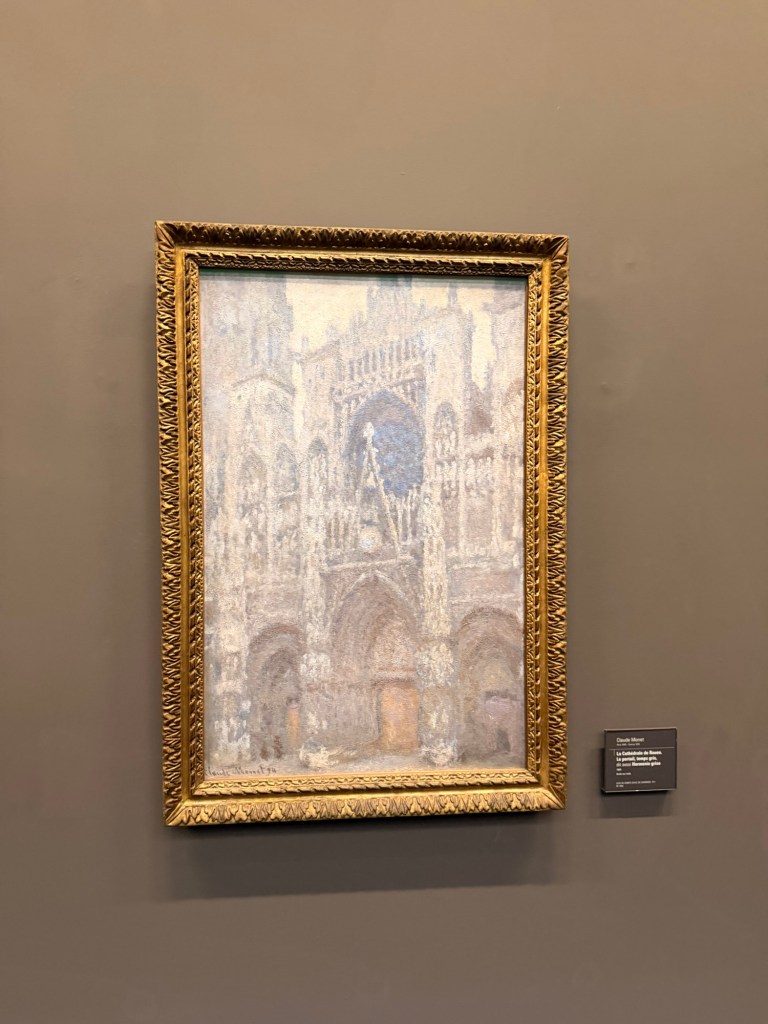
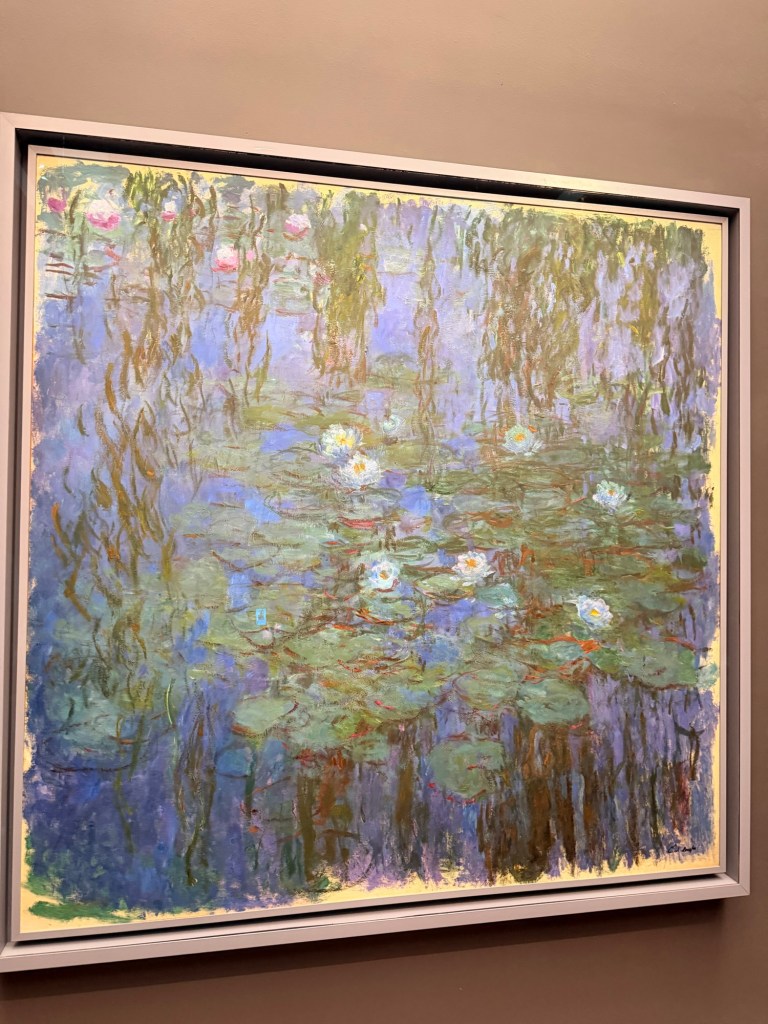
He also painted more than 230 water lily paintings. Our guide told us a cool fun fact about his water lilies: you can tell when he painted them based on the focus. Early on, the paintings include sky, trees, and reflections. Toward the end of his life, the compositions move downward, focusing more on the water itself.
Americans were actually huge fans of Impressionist paintings. As big industrial families began to emerge, they started buying art in large quantities, and Impressionism was one of the first styles available at that scale. At the time, Europe wasn’t very interested in it since they already had their beloved masters like Da Vinci and the other classics. Because of American collectors, artists like Monet became incredibly successful and wealthy.
Renoir, on the other hand, became wealthy by painting for rich families. He was known for painting “fluffy” women, a reflection of wealth at the time. Being larger meant you could afford to eat well.
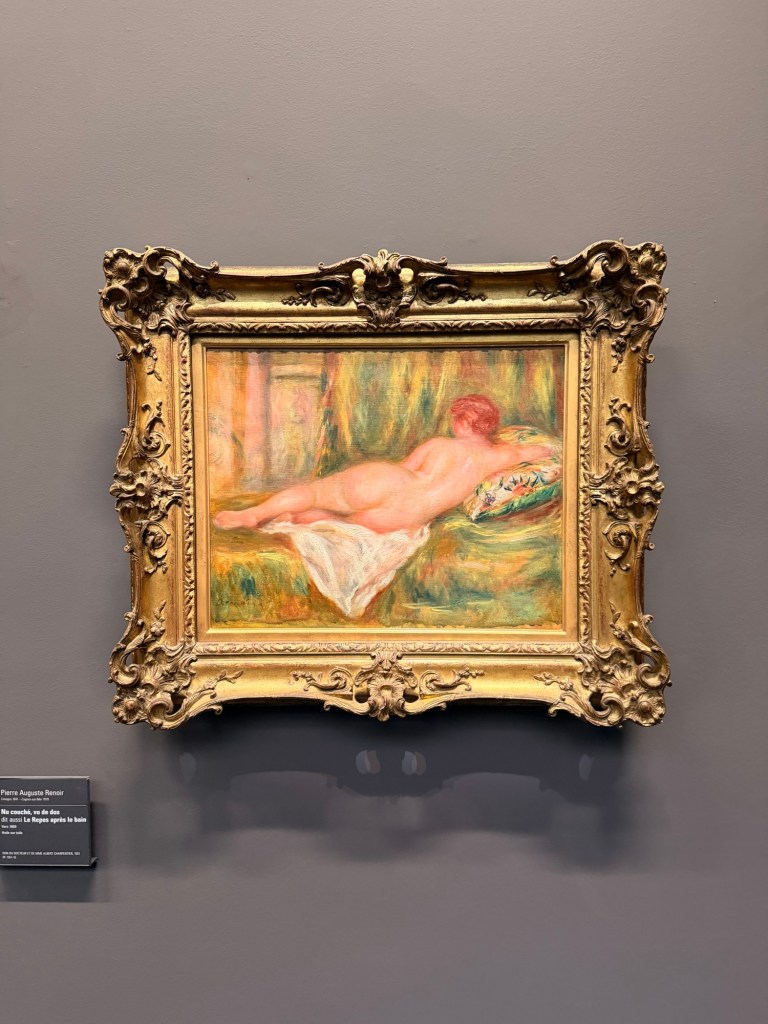
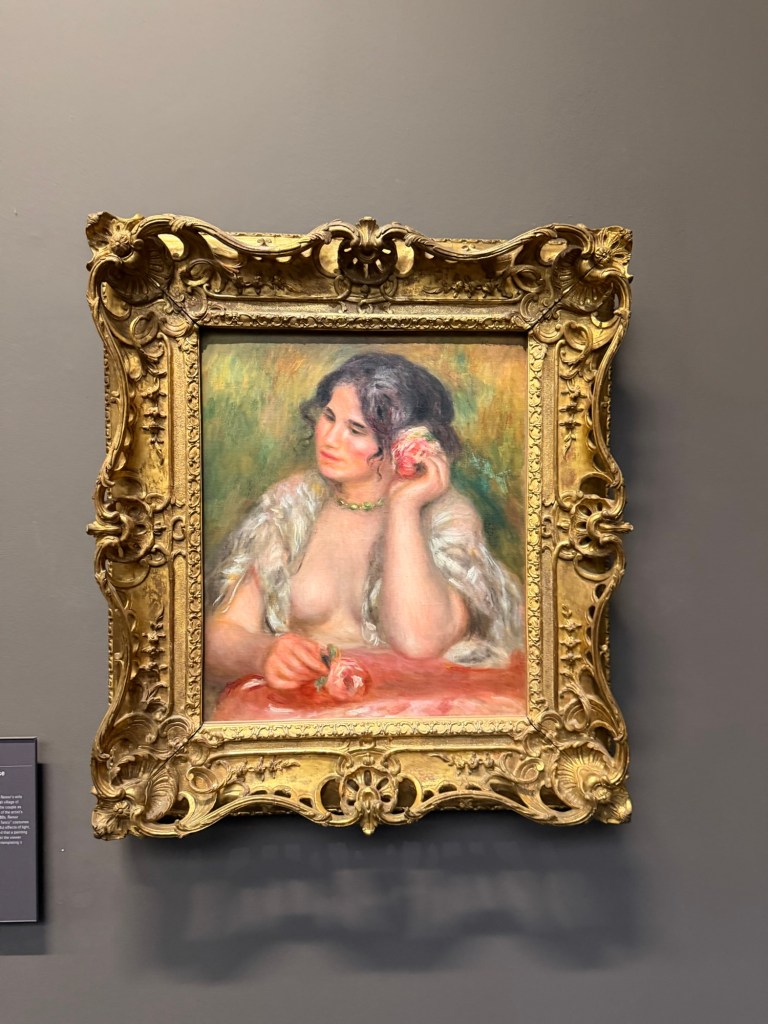
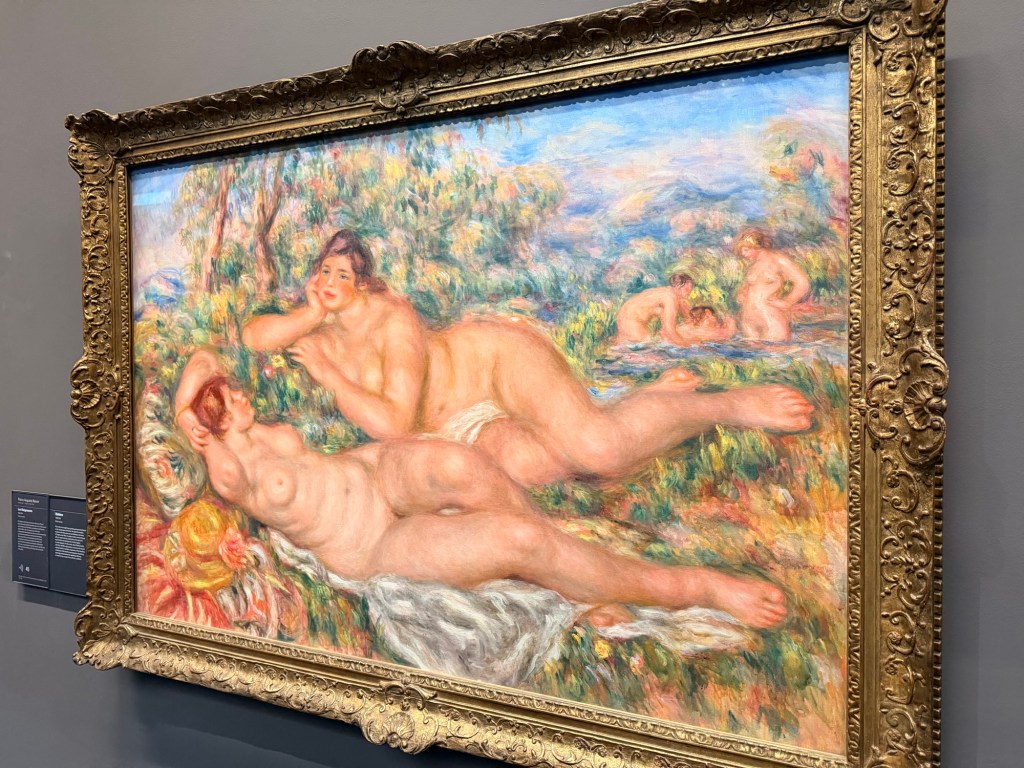
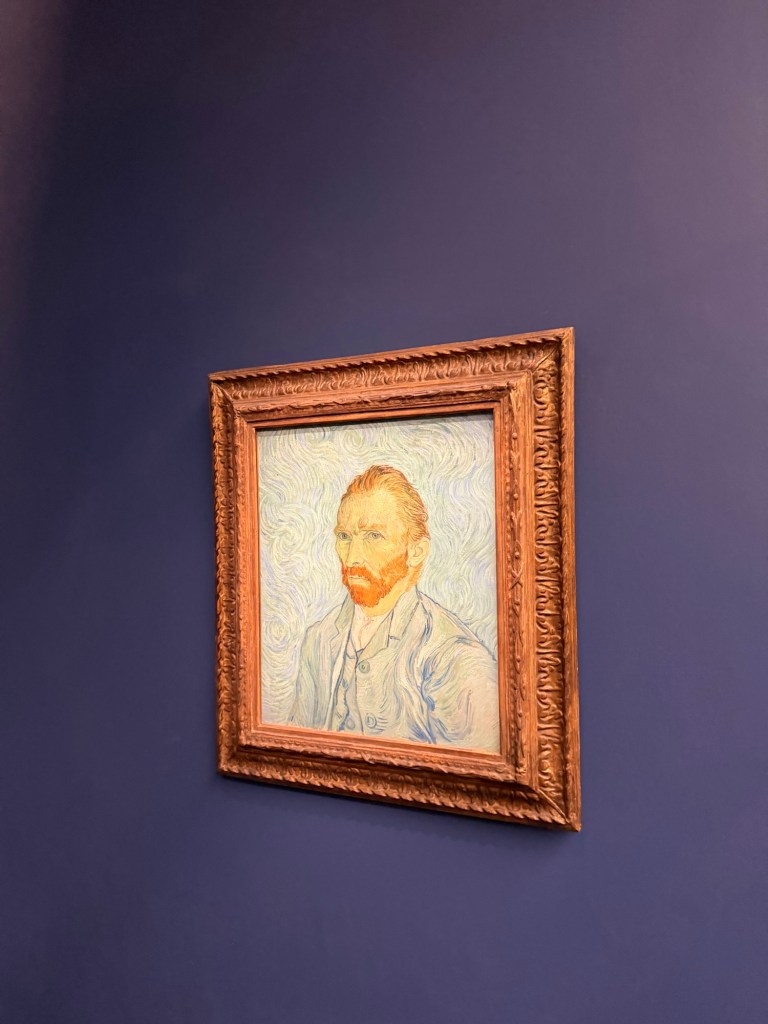
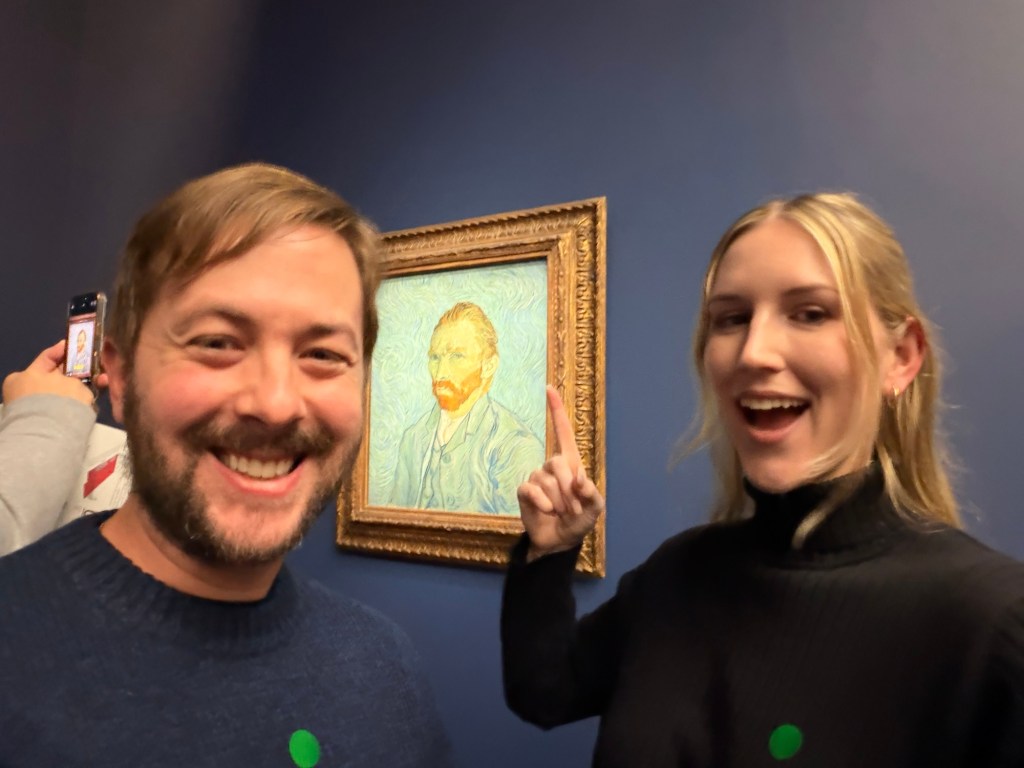
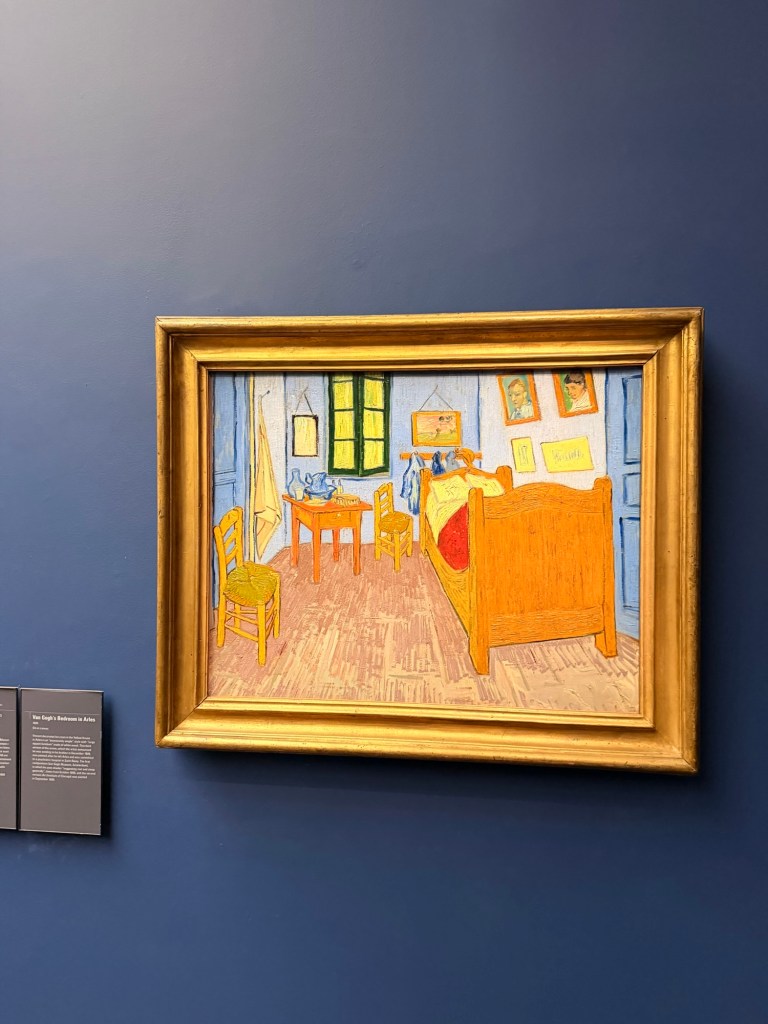
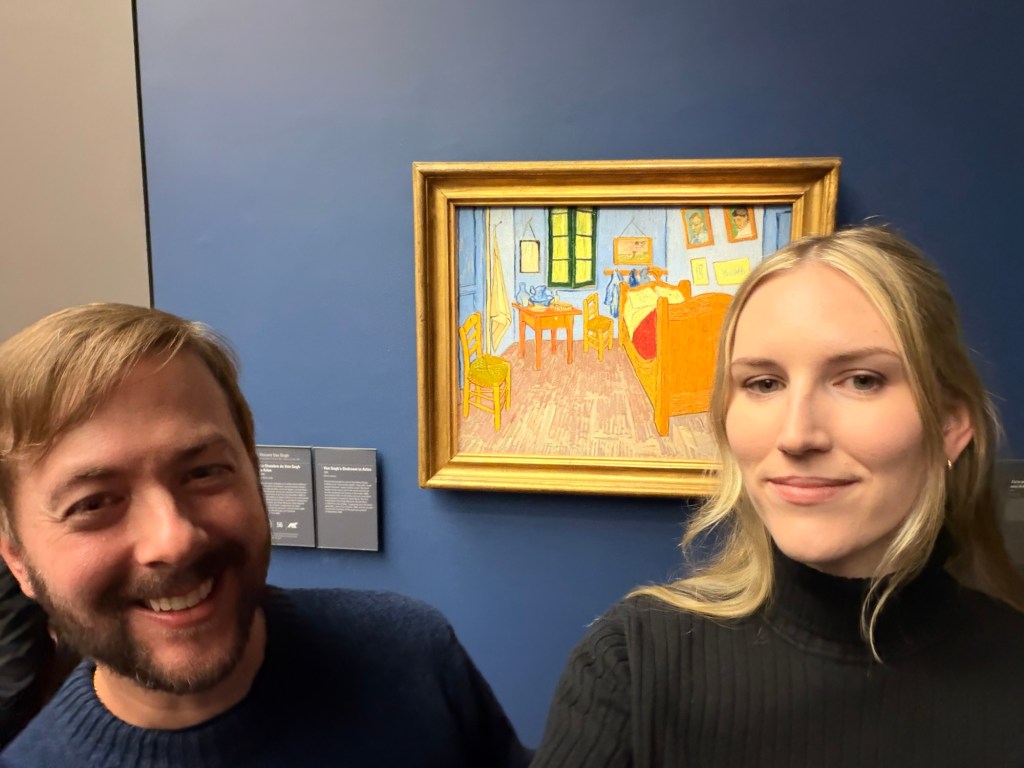
After the Renoir room our tour ended and we were free to use the rest of our time in the museum for self exploration. We went back to the Vincent Van Gogh room. I had no idea, but he was not an artist his whole life, he only painted for about five years at the end of his life. At the time of his death, he was poor and completely unknown. His fame came later, largely thanks to his sister-in-law, who worked tirelessly to promote his work after his death. The Musée d’Orsay now holds the second-largest collection of his paintings in the world.
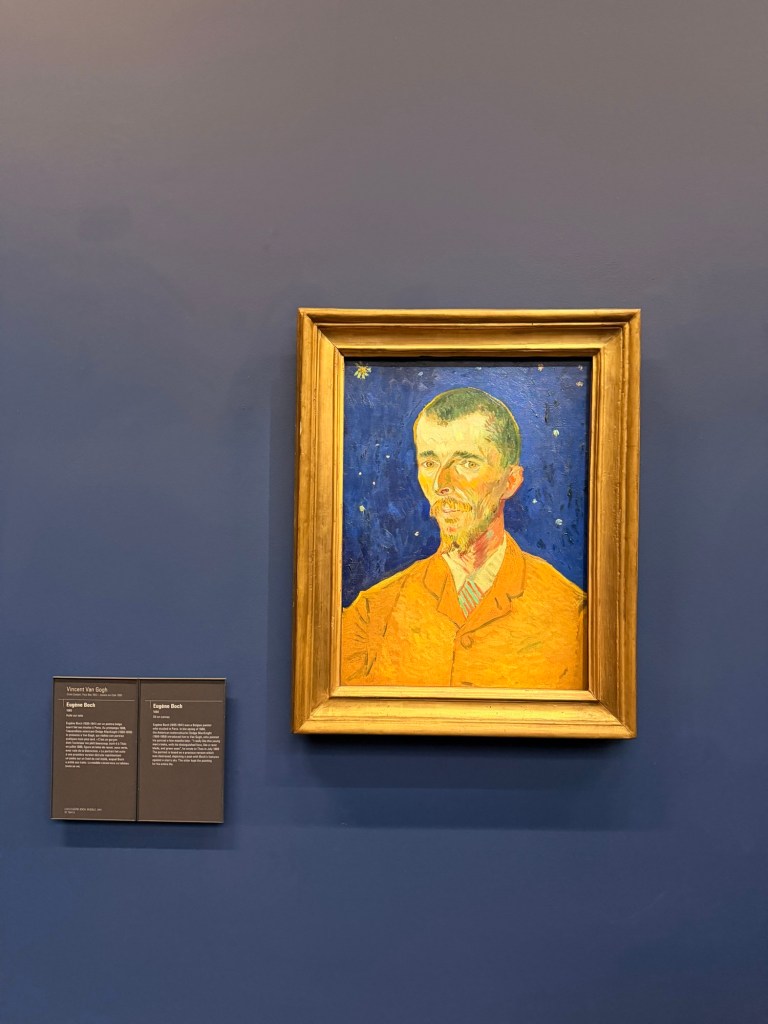
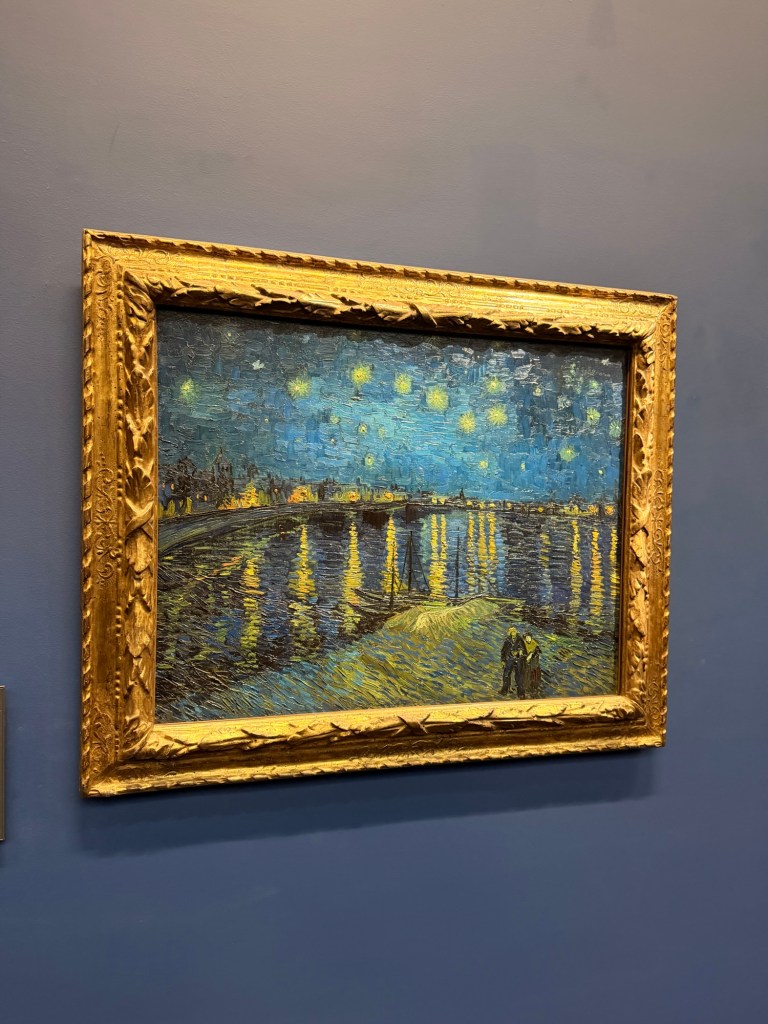
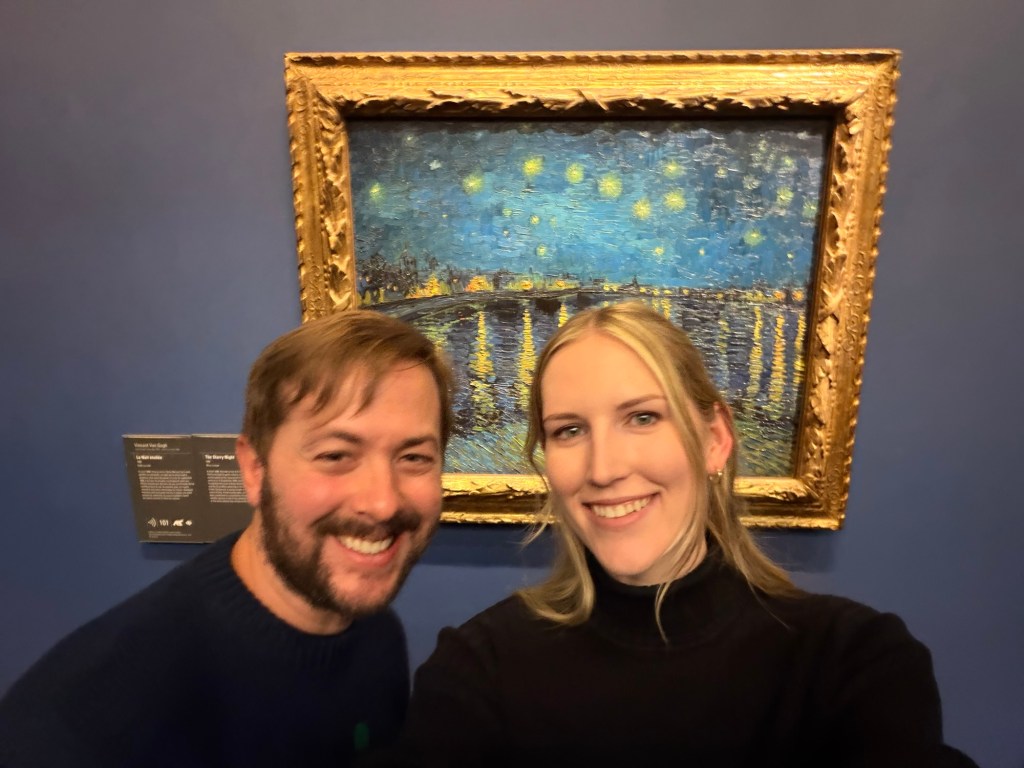
This section was quite busy, and we had to wait a while to pose in front of some of his very famous works.
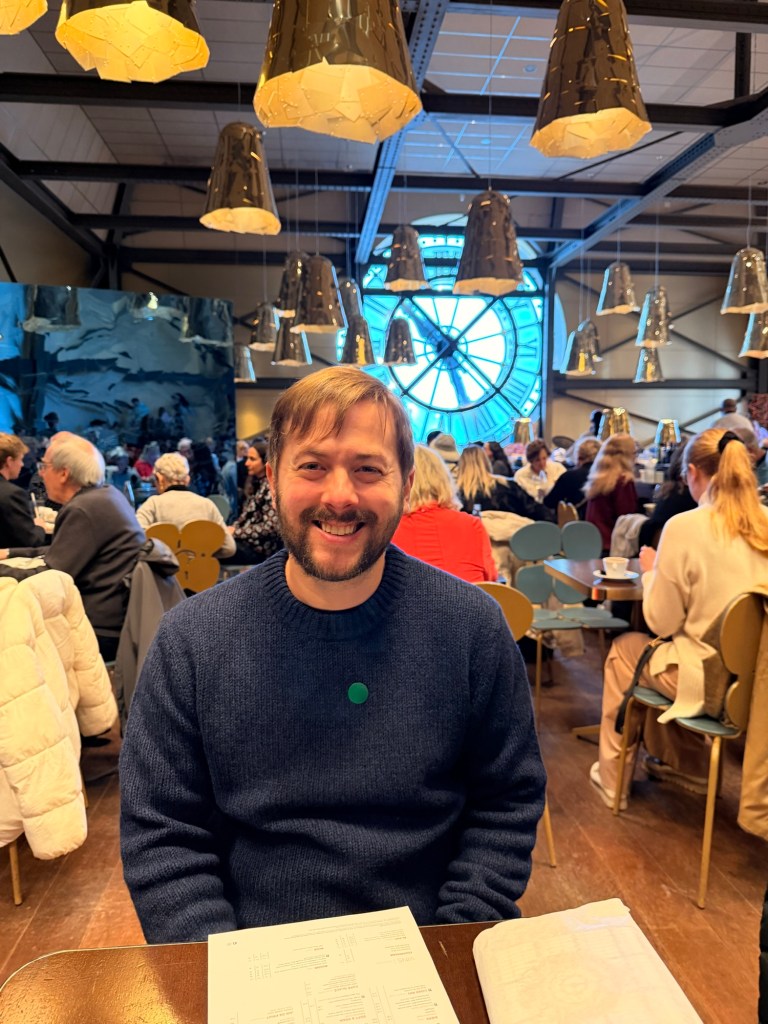
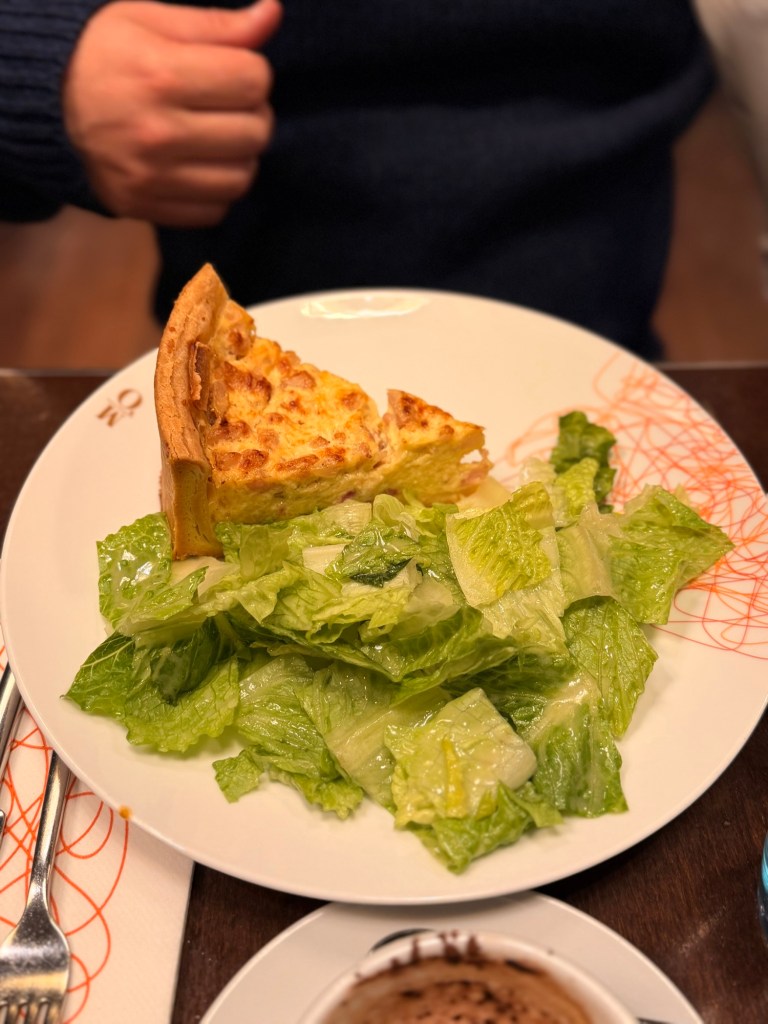
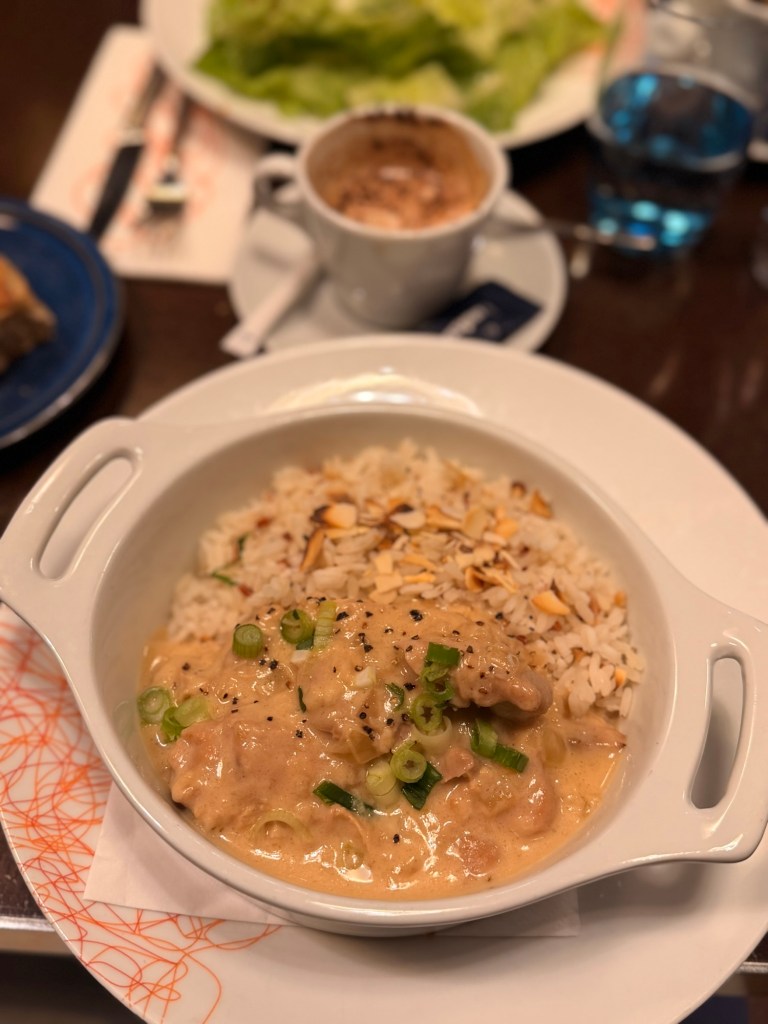
I was starting to get hungry at this point, so we made our way back to the museum café for some lunch and a caffeine boost. I ordered the chicken fricassée and Jordan got a quiche Lorraine. I chose the chicken because it’s a traditional French dish, and I’m really glad I did. It was so cozy and comforting, almost like a thicker, creamier chicken soup or a chicken pot pie.
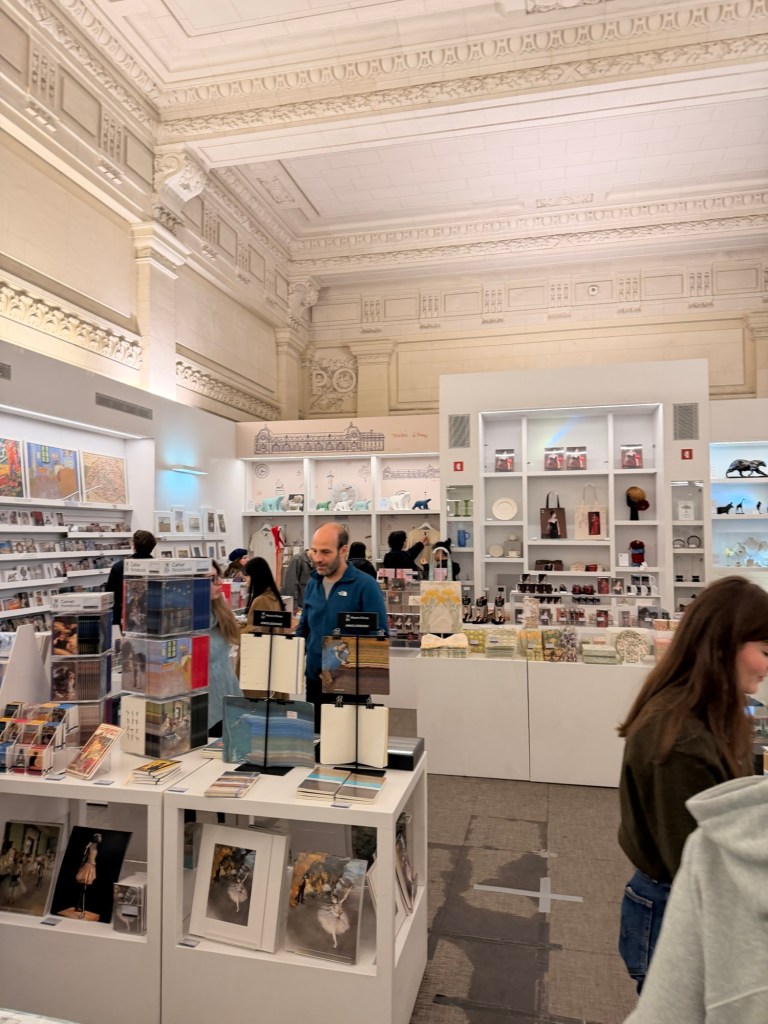
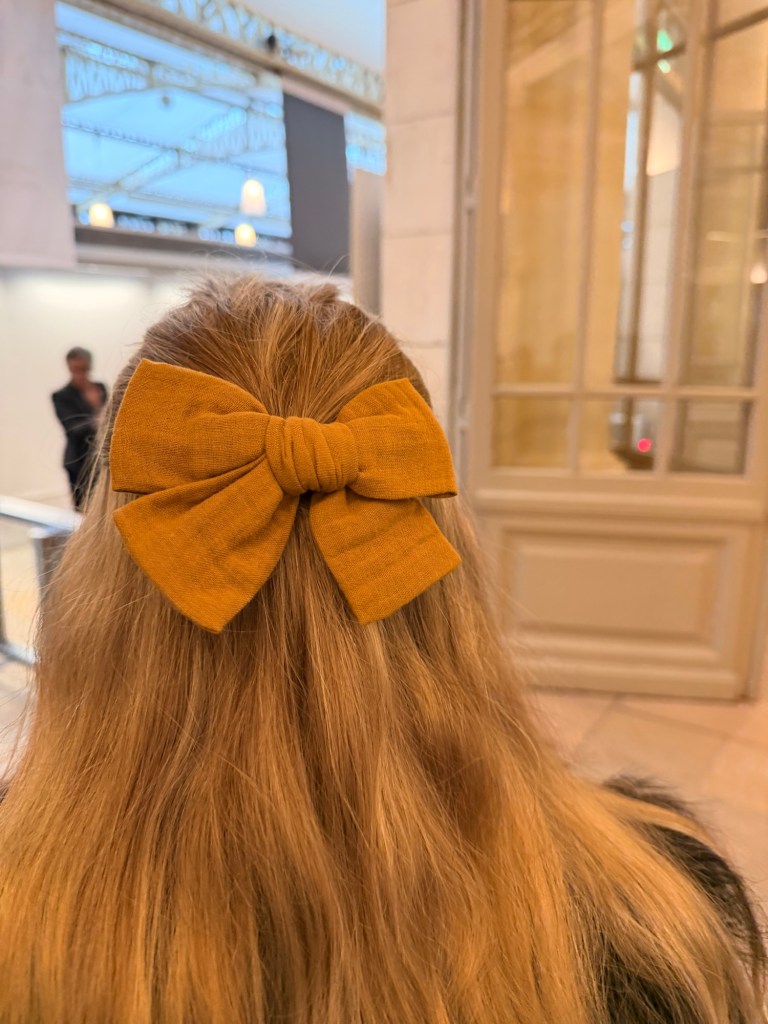
After lunch, we headed back downstairs, used the restroom, and wandered through the gift shop for a bit. I picked up a cute bow to put in my hair. Then we exited to the street and started the walk back toward our hotel.
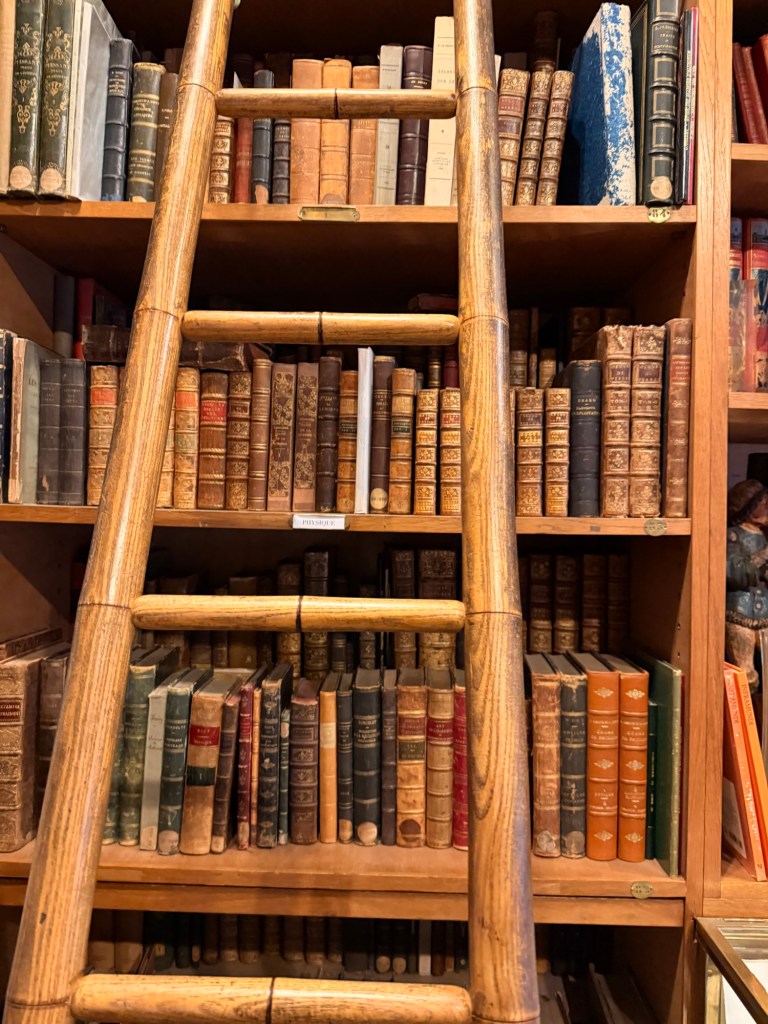
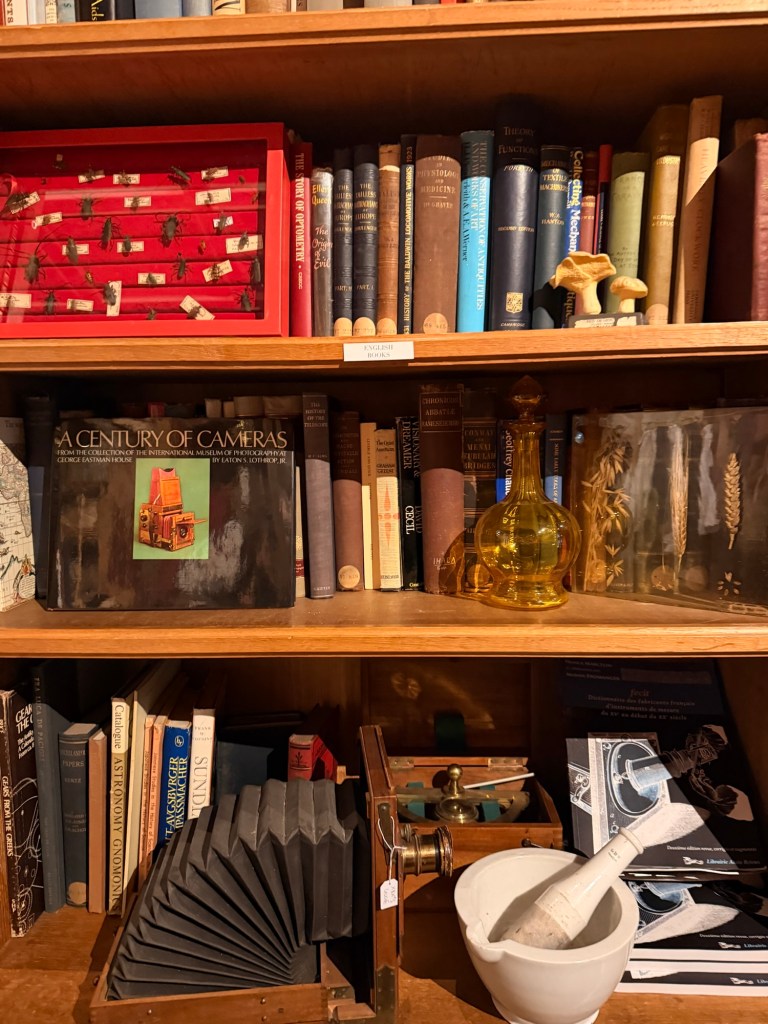
We made a few stops along the way, including an antique bookstore filled with incredibly old books. Some were dated back to the 1600s. One book I picked up was €700, so I mostly just admired everything from a safe distance and took photos. Touching anything felt way too stressful.
Next, we stopped into a Louis Vuitton store just to browse. I was a little intimidated at first because of the security at the door and all the attendants, but I’m glad we went in. It was fun to look around and see everything up close.
After that, we visited Ralph Lauren’s flagship store. The building itself was stunning. It was four stories tall, and the view looking down onto the street was so cool.
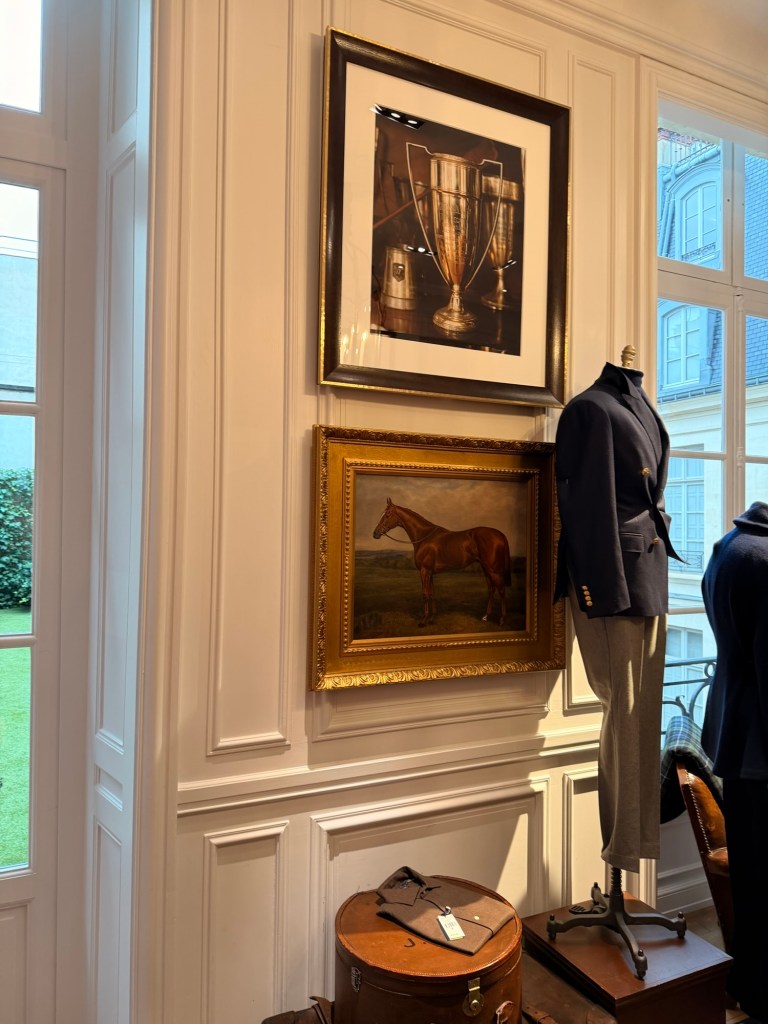
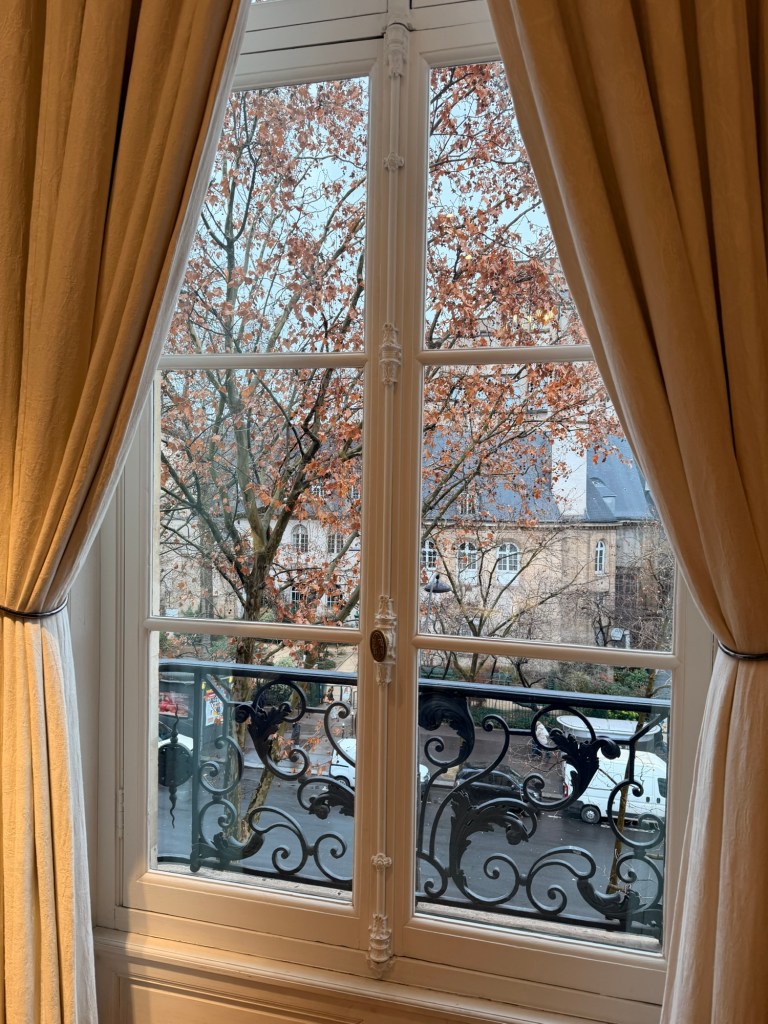
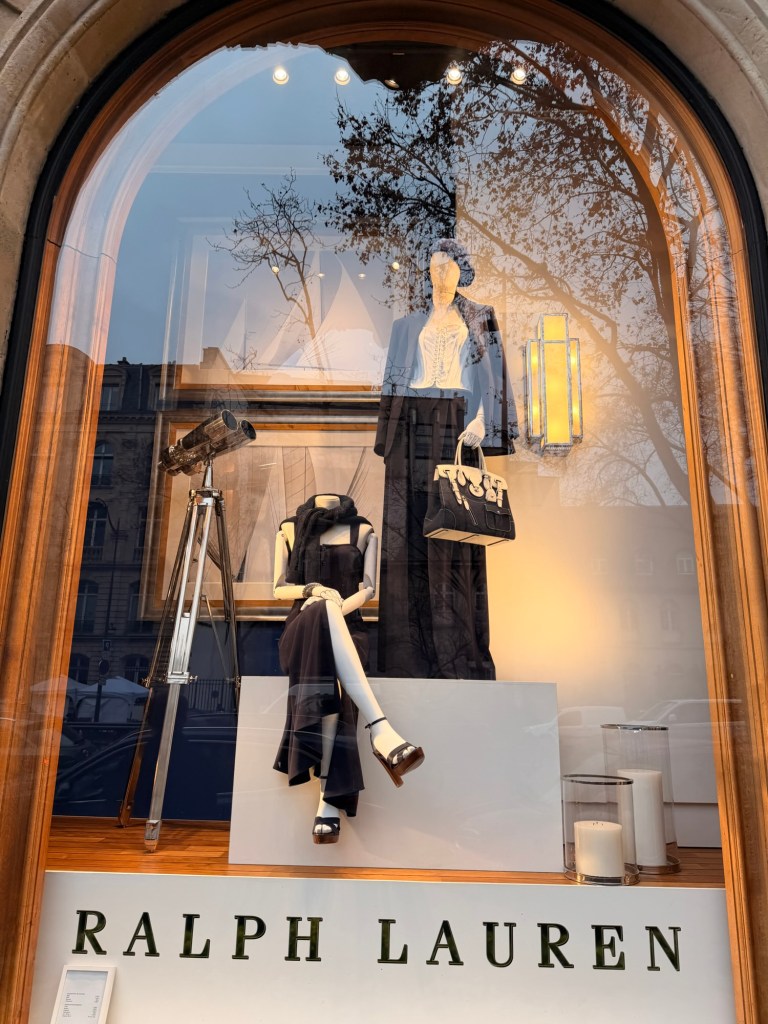
At that point, we decided it was time to head back to the hotel and rest before our second Michelin-star experience!!
We relaxed at the hotel for a bit and eventually called an Uber. We considered taking the metro but decided an Uber would be less stressful on the way there. Before we left, the front desk attendant noticed us taking mirror selfies and offered to take photos for us. She absolutely nailed them.
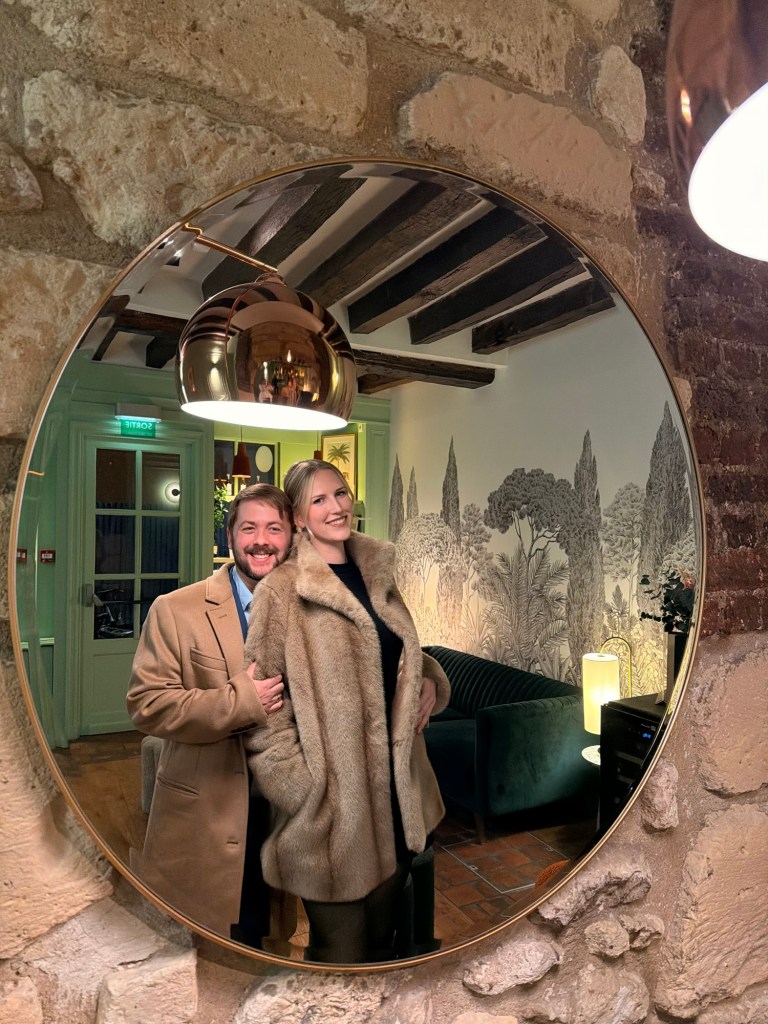
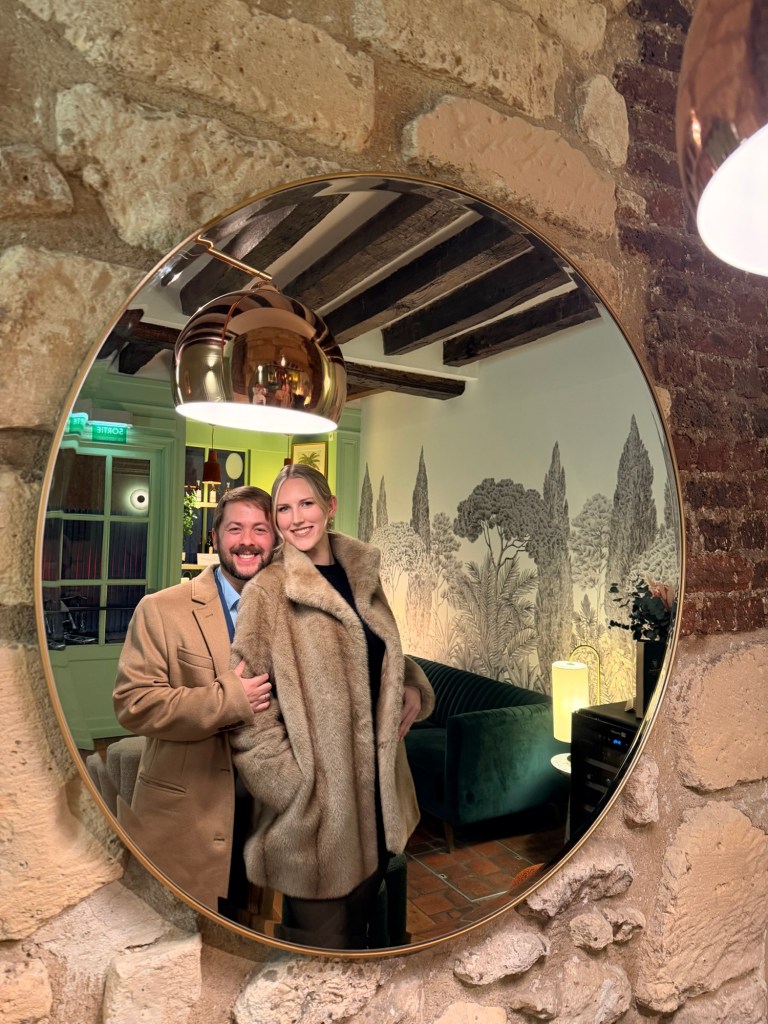
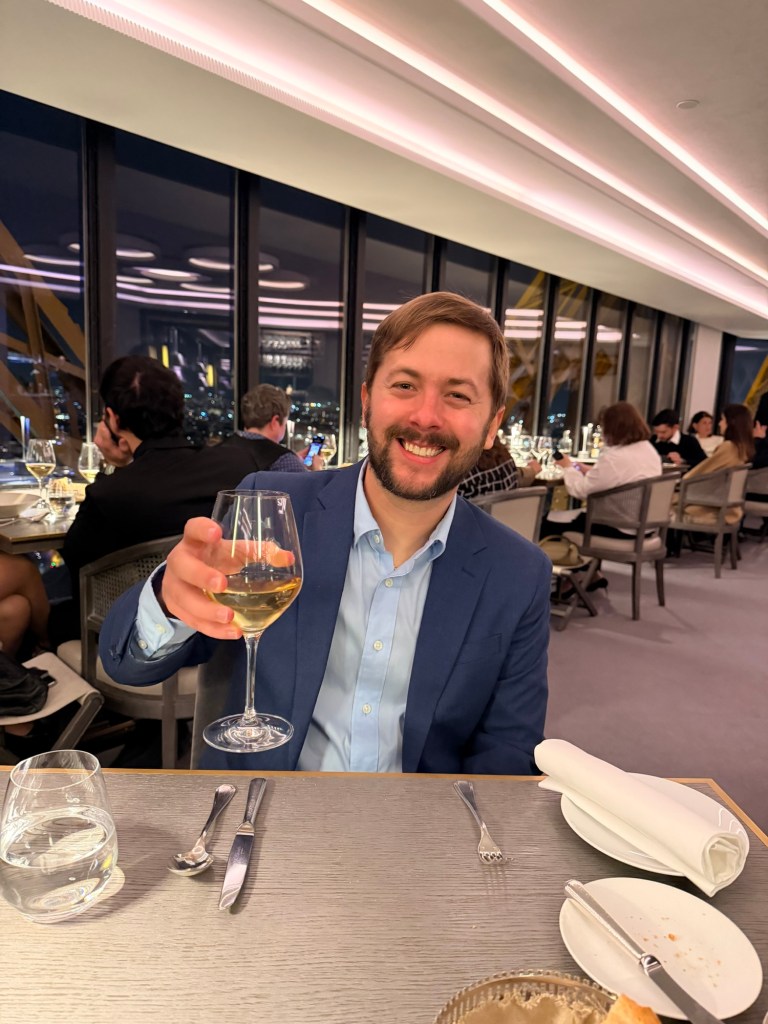
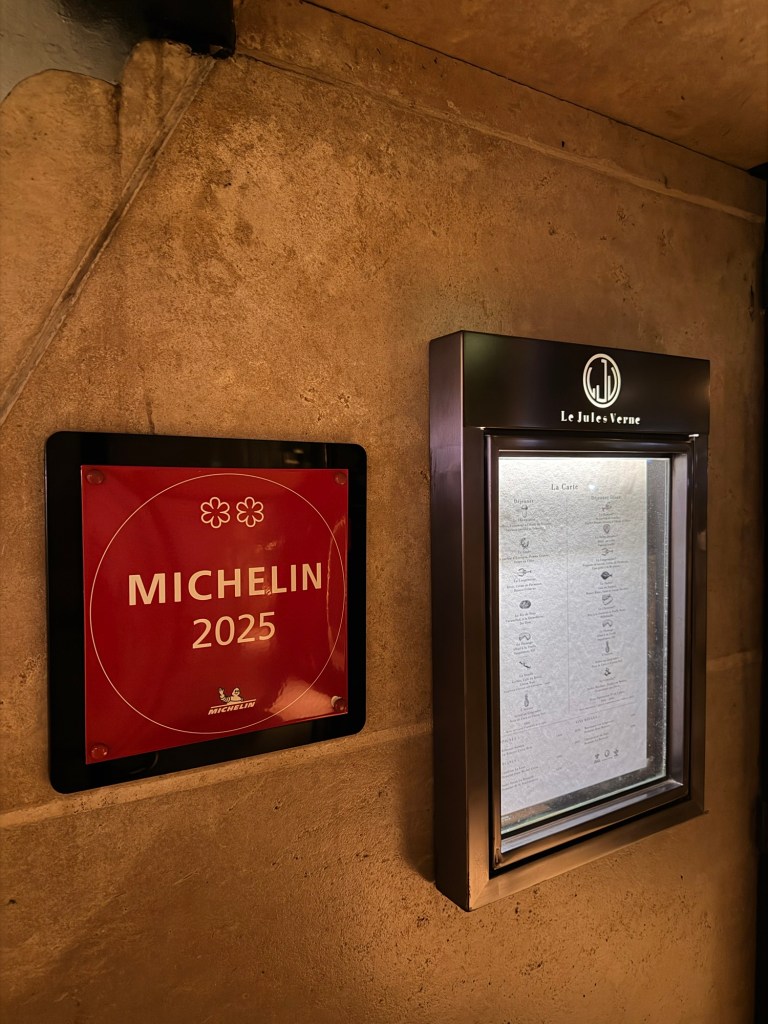
Our dinner reservation was at Le Jules Verne, a two-star Michelin restaurant located inside the Eiffel Tower. We had such an amazing experience at a Michelin-star restaurant in Italy overlooking the Spanish Steps, so we knew we wanted to do something similar in Paris.
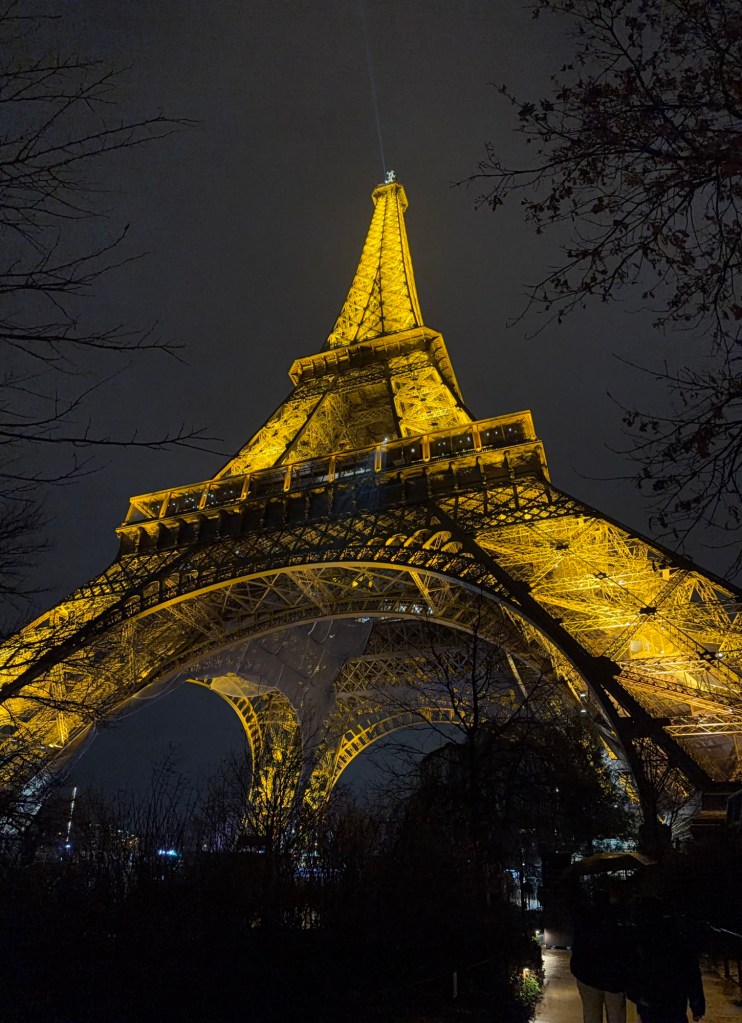
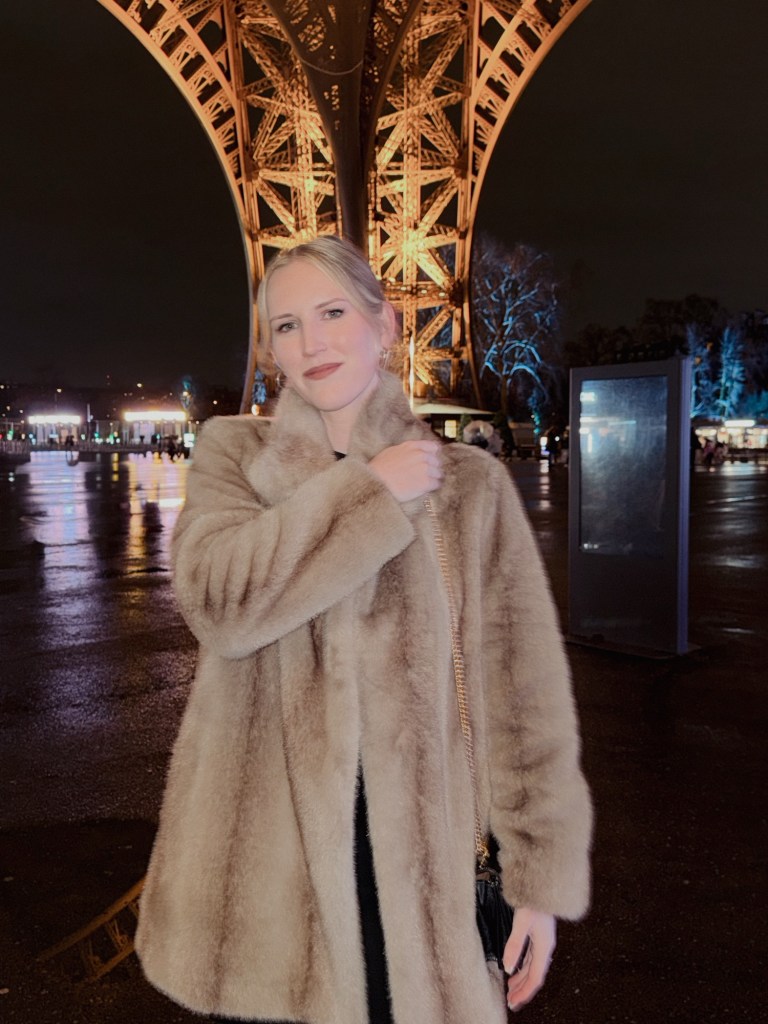
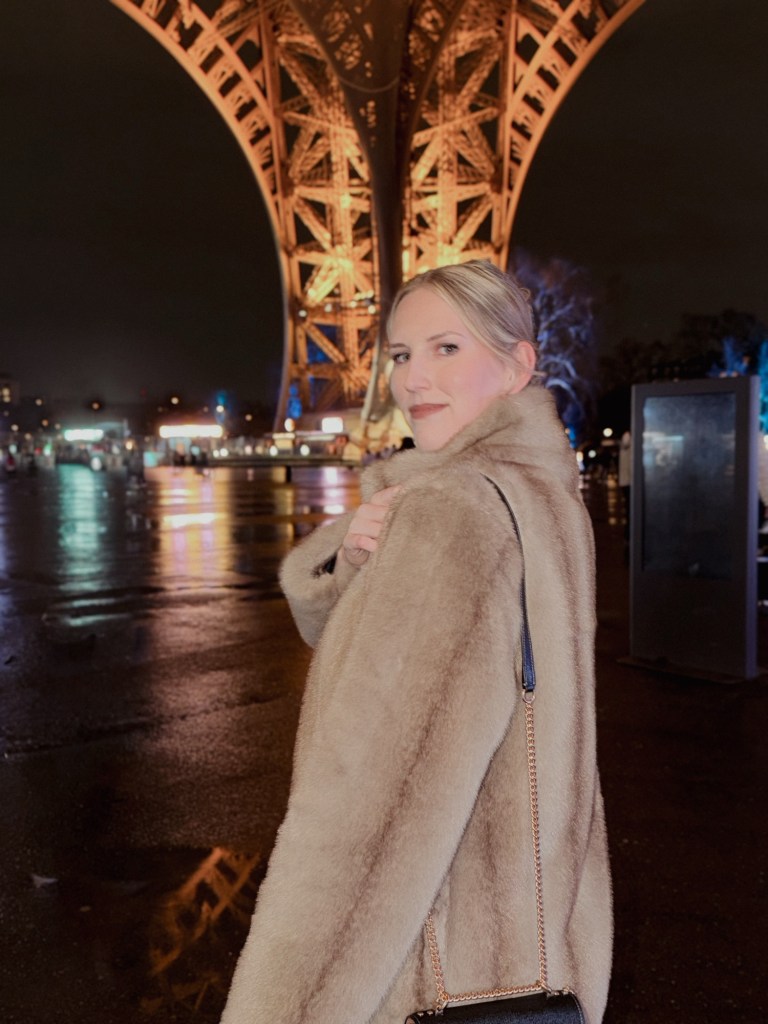
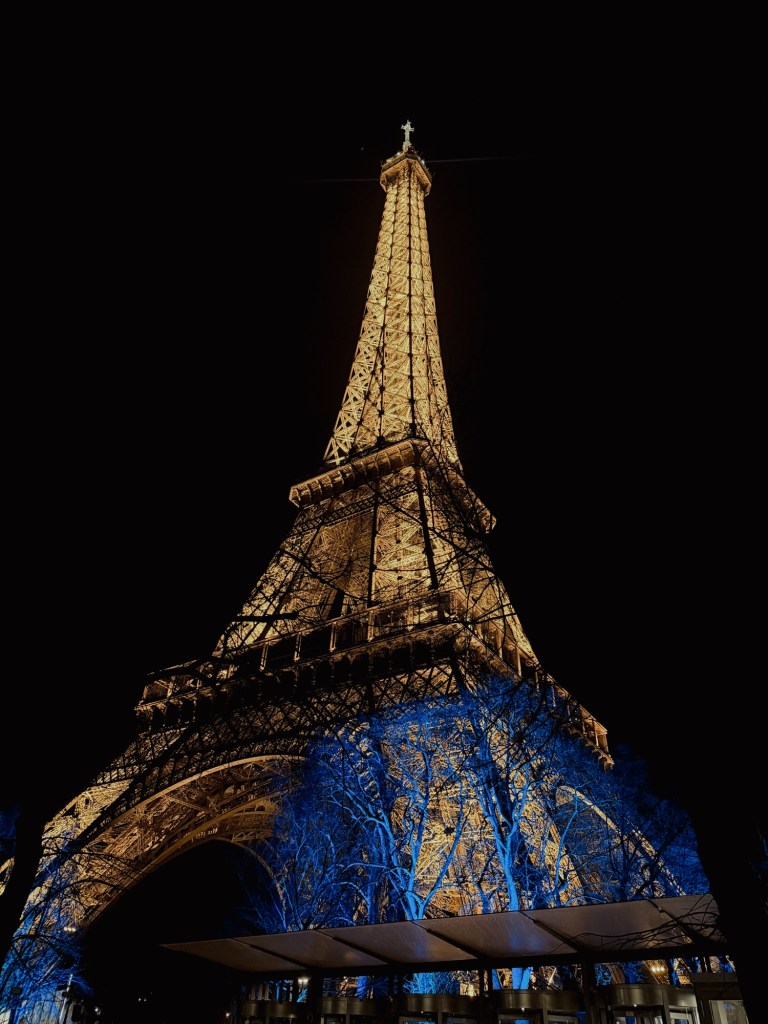
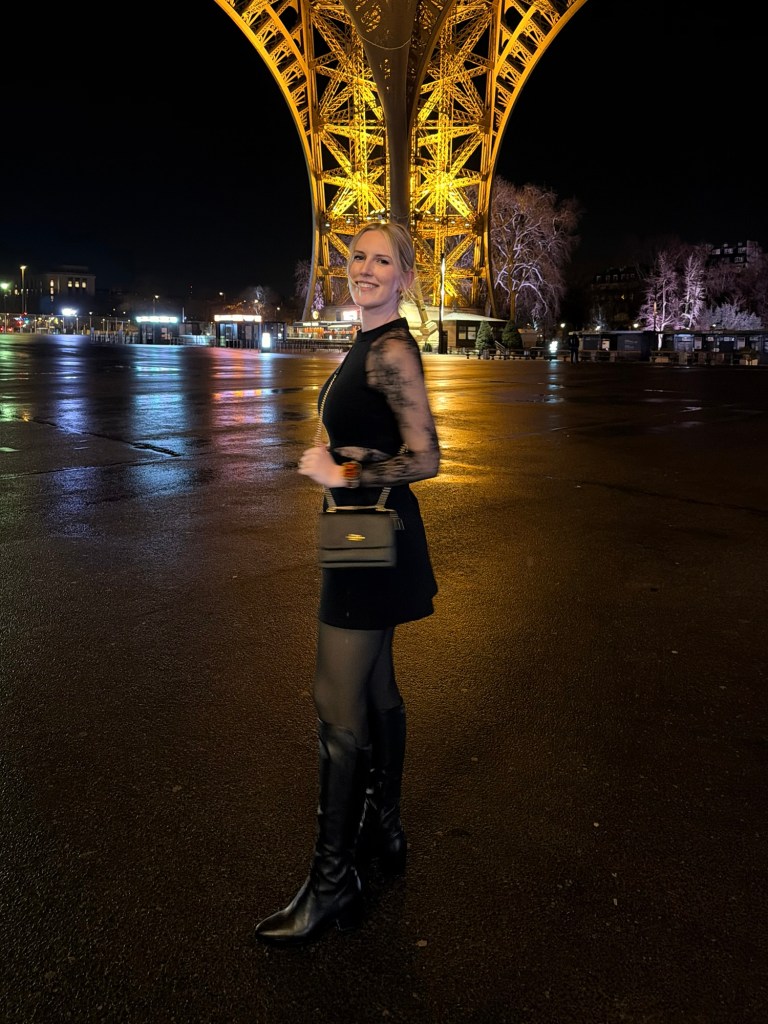
We entered through the restaurant’s private security line and, of course, took a few photos in front of the Eiffel Tower. After my mini photo shoot, we headed inside and took the elevator up. It was much higher in the tower than I was expecting.
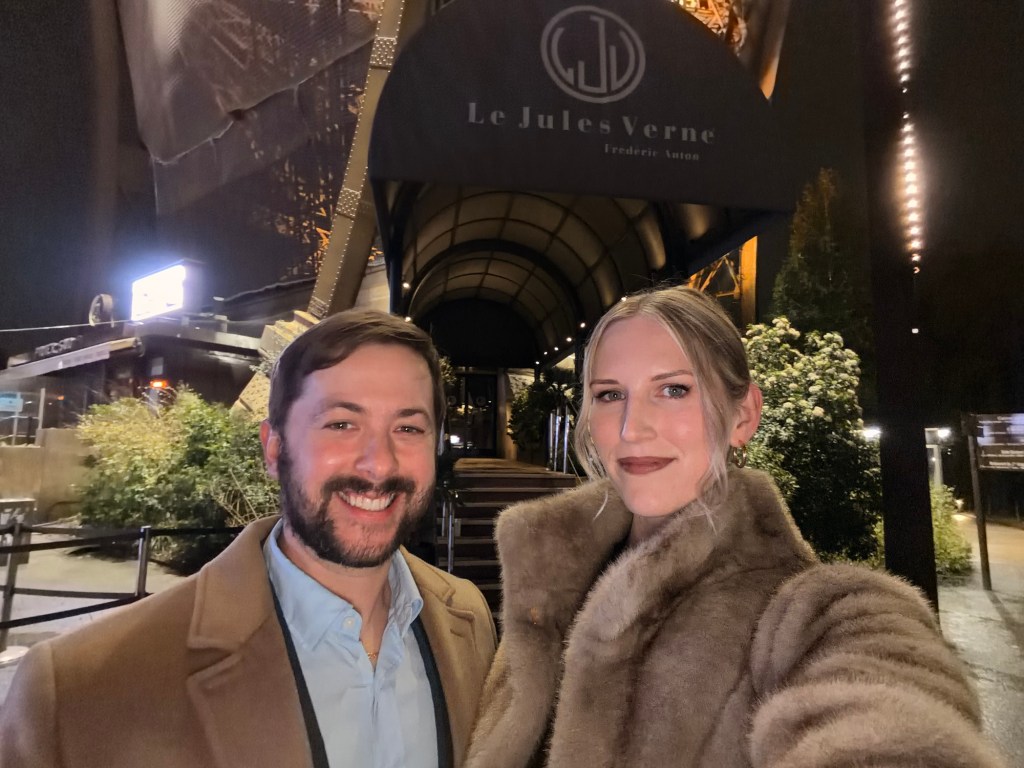
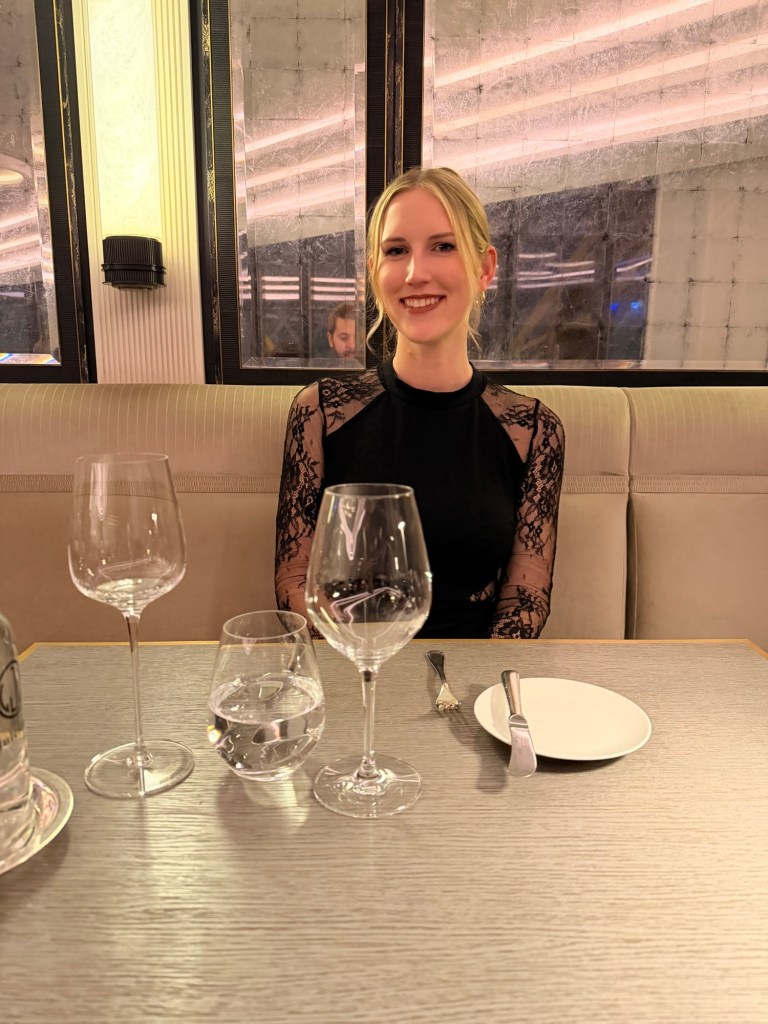
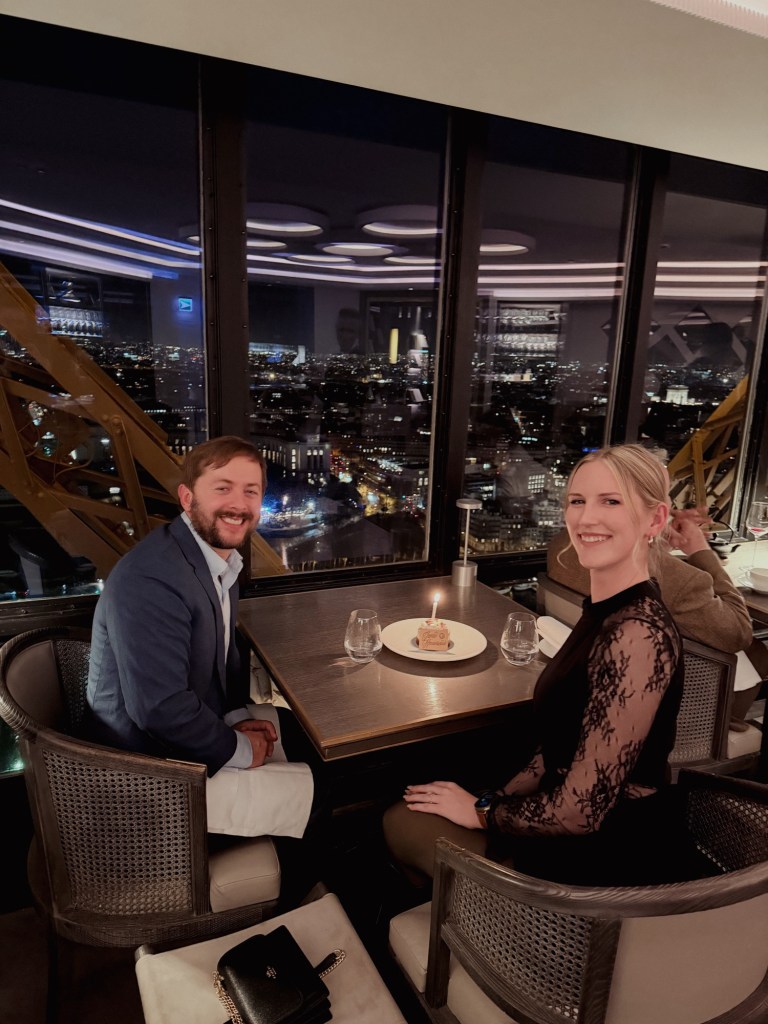
When we were first seated, I was a little bummed because our table wasn’t facing the skyline. Jordan assured me he was happy with it, though, so we ordered some wine to kick off the night.
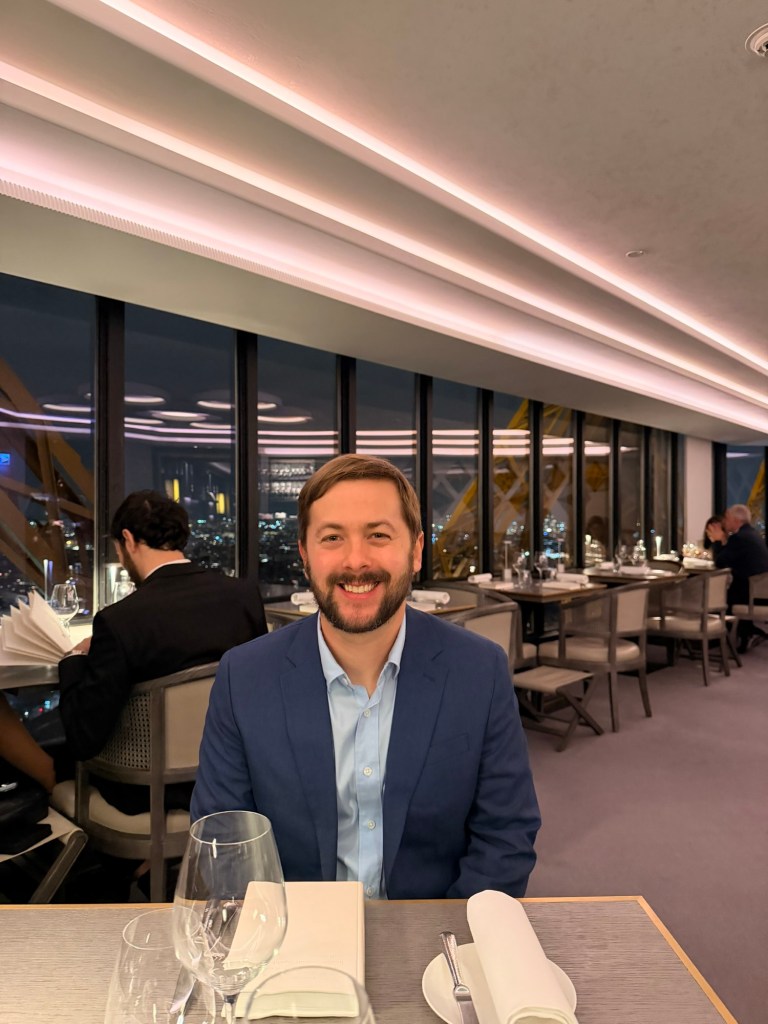
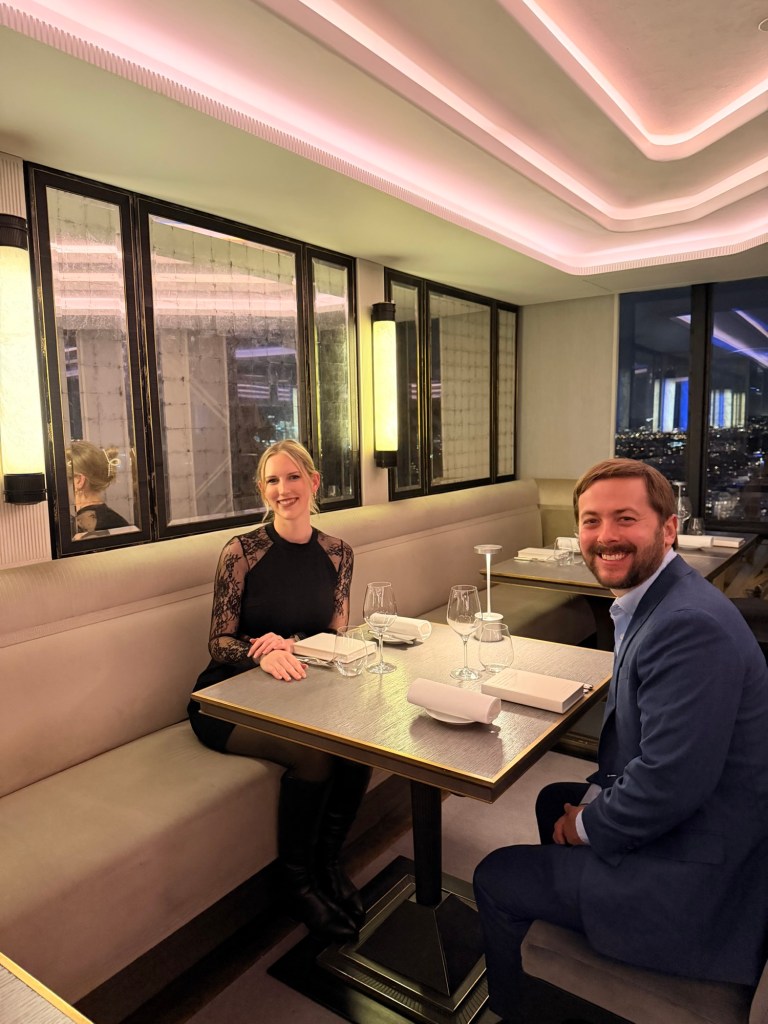
I asked for the sweetest wine they had. I originally asked about a Riesling, but they only had a dry one, so the sommelier recommended another option. It was sweet, though I wouldn’t have complained if it were even sweeter.
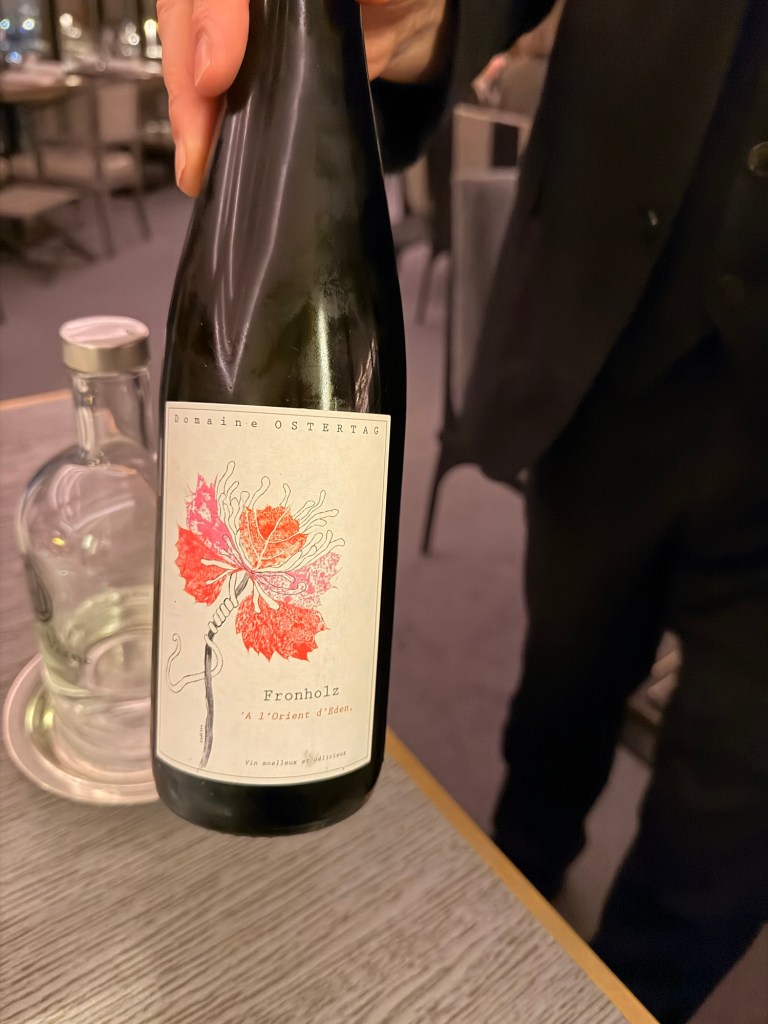
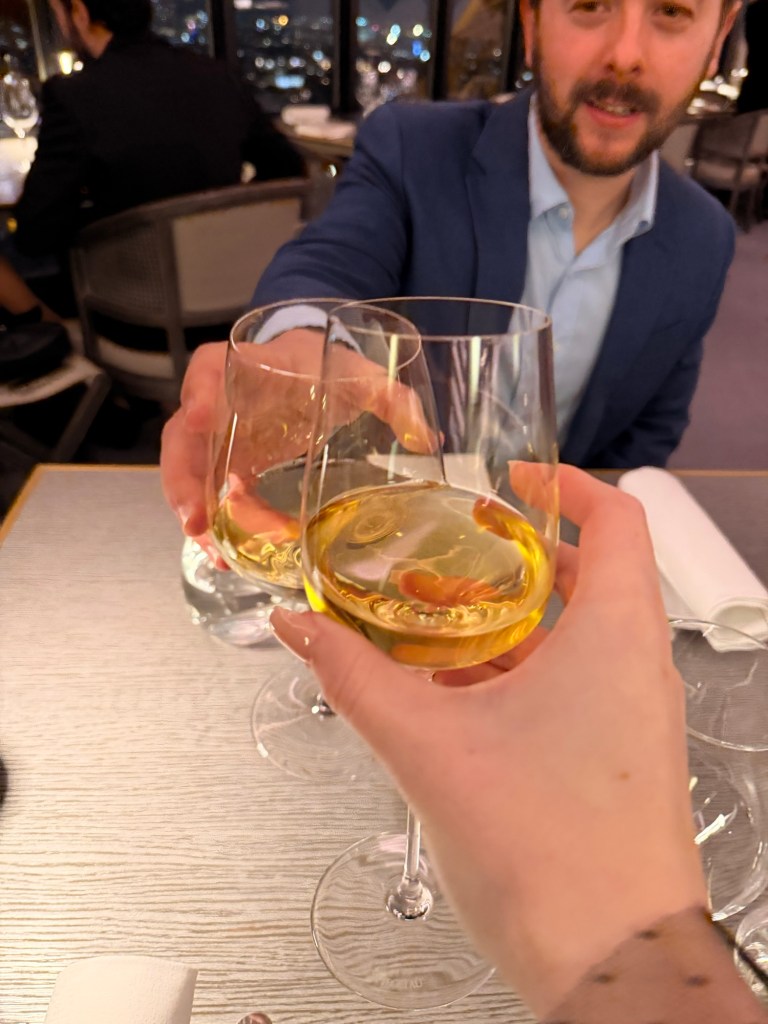
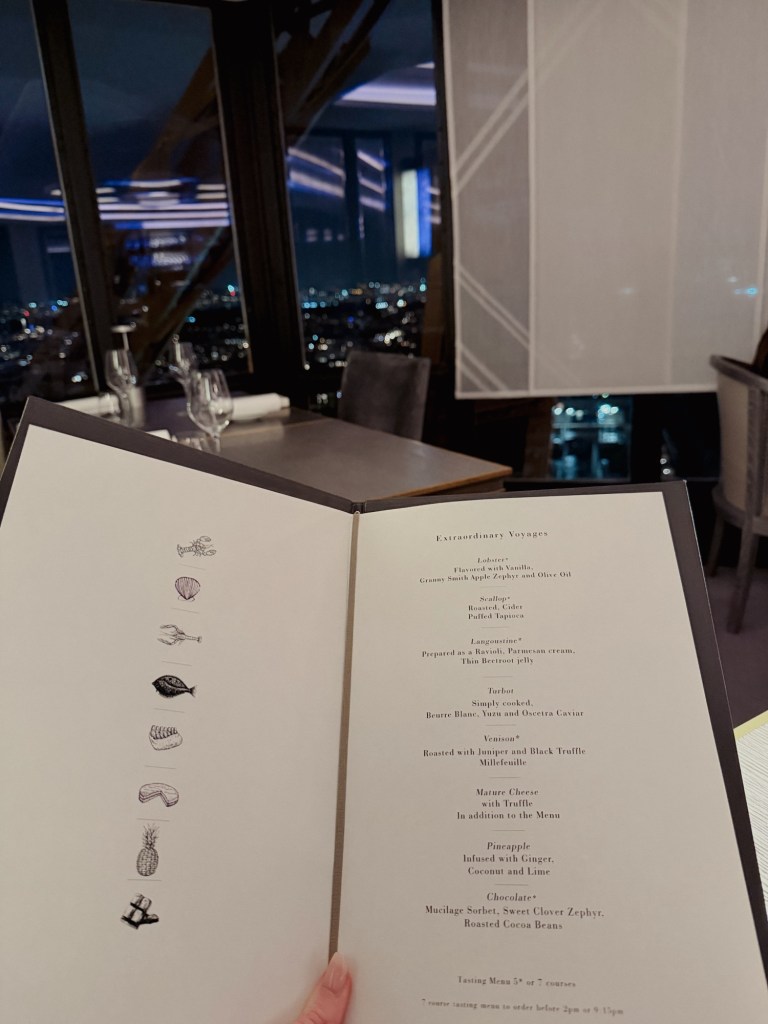
We sipped our wine and enjoyed the atmosphere while looking over the menu. When the waiter came back, he asked which tasting menu we wanted. There was a five-course option, a seven-course option, and the choice to add a cheese course. We decided to do it all. When in France.
The sommelier was hilarious. He came over to recommend wine pairings and started pointing out several bottles. Jordan asked how much it would be, and he said €200. I’m still not sure if that was per person or total. Jordan then clarified that he’d be the only one drinking. The sommelier was genuinely shocked that I wasn’t joining in and immediately changed plans, opting to do wine by the glass instead.
After I finished my first glass of wine, I asked for another recommendation, this time something even sweeter. He suggested a Moscat but warned me that it was very sweet, so I told him to bring it on. It ended up being perfect and exactly the right amount of sugar for me. We all had a good laugh about my questionable wine preferences. Later, when he brought out one of Jordan’s wines and was describing it, he joked “just for us boys,” since I clearly wasn’t the wine person of the table.
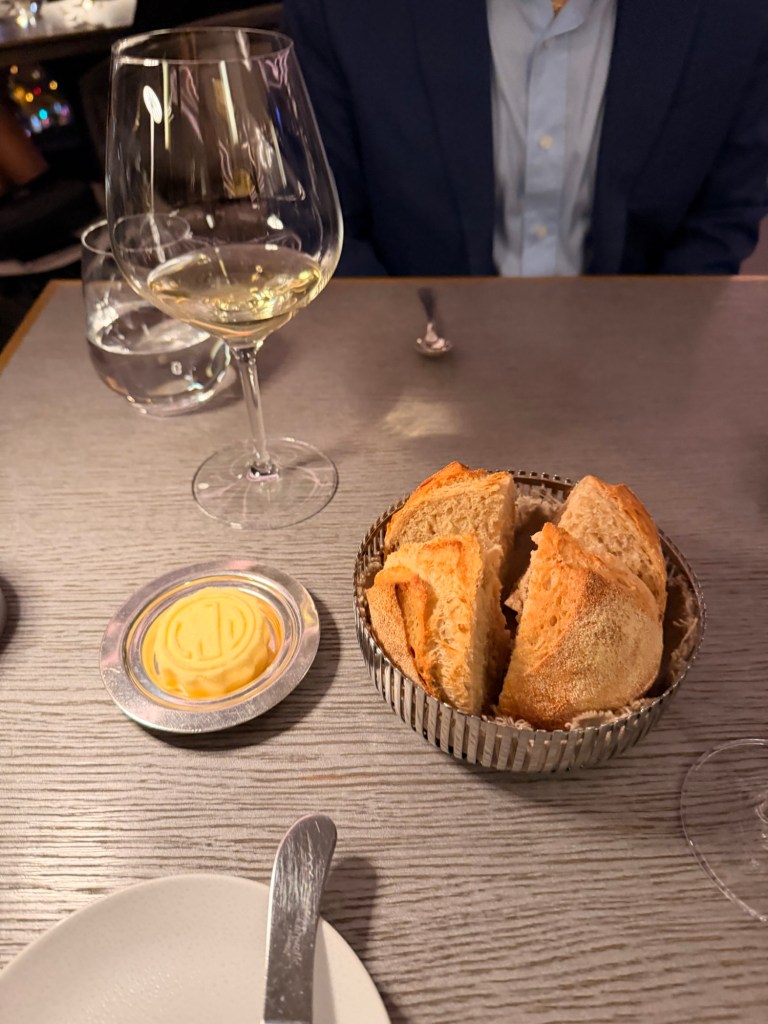
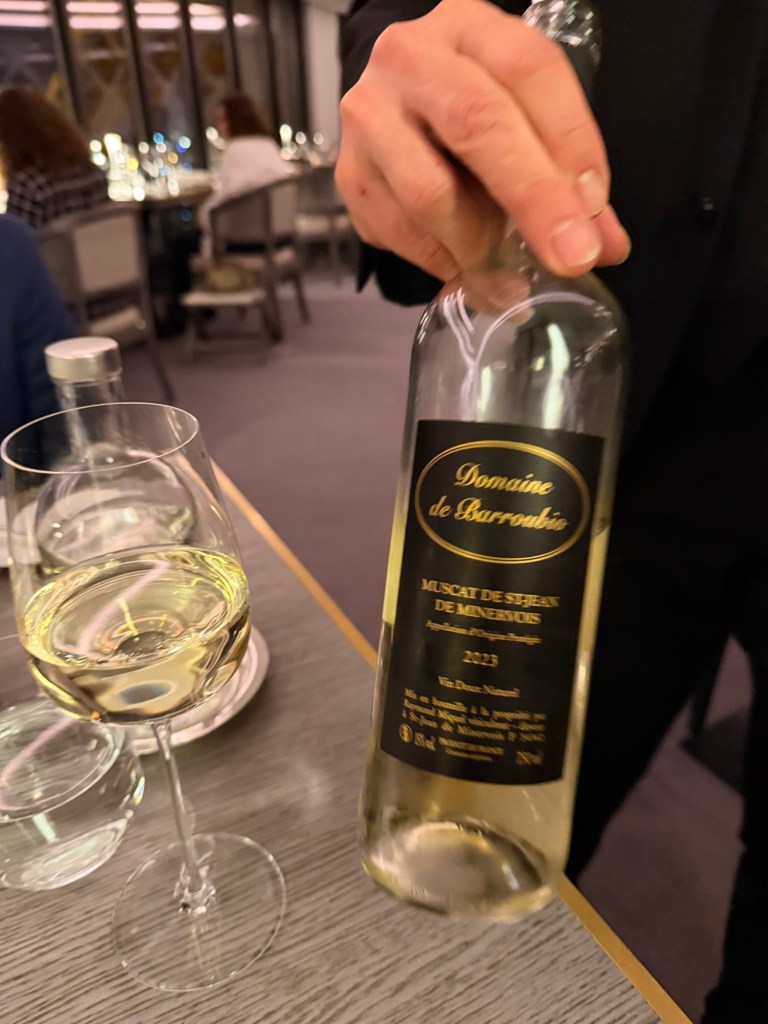
There were so many courses, and I tried to take notes as they came out, but it was hard to keep up and stay in the moment. Everything was incredible.
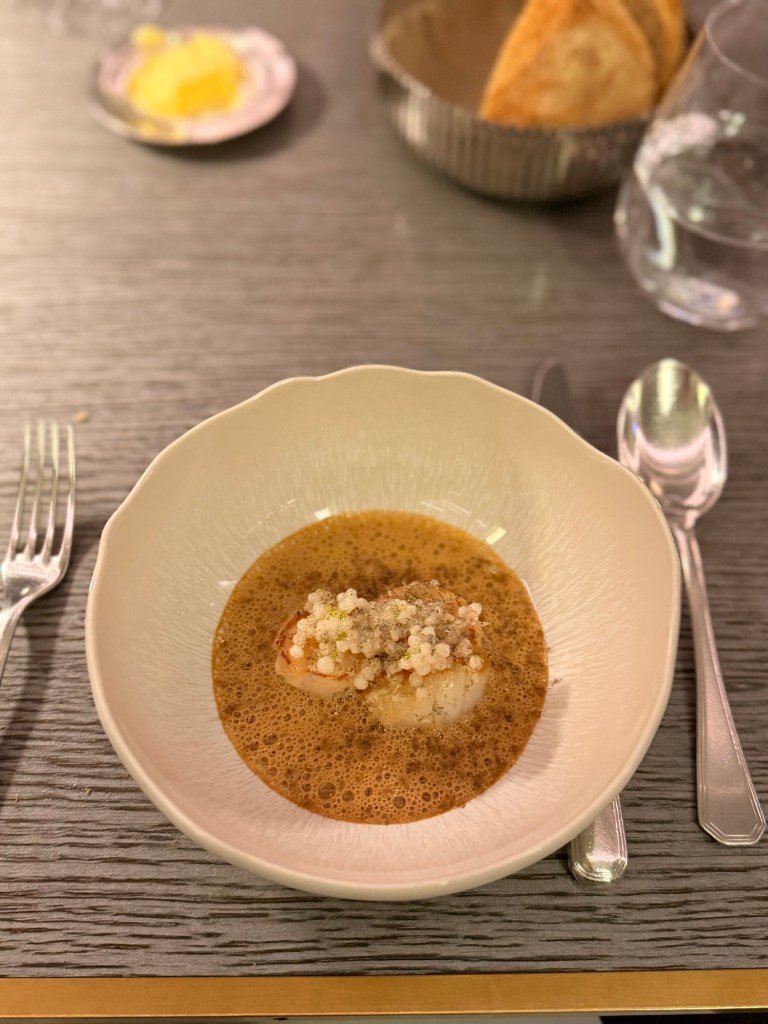
The lobster was light, creamy, and lemony, with the most delicate foam on top. The scallops were amazing, topped with caviar and a rich, flavorful sauce.
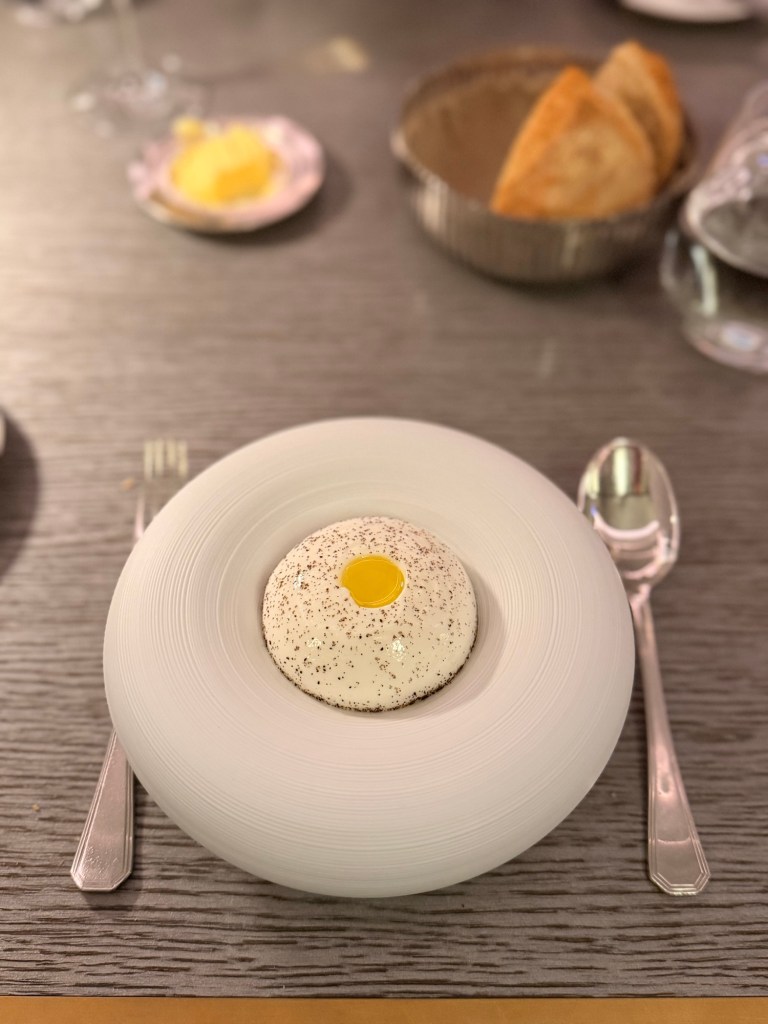
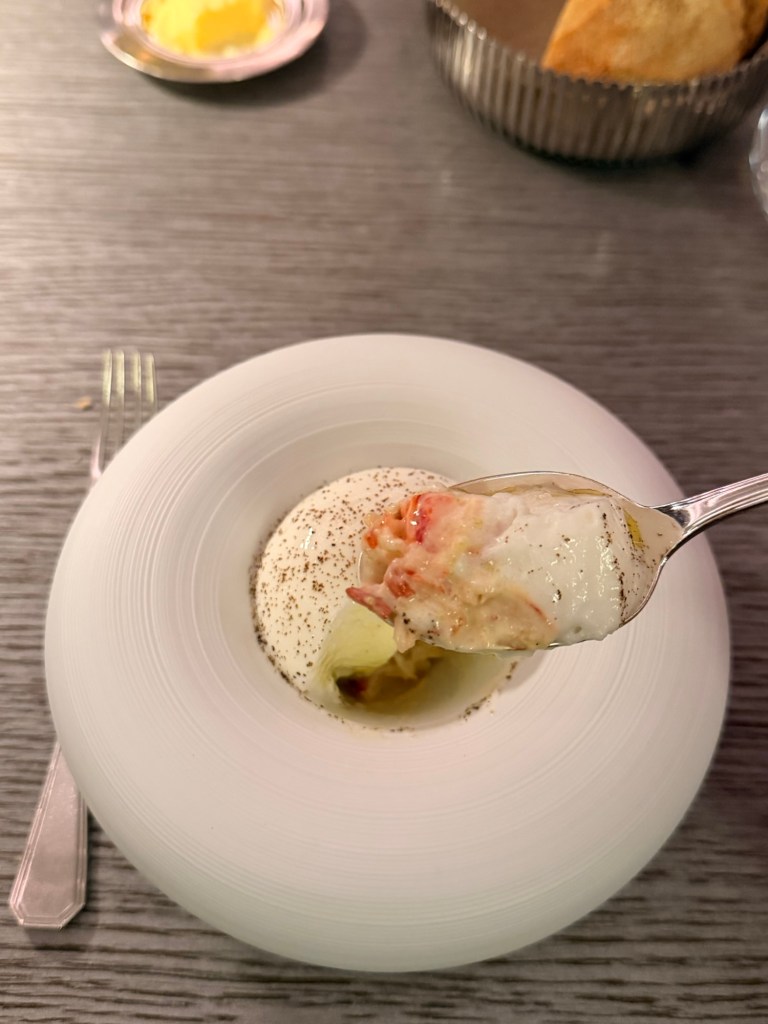
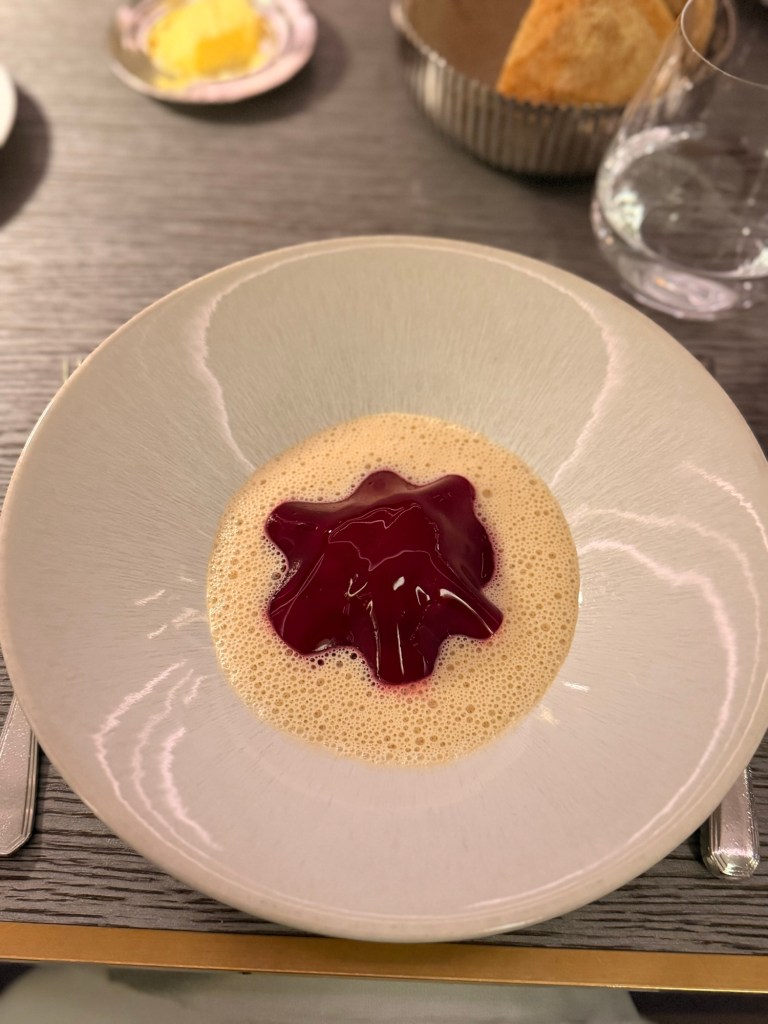
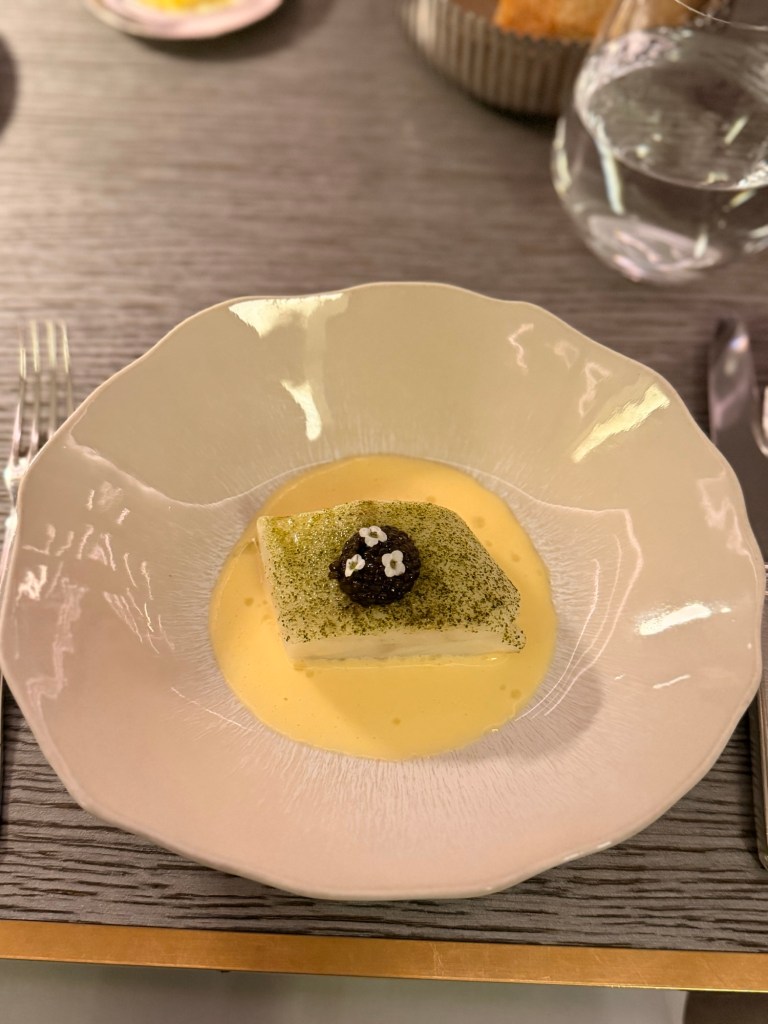
The prawns came with a beet gelatin and were surprisingly creamy and delicious. The turbot fish was our waiter’s favorite course, and it lived up to the hype.
The venison ended up being Jordan’s favorite. The sauce alone was unreal. It’s wild how small the courses are, yet how full you feel by the end.
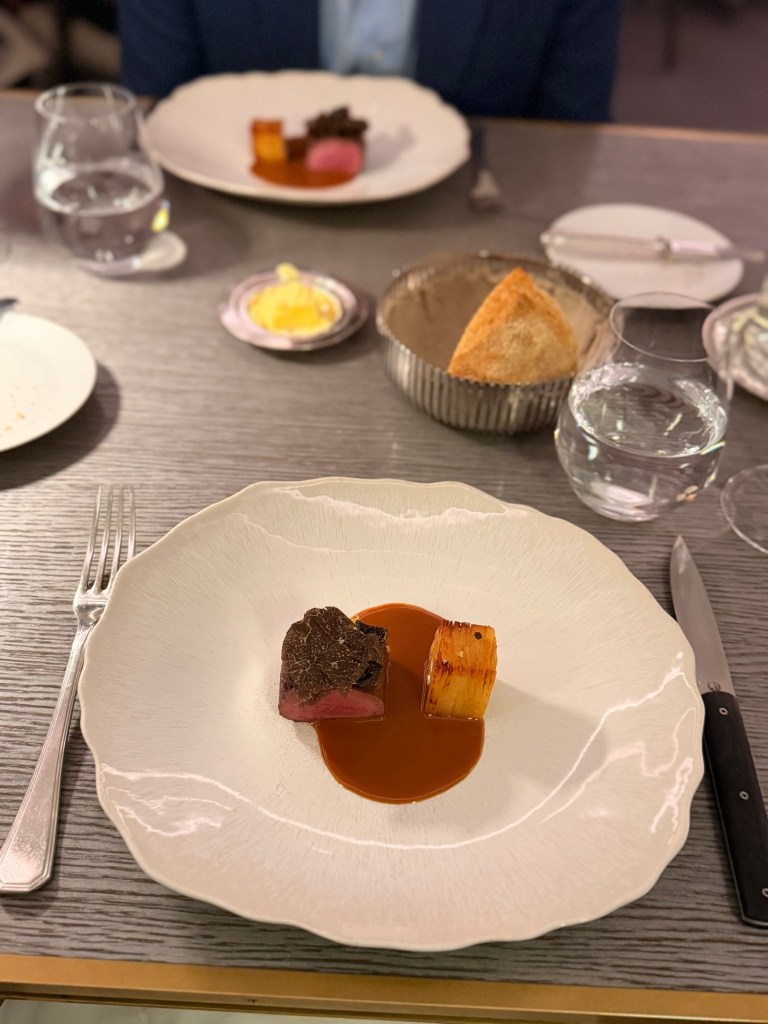
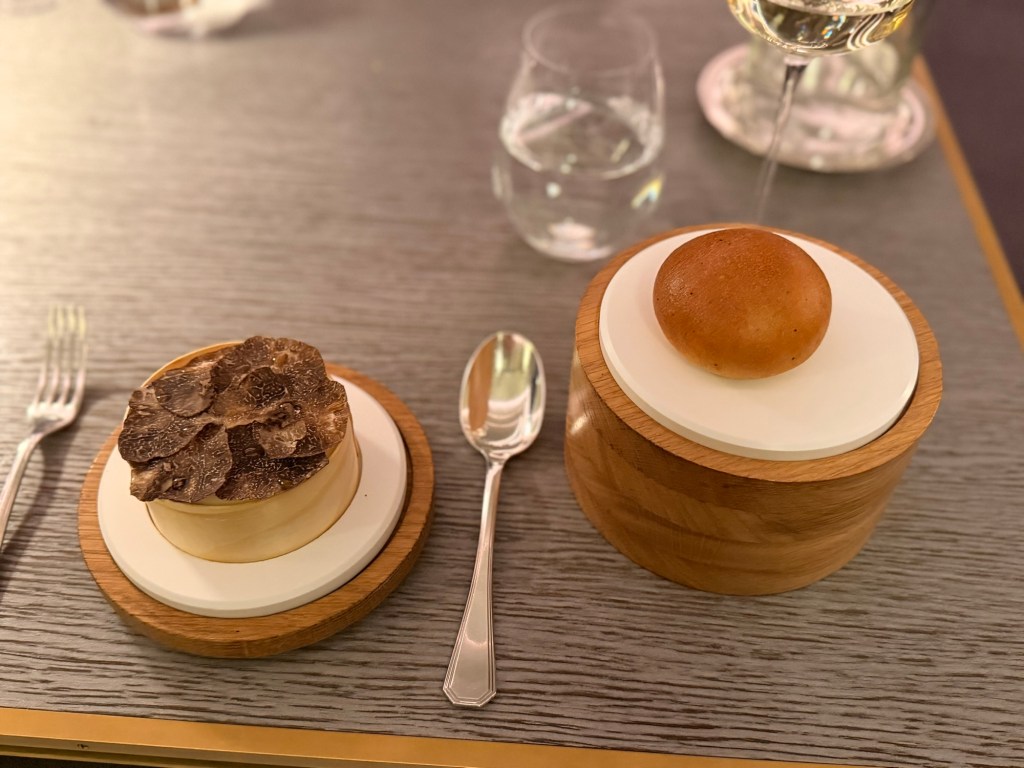
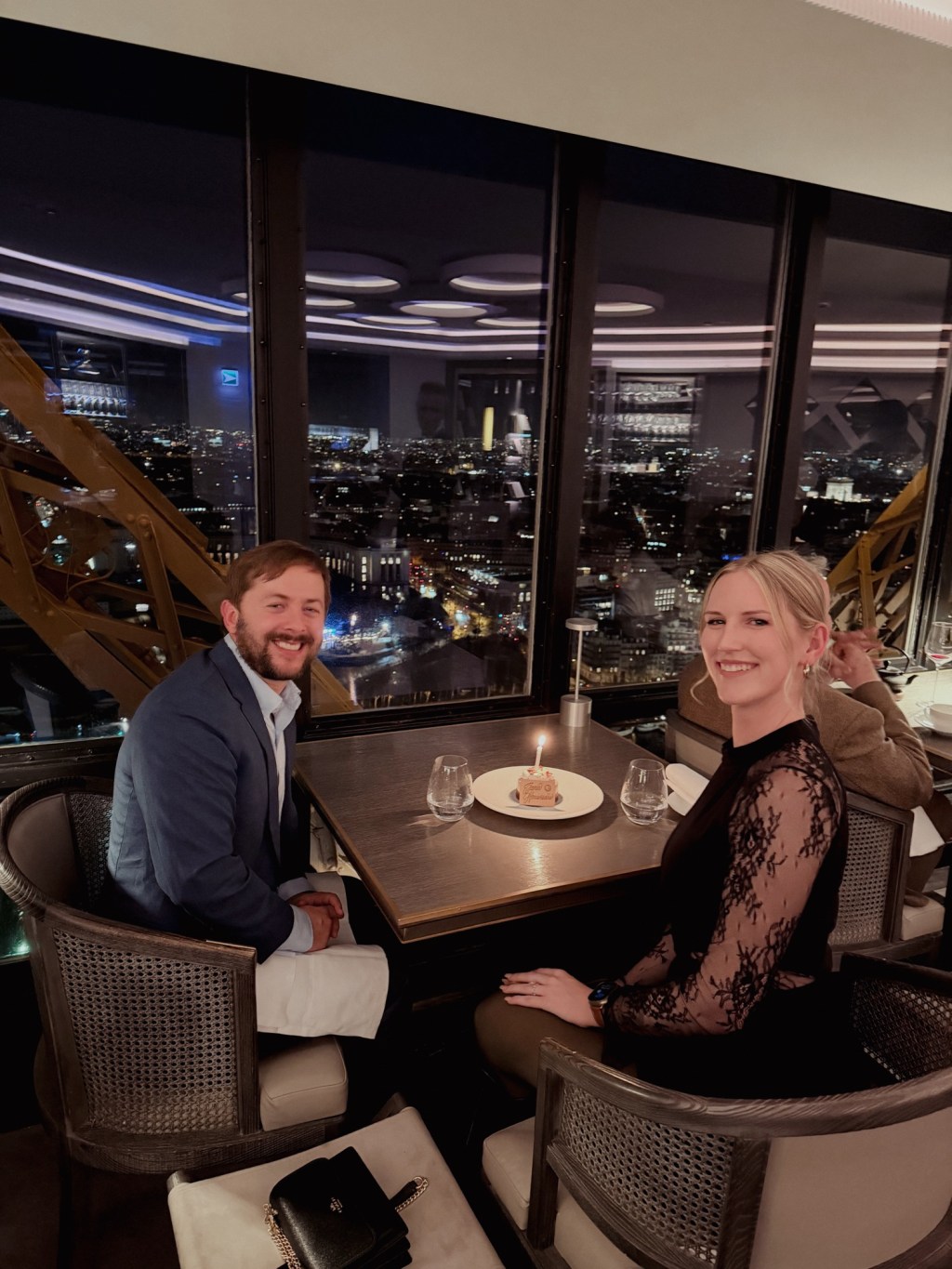
At one point, Jordan went to the restroom, and while he was gone, the waiter asked if I’d like to move to a window table to finish our dinner. I was so happy because I had wanted that view all night. It absolutely made my evening. The view was breathtaking!
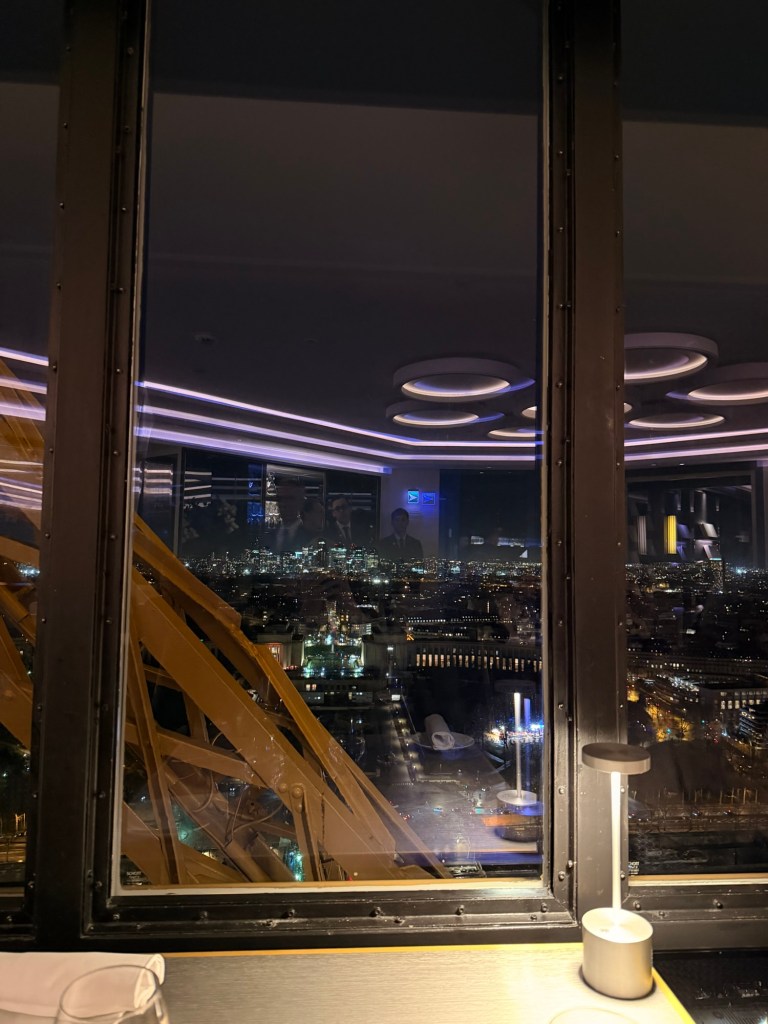
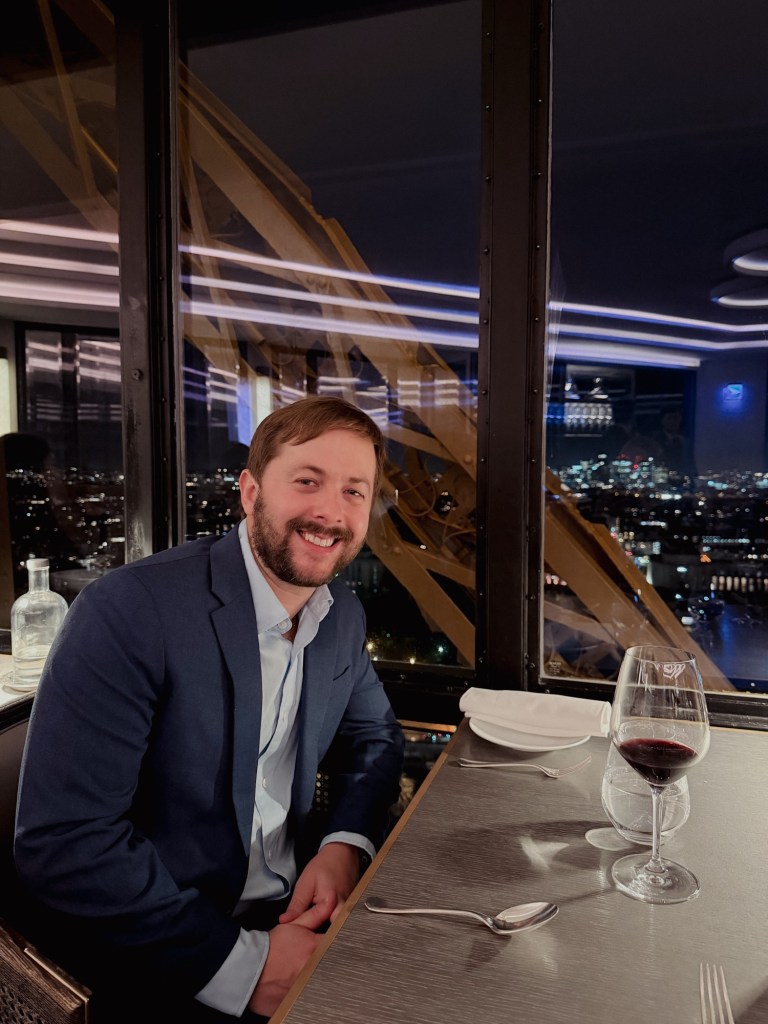
And you could see the hourly sparkle show that the Eiffel Tower puts on from the dining room.
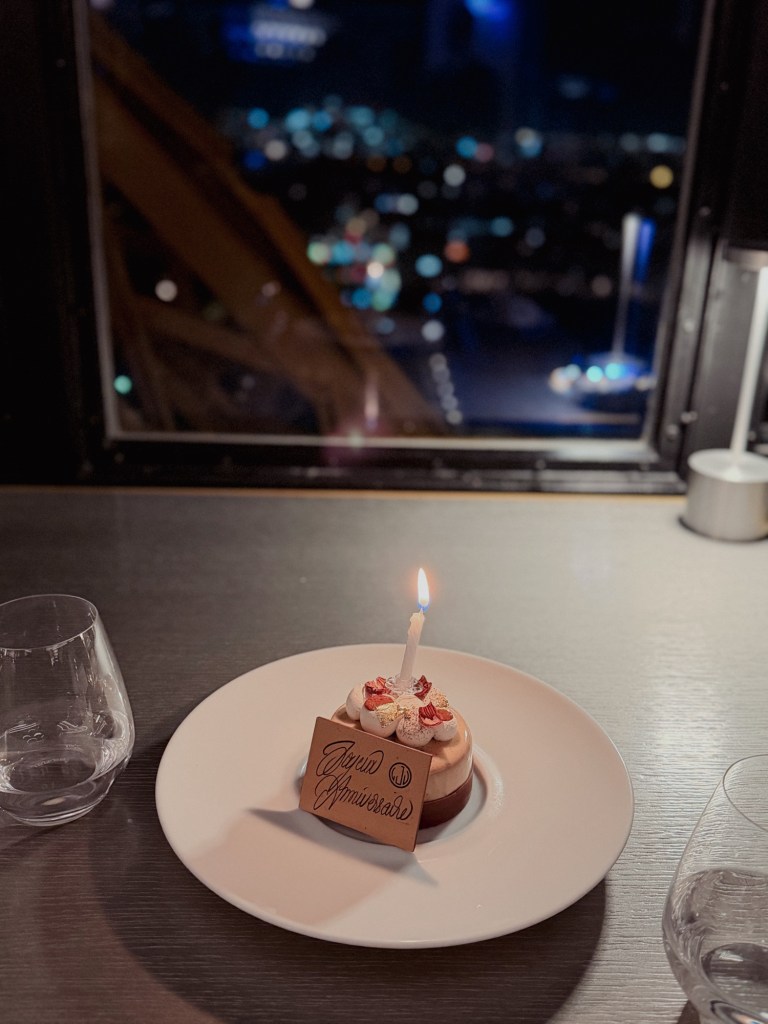
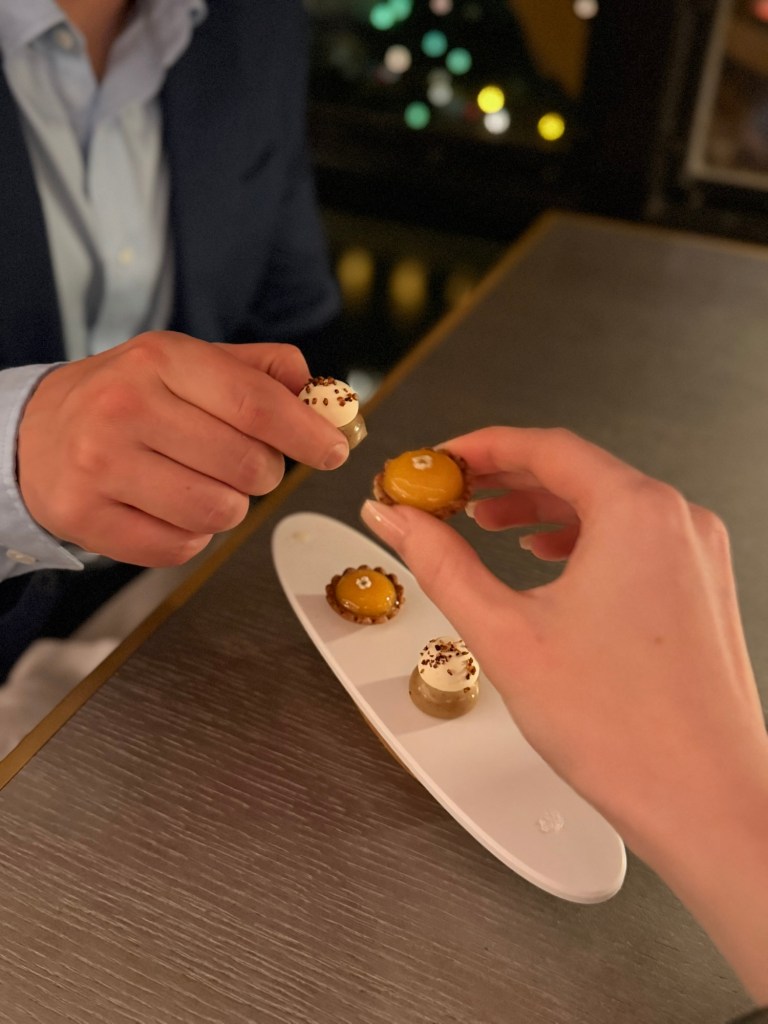
For dessert, they brought out multiple courses, including a small birthday cake we had added when booking. We were so full at that point that we were kind of hoping it would be forgotten, but it wasn’t. Thankfully, it was small, super cute, and delicious, with a little chocolate “Happy Birthday” sign and a candle.
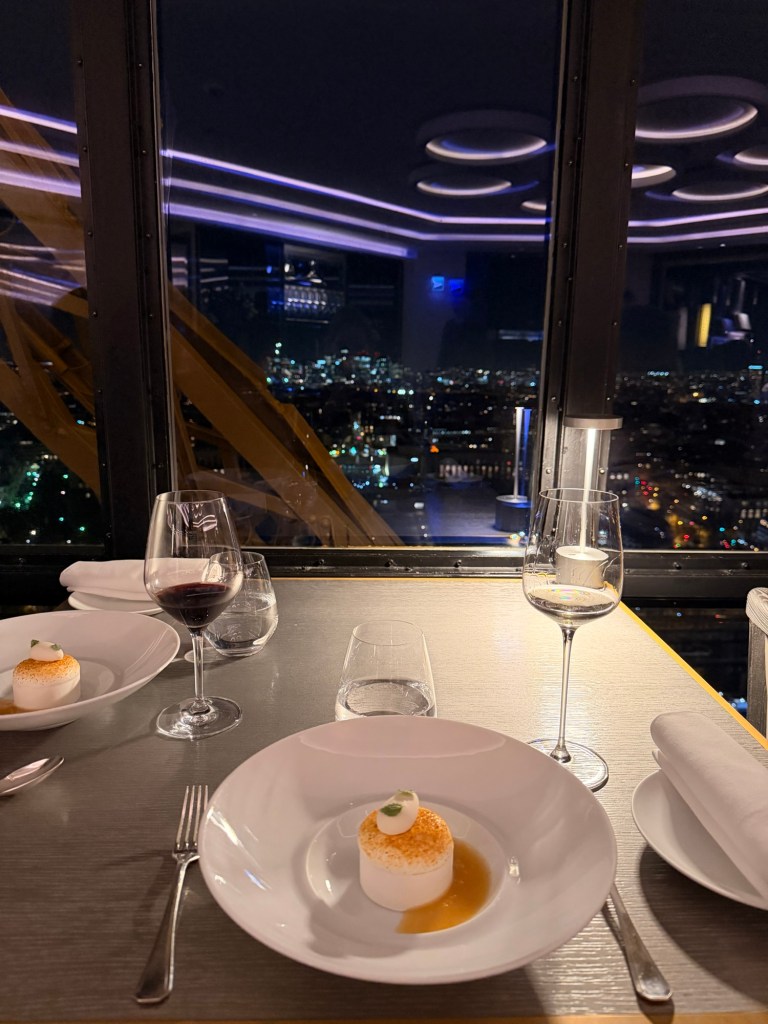
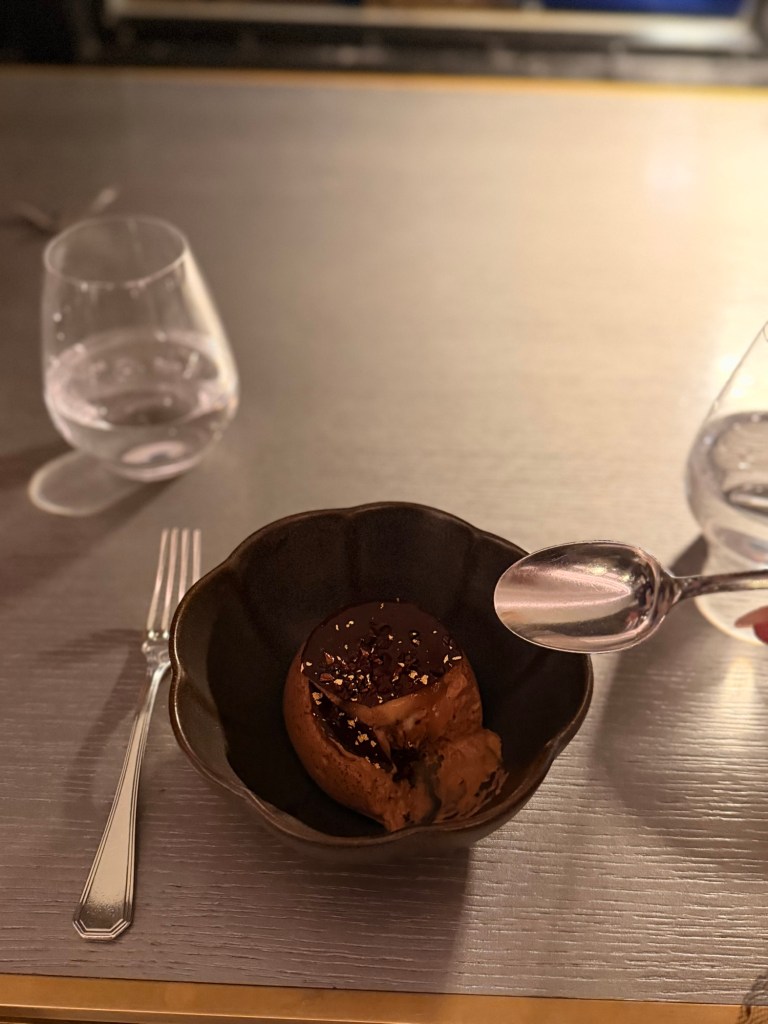
Here are the other desserts that were brought out. I’m not sure how we kept eating.
After all of our desserts, we headed back downstairs and took a few more photos since the area around the Eiffel Tower had mostly emptied out.
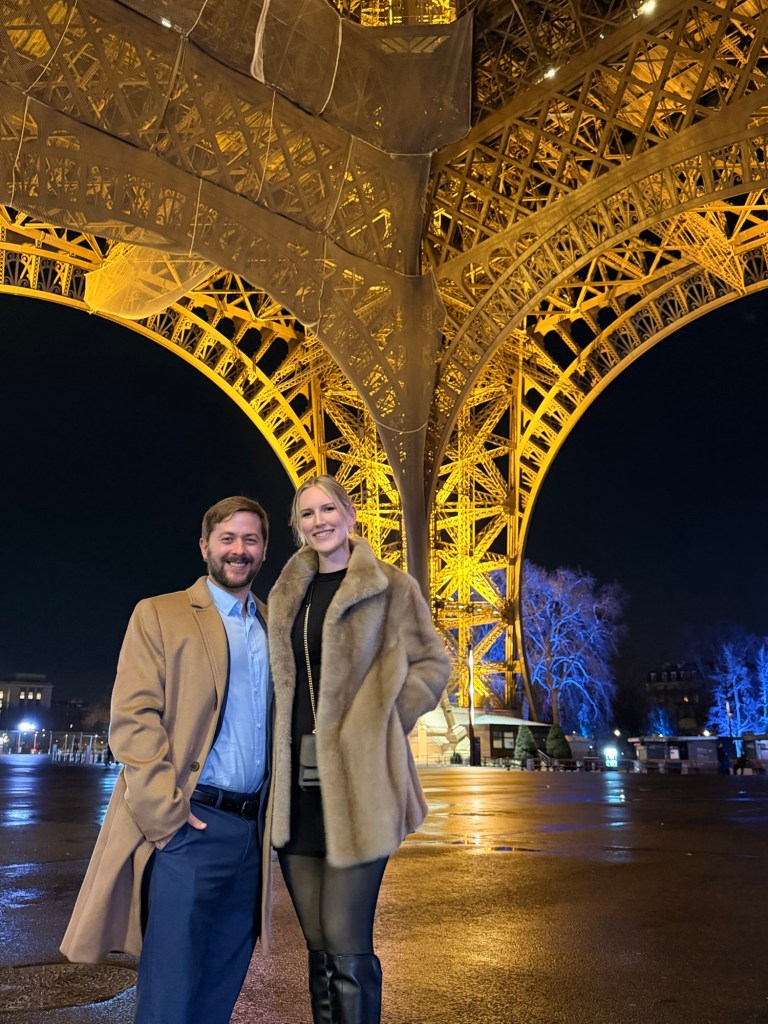
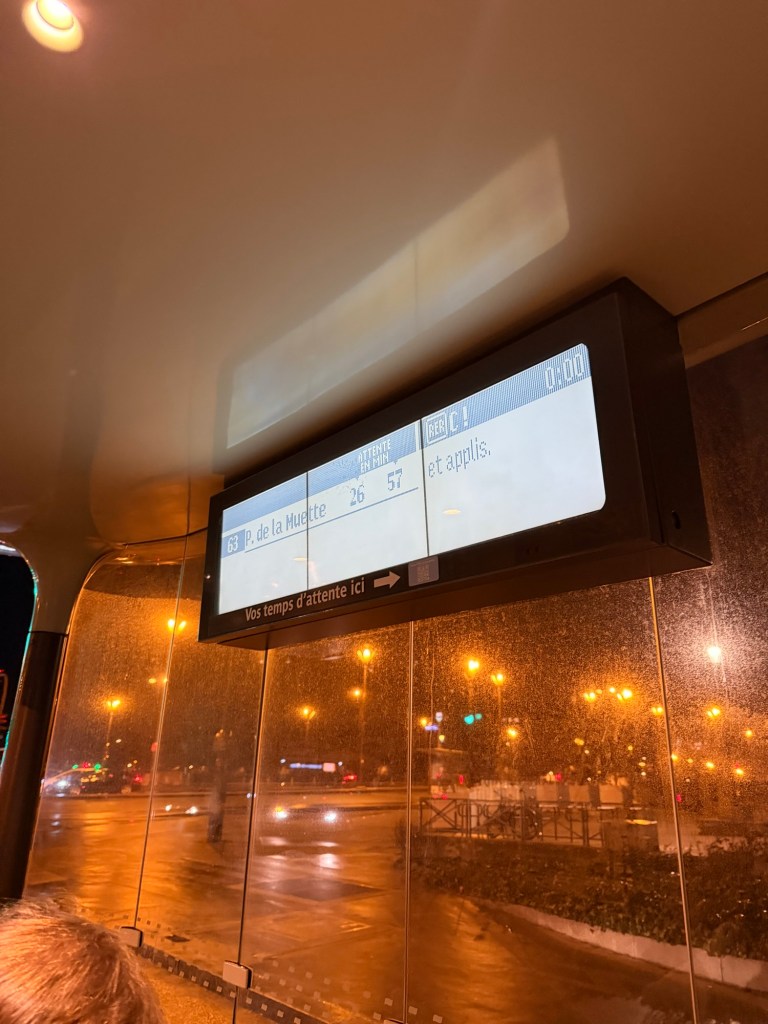
The easiest way back was by bus, so we walked to the bus stop, but the bus flew right past us. It turned out to be a blessing because we were actually on the wrong side of the road anyway. We crossed the street to the correct stop, saw the bus wouldn’t arrive for another 15 minutes, and decided to just call an Uber instead.
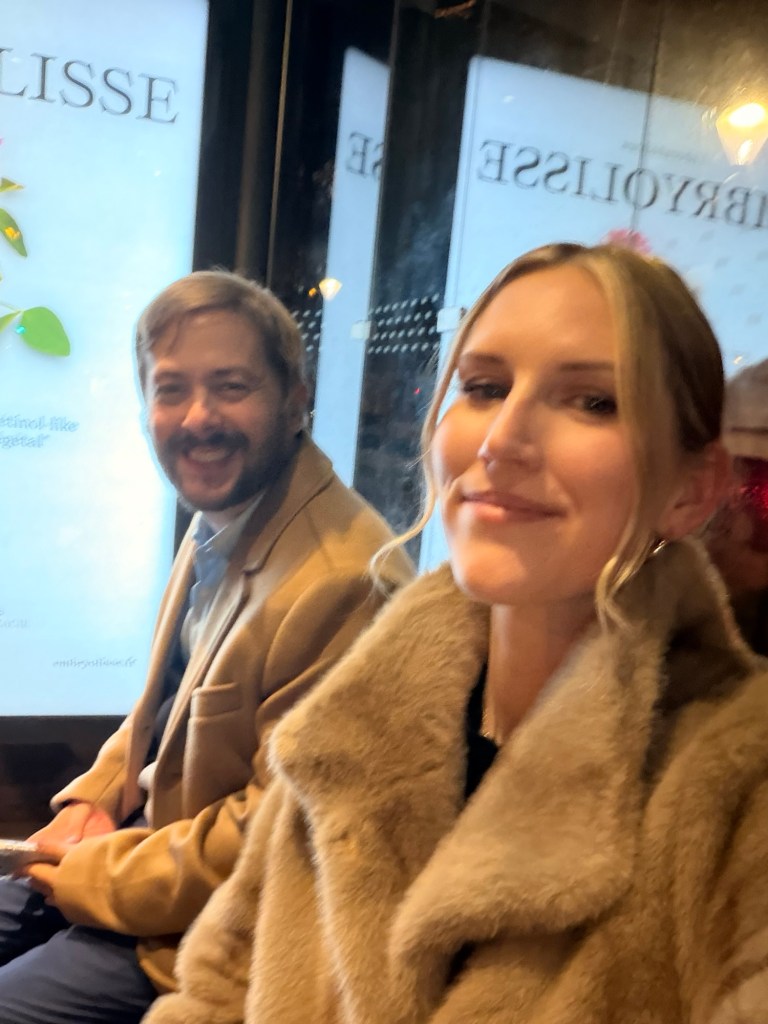
It was such an incredible night, and I’m so grateful we got to experience something like that together!! Tomorrow, we visit the Louvre!

 Lauren and Life
Leave a comment